
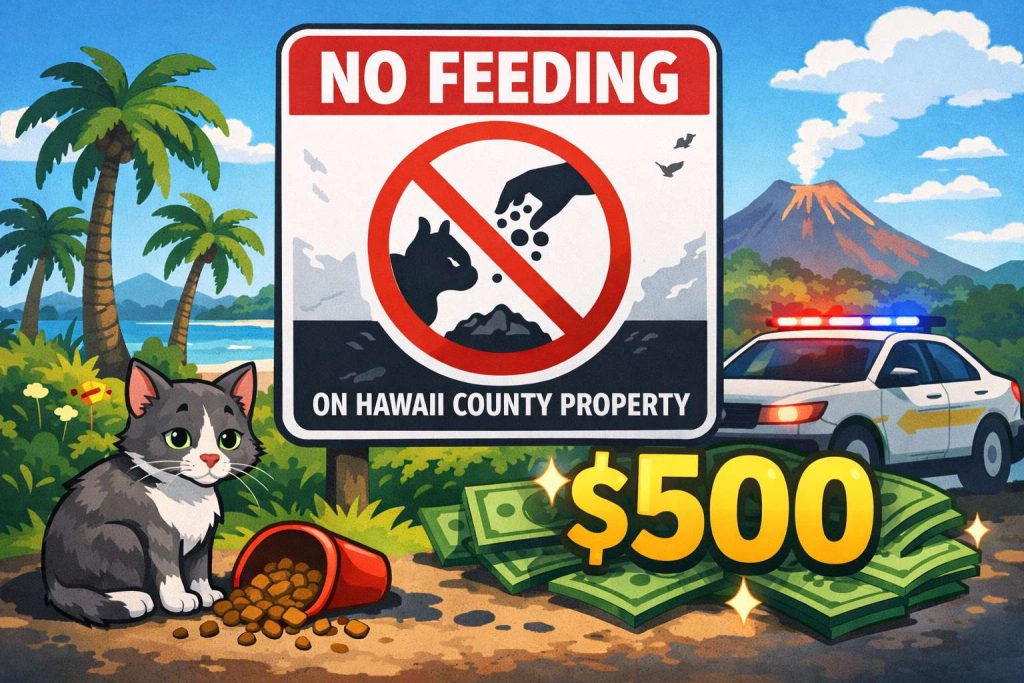
The Hawaii cat feeding fine is now real on the Big Island. Starting January 1, 2026, Hawaiʻi County began enforcing a rule that bans feeding stray or feral animals on county property. So if you leave food out in the wrong place, you can get fined. Then if it happens again, the fine can climb all the way up to $500.
A lot of people feed outdoor cats out of kindness. They see a hungry animal, and they want to help. At the same time, the county says public feeding sites can create bigger problems for wildlife, public health, and even traffic safety. So this new rule changes what is allowed in parks, gardens, and other county-managed spaces.
What changed on January 1 in Hawaiʻi County
Hawaiʻi County updated its county code to prohibit feeding, or attempting to feed, stray or feral animals on property owned, leased, rented, managed, or operated by the county.
This rule covers more than cats. It can apply to other feral animals that gather near food sources on public land. Still, in daily life, the biggest impact lands on people who feed cat colonies near parks, public buildings, and shared community spaces.
Here is the fine structure people need to know:
- Up to $50 for a first violation
- Up to $500 for later violations
So the change targets the location, not the intention. Even a small bowl of food can trigger a violation if you place it on county property.
Where the ban applies
This law focuses on Hawaiʻi County property on the Big Island.
That includes many places people visit all the time:
- County parks
- County gardens and landscaped public areas
- County facilities and public service sites
- County-managed lots and public access areas
So if you feed cats, treat location as the first risk factor. Then treat the “gray areas” as risky too, since boundaries in Hawaii can be confusing. A spot might look like a normal open area, but it may still fall under county control.
Why county leaders say feeding cats on public land causes harm
County leaders tied the ban to native wildlife protection and public safety. So the core argument is simple. Feeding sites support larger feral populations in public spaces, and that creates harm over time.
Feral cats hunt birds and other small animals. Then when cats gather around predictable food spots, the pressure on nearby wildlife rises. That can hit harder on islands, since many native species have fewer defenses than animals on the mainland.
Food left out for cats can shift animal behavior too. It pulls cats into regular gathering sites. Then it draws other animals into the same areas. Next, those clusters can lead to aggressive behavior between cats, more injuries from fighting, and more noise complaints from neighbors.
Sanitation is another big part of the county’s concern. Leftover food spoils fast in warm weather. So it attracts insects and rodents. Then cat waste builds up in the same spots, and that raises disease risks.
One concern raised often in Hawaii is toxoplasmosis, a parasite linked to cat feces. It can spread through soil and water runoff. So wildlife and marine animals can face real harm when contamination reaches streams or coastal zones.
Why many residents oppose the Hawaii cat feeding fine
Many caretakers see themselves as the ones who stepped in when no one else would. They feed cats on a schedule. They bring water on hot days. They watch for injuries. Plus some support trap-neuter-return work and pay for it with their own money.
So for them, feeding is not a random habit. It is a routine that keeps animals stable and easier to monitor.
Their biggest fear is simple. If feeding stops on public land, hungry cats may spread out and hunt more. Then the wildlife risk may rise, not drop. On top of that, caretakers worry that cats will scatter and become harder to trap for sterilization. That can slow down population control.
This is where emotions run high. The county wants fewer cats gathering in sensitive public spaces. Caretakers want realistic steps that reduce cat numbers without sudden chaos.
And honestly, it’s easy to see why people connect with these animals. Cats have a way of becoming part of a place, even when they do not “belong” there on paper. If you like stories about famous feline residents, you may enjoy this one too: Larry the Cat turns 19 and Downing Street still feels like his house.
Will the county fine every person who feeds a stray cat?
Not every feeding moment will lead to a ticket, but the rule gives the county the power to enforce it. So it is smart to treat it seriously.
A single bowl left on county property can count as feeding. A bag of food dumped near a colony can count too. Then if an officer or county worker documents a violation, the fines can follow.
So the safest approach is to assume enforcement can happen anywhere the county controls. Then plan your help around locations that stay legal.
How to help outdoor cats without risking a $500 fine
If you care about cats, you still have options. You just need to move support away from county land, and tighten the way you feed.
Feed only on private property with permission
Get clear approval from the property owner. Then pick a spot away from sidewalks and public entrances.
Use set meal times, then remove bowls
Short feeding windows reduce pests, and they reduce leftover food.
Keep the area clean every day
Pick up cans, packaging, and spilled kibble. Then wash bowls after use.
Avoid large piles of food
Big piles attract more animals and create faster spoilage. So small portions work better.
Support spay and neuter work
Sterilization reduces new litters. Then colony growth slows down over time.
Work with local rescues and trap groups
Coordinated trapping and adoption has a better chance of reducing suffering.
These steps protect cats in a practical way. At the same time, they lower the chance of wildlife harm, since cats gather less in sensitive public spaces.
Common mistakes that can trigger a fine fast
Some feeding habits raise risk right away:
- Leaving food near a park fence or park parking lot
- Feeding near a public restroom building
- Dropping food near a county trash site or transfer station
- Feeding in garden areas that look public but fall under county control
- Leaving food out all day
So if you are not sure who owns the land, do not feed there. Move the feeding site to a confirmed private location instead.
What this means for visitors to the Big Island
Tourists sometimes feed cats without thinking about local rules. They see friendly cats near beaches or parking lots, and they want to help. So this new policy matters for visitors too.
On the Big Island, that simple act can now lead to a fine if it happens on county property. So visitors should avoid feeding cats in public areas. Then if they still want to help, they can donate supplies or money to a local rescue group instead.
The bottom line
The Hawaii cat feeding fine marks a major shift on the Big Island. Feeding stray or feral animals on Hawaiʻi County property is now banned, and repeat violations can cost up to $500.
So if you want to keep helping cats, move that help to private property, keep feeding sites clean, and support sterilization and rescue work. That path protects cats, and it reduces conflict with wildlife and public health goals at the same time.