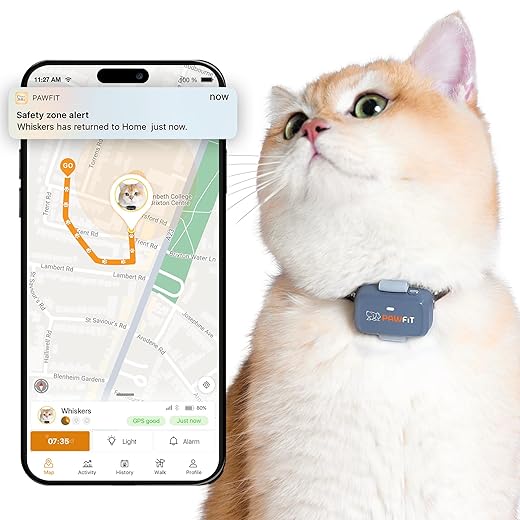


















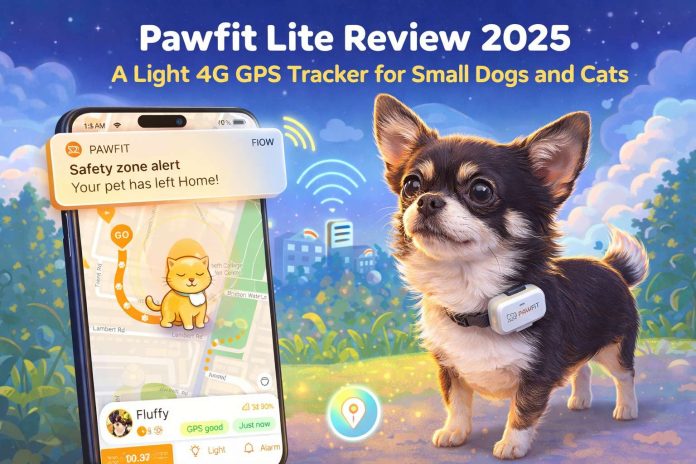
Pawfit Lite is built for small pets first. It weighs 17.6g and measures 41.5 × 25 × 13.8 mm, so it sits on a collar without feeling like a brick. So if you have a small dog or a roaming cat, the size alone will catch your eye.
Pawfit recommends it for pets over 2.7 kg. That detail matters, and it can save you a bad fit and a grumpy pet.
What it feels like to use
Pawfit Lite keeps the feature list simple, and that helps. You get live tracking over 4G, activity tracking, Safety Zones, family sharing, and a short location history. Then you manage everything in the Pawfit app.
Find mode is the star. It gives location updates every 5 seconds. So when your pet slips out, the map keeps moving and you can react fast.
There is a second tool too. Find Nearby uses Bluetooth to help you locate your pet at close range. GPS can get weird near apartments and busy streets, so Bluetooth can help when you are down to the last few meters.
Comfort and build
The weight is the main win. At 17.6g, it suits smaller dogs and many cats. Plus the smaller body tends to bounce less on the collar, which keeps it more comfortable during walks.
Pawfit lists an IP68 water rating, up to 3 m for 30 minutes. So rain, puddles, and wet grass should not be a big deal in normal use.
Tracking in real life
Most owners end up using two tracking styles.
Regular tracking fits day to day life. You check the app, you confirm your pet is where you expect, then you move on with your day.
Then there is Find mode. This is the “I need answers now” setting. You turn it on, and you get updates every 5 seconds.
At the same time, Find Nearby can finish the job. For example, a pet may hide under a car, behind a shed, or inside a stairwell. Bluetooth can help you narrow that final spot when GPS accuracy drops.
If you want a good side by side comparison with another popular option, read this Tractive GPS review. It helps you see what you gain and what you give up.
Safety Zones and alerts
Safety Zones act like a simple boundary in the app. You set a home zone, and you get an alert when your pet leaves it. Then you can add another zone later, like a park or a trusted yard.
Keep your zones simple at first. So you avoid alert fatigue, and you treat each alert as a real signal.
Activity tracking
Activity tracking is a nice extra, and it can feel more useful than expected. You can set goals, then watch day to day movement.
For instance, if your pet’s activity drops for a few days, the change stands out fast. So you can pay attention earlier, even before you notice it during playtime.
Battery life and charging
Pawfit rates the battery at up to 3 days. Still, battery life changes with use. Find mode uses more power, so frequent live tracking means more charging.
A simple rhythm works well. Charge it before a long day out. Then top it up again if you used Find mode a lot.
Subscription and real cost
Pawfit Lite needs a subscription for the built in SIM data, and each tracker needs its own plan. So the long term cost matters as much as the device price.
Basic and Premium plans exist, and longer plans cost less per month. So if you already know you want a tracker year round, the longer term plan usually makes more sense.
And if you are already thinking about ongoing pet costs, this guide pairs well with the tracker decision. Here is a warm, honest take on dog insurance in 2025. It helps you plan your budget with clear expectations.
Pros and cons
Pros
- Very light at 17.6g, and easy for small pets to wear
- Find mode updates every 5 seconds, so live tracking feels responsive
- Find Nearby via Bluetooth helps at close range
- IP68 water rating for everyday weather and wet ground
- Safety Zones and short location history cover the basics
Cons
- Up to 3 days battery life can shrink with heavy Find mode use
- Subscription required, and each tracker needs its own plan
- Total cost grows over time once the monthly plan stacks up
Price