















Feeding your cat only dry food can work. So yes, it can be safe for many cats. Still, the plan only works when you do a few basics every day.
Dry food has one weak spot. So your cat gets very little water from meals. Then hydration becomes your job, not your cat’s guesswork.
Start with the label, not the marketing
Pick a food that says “complete and balanced” for cats. Then match the life stage on the bag, kitten for kittens and adult for adult cats. Plus, skip foods marked “supplemental” or “treat” as the main diet.
Next, keep the ingredient list in perspective. So do not chase one trendy ingredient and ignore the full nutrient profile. Then focus on how your cat looks, feels, and stays steady over time.
So is dry food only okay
Yes, it can be okay. So long as your cat stays hydrated, keeps a healthy weight, and has no history of urinary problems.
The two problems that show up most often
Low water intake.
Cats often drink less than you expect. So a dry-only plan can leave some cats under-hydrated day after day. Then stools can get harder, and urinary irritation can show up in cats that already run into it.
Easy overeating.
Kibble packs lots of calories into a small scoop. So free-feeding can push calories up fast. Then weight gain creeps in quietly, and you notice it late.
Cats that need extra care with dry food only
Some cats do fine on dry only. Still, these cats need tighter control:
- cats with past urinary crystals, blockages, or repeated urinary flare-ups
- cats that get constipated often
- cats that gain weight fast
- older cats that move less and drink less
- cats on a medical diet from the vet
So if your cat fits one of these, keep the plan strict and simple. Then track water and weight more closely.
Portions that stay steady
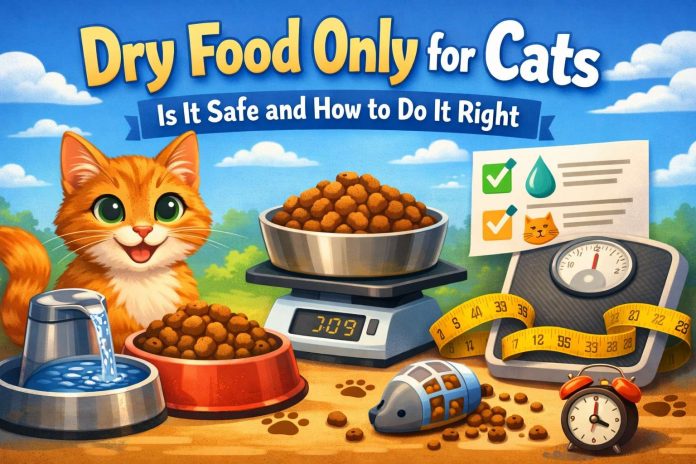
Start by measuring. So skip “a cup” unless you level it the same way every time. Then a kitchen scale gives repeatable portions, and it cuts guesswork.
Next, treat the feeding chart as a starting point. So feed the suggested amount for your cat’s weight, then watch the trend. Then adjust in small steps if the scale moves the wrong way for two straight weeks.
Use a quick body check too. So look for a waist from above. Then feel the ribs with light pressure. Plus, aim for steady weight, not a constant up and down.
Water is the make-or-break part
If your cat eats only dry food, plan water like you plan meals. So place at least two water bowls in different spots. Then keep them away from the litter box, and refresh them daily.
Try small changes that often help:
- use a wide bowl so whiskers do not rub the sides
- switch to glass or stainless steel if plastic holds smell
- add a fountain if your cat likes moving water
- keep one bowl near a favorite nap spot
Then watch your refill routine. So if you suddenly refill far more or far less, take note and talk with your vet.
If you want help picking a good indoor cat food without getting lost, use this guide: best food for indoor cats.
Meals beat a full bowl all day
Set meal times help most cats. So aim for two meals per day, or split into three or four smaller meals. Then your cat gets the same daily amount, just spaced out.
If your cat eats too fast, slow it down. So use a puzzle feeder for part of the daily kibble. Then keep the rest for a calm bowl meal.
Dry food and teeth. What to expect
Kibble does not clean teeth in a reliable way. So plan dental care directly. Then brush if your cat accepts it, and ask your vet about dental diets or dental treats if you need extra support.
Watch for early signs. So look for bad breath, red gums, drooling, or pawing at the mouth. Then book a dental check, since cats hide mouth pain well.
A simple upgrade that many cats handle well
Dry only can work. Still, many owners like a mixed routine. So serve one wet meal per day, then use measured kibble for the rest of the calories. Then water intake often improves without a big routine change.
If you want a clear daily schedule with meal timing and portion ideas, use this: what should my cat eat daily.
Warning signs you should not ignore
Call your vet fast if you see any of these:
- straining to pee
- crying in the litter box
- frequent tiny pees
- blood in urine
- no urine in the box
- repeated vomiting
- constipation that lasts more than a day or two
- fast weight loss or fast weight gain
- big change in thirst or appetite
So treat “can’t pee” as an emergency, especially for male cats. Then act the same day.
The quick daily checklist
- Measure the full day’s kibble, then split it into meals.
- Keep treats small, then count them.
- Refresh water daily, then keep more than one water spot.
- Use one feeding game per day, then watch for slower eating.
- Weigh weekly until weight stays steady, then check monthly.