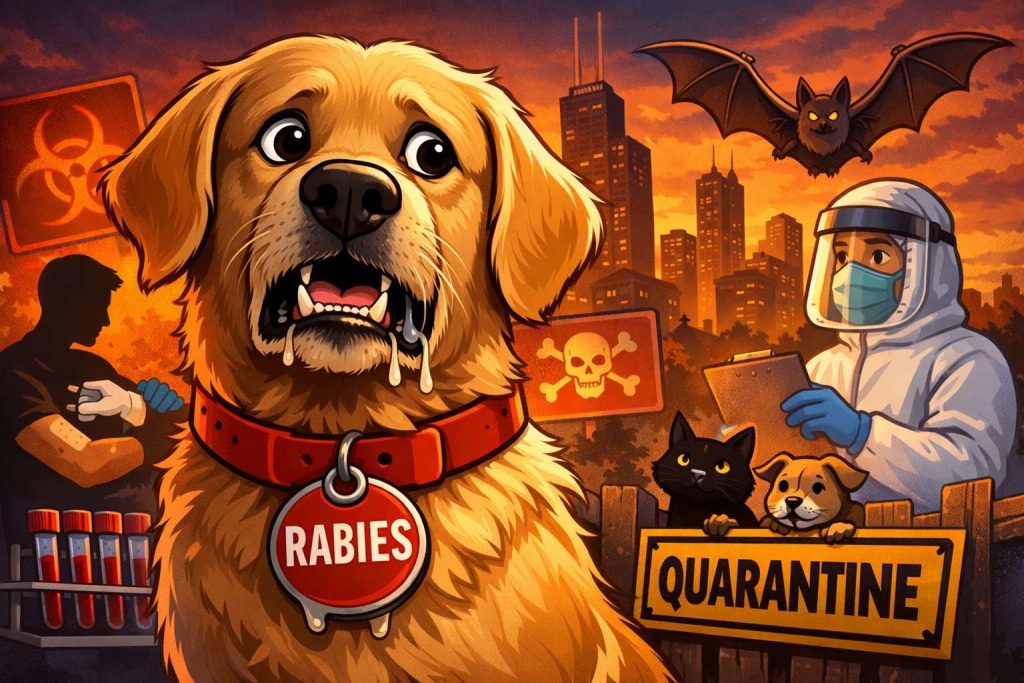
A confirmed rabies-positive dog in Chicago set off a rare public health response, and it caught a lot of people by surprise. So even if the risk to the wider public stays low, the story still matters. Rabies is serious, and quick action after a real exposure makes a difference.
What happened, step by step
Officials shared a timeline, and it helps put the case in context.
The dog received a rabies vaccination in June 2025, and everything looked routine at that point. Then, on December 11, 2025, the dog bit a person, so health teams began the usual follow-up steps. After that, on December 16, the dog showed a sudden behavior change, and that raised concerns fast. Then, on December 18, the dog was euthanized after a behavior risk assessment. Next, on December 19, lab testing confirmed rabies, and officials started strain typing to learn where the virus likely came from.
The dog came from PAWS Chicago, which received it as a puppy from a rescue partner on May 26, 2025 and saw it adopted on July 26, 2025. The adopters brought it back to PAWS on December 17, after a bite in the home and new behavior changes. Cook County called the case extremely rare.
So yes, it is a single case. Still, it becomes a community issue when bites or close contact happen.
How a vaccinated dog can still test positive
A rabies vaccine cuts risk by a lot, and that is why it is a key part of pet care. But timing still matters, and exposure can happen without anyone noticing. Rabies can sit quietly for weeks, and sometimes for months, before symptoms show. So the key question becomes simple. When did exposure happen.
Investigators look at the dog’s history, and they look for any wildlife contact. They also check the strain type, since that can point toward a likely source. In Illinois, bats are a major reservoir for rabies in animals, so bat contact often becomes a focus of the review. That does not mean every case links to bats. It just means teams start with the most realistic path, and then they narrow it down.
Update, October 17, 2026. PAWS Chicago has since updated its statement. The CDC’s strain typing was inconclusive (January 2026), so the test did not show where the virus came from. PAWS says the USDA will retest retained samples from the vaccine lot given to the dog, and the statement gives no result yet. In July 2026, Elanco Animal Health, the shelter’s vaccine maker and supplier, told PAWS that quality re-testing had found seven rabies vaccine serials below potency requirements. All of them had met manufacturing standards when first released. The serials are E155948A, E155949A, E158770A, E162767A, E162767C, E167567A and E191877A. PAWS says owners of pets vaccinated from them have been contacted about next steps, and its statement does not say whether this dog’s vaccine was among them.
Who may be at risk
Health teams focus on direct contact, and that keeps the response targeted. Officials reported that 13 people with direct contact started post-exposure care, and they reported no symptoms at the time of the update. Next, teams work to find any pets that had close contact with the dog, and then they notify owners.
So the goal is clear. Identify exposures, act fast, and stop the chain from growing.
How rabies spreads, and what does not spread rabies
Rabies spreads through infected saliva, and bites are the most common route. Saliva can enter through an open wound, and it can reach the body through the eyes, nose, or mouth. So a bite or a saliva-to-wound contact is the big concern.
At the same time, everyday contact does not spread rabies. Touching fur on intact skin does not spread it, and sharing space with an animal does not spread it. So people do not need to panic over casual contact. They just need to treat bites, scratches, and saliva exposure as urgent.
What pet owners can do today
This case is rare, but it is still a good moment to check basics.
Start with your pet’s rabies vaccine date, and call your veterinarian if anything looks off. Then keep dogs on a leash outside, and keep cats indoors when possible. Next, keep pets away from wildlife, and pay extra attention at dusk and at night if bats are active in your area. After that, block entry points at home, like attic gaps, loose screens, and roof vents.
And since everyday home risks tend to pile up, it helps to review more than one safety topic at a time. So if you want a quick reminder of common kitchen hazards, check this guide: foods cats should never eat.
What to do after a bite or saliva exposure
If a bite happens, wash the wound right away with soap and running water, and keep washing for several minutes. Then contact a medical provider the same day, and report the incident to local animal control or your local health department. Next, follow the plan you receive, even if the wound looks small.
For pets that may have had contact with a rabid animal, veterinarians and public health teams may recommend a booster shot and a period of observation. So stick to the instructions, and keep the pet under control during that window.
Why this Chicago case got so much attention
Chicago sees many public alerts, but a rabies-positive dog stands out. It is rare, and it triggers a careful response by design. So the message for pet owners stays simple. Keep vaccines current, avoid wildlife contact, and treat bites as urgent.