















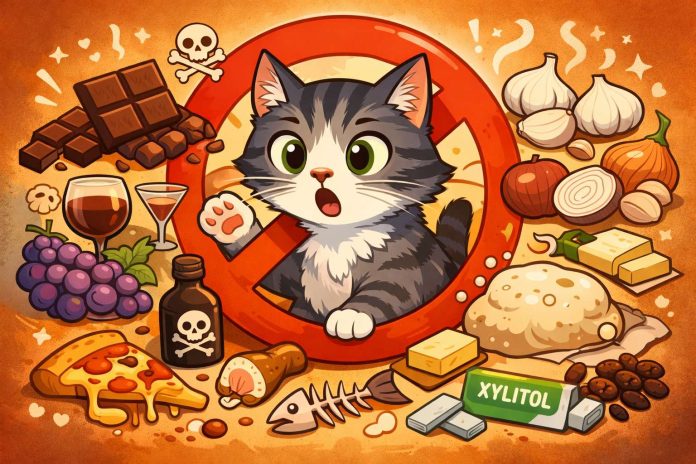
You love your cat, so sharing a bite feels kind. Still, a lot of “normal” foods can hurt cats fast. So it helps to keep a clear no list on hand. Then you can relax at mealtime.
If your cat eats any food on this list, call your vet right away. Then save the package, and write down what your cat ate and how much.
Onions, garlic, chives, leeks, and onion or garlic powder
These foods can damage red blood cells. So anemia can follow, even after small amounts. The risk shows up in fresh food and cooked food, and it stays in dried flakes and powders too.
So watch labels. Onion powder hides in soups, rubs, chips, and many sauces. Then watch for drooling, vomiting, weakness, pale gums, or fast breathing.
Chocolate, cocoa, and cacao
Chocolate contains compounds cats do not handle well. So even a few bites can cause trouble. Dark chocolate, baking chocolate, and cocoa powder carry the highest risk.
Then look for vomiting, diarrhea, restlessness, a fast heart rate, tremors, or seizures.
Alcohol, plus foods made with alcohol
Alcohol can cause vomiting and poor balance, and it can lead to breathing trouble. So keep drinks out of reach. Then clear away boozy desserts too, since cats lick plates.
Raw bread dough and yeast dough
Raw dough can rise in the stomach. So it can cause painful swelling. It can create alcohol in the gut too, which makes the situation worse.
So lock down the kitchen when you bake. Then take out trash fast, since dough scraps tempt curious cats.
Grapes and raisins
Treat grapes and raisins as unsafe. So keep them off counters. Then store trail mix and raisin bread in closed cabinets.
Xylitol, plus sugar free gum and candy
Xylitol shows up in gum, mints, and some peanut butters. So treat it as a hard no. Then keep purses, backpacks, and coat pockets closed, since cats love to sniff new smells.
Cooked bones, especially poultry bones
Cooked bones splinter. So they can choke a cat or puncture the gut. Chicken bones and turkey bones cause the most trouble, since they break into sharp shards.
So scrape plates straight into a sealed bin. Then wipe down the table, since tiny bone bits still matter.
Greasy scraps, fried foods, and fatty trimmings
Greasy foods can upset the stomach fast. Then pancreatitis can follow, which turns into a real emergency. Turkey skin, bacon grease, and creamy sauces cause problems often.
So keep the “good stuff” off the floor. Then keep the trash closed, since cats learn where the smells live.
Raw or undercooked meat and eggs
Raw foods can carry germs and parasites. So skip raw meat treats and raw egg. Then use plain cooked meat if you want a safer treat.
Milk and most dairy
Many adult cats struggle with lactose. So milk often causes diarrhea and belly pain. A tiny bite of plain cheese works for some cats, but many still react.
So offer water instead. Then stick with cat safe treats when your cat begs.
Liver as a regular food
Cats love liver, and it feels like a rich reward. Still, too much liver over time can overload vitamin A. So joint and bone problems can build up, mainly in young cats.
So treat liver as rare, not daily. Then rotate treats to keep things balanced.
Hidden dangers that sneak in from your plate
Seasonings and sauces
Plain meat looks safe, but the coating causes trouble. So avoid giving bites from seasoned food. Then watch out for:
- Onion or garlic powder in rubs, soups, and gravies
- Salty spice blends
- Hot spices and pepper sauces
- Cream sauces and buttery pan drippings
Snack foods
Chips, jerky, and processed snacks pack salt and flavorings. So cats get stomach upset, and some products include onion or garlic powder too. Then crumbs fall on the floor, which turns one snack into many.
Holidays and parties
Holiday plates bring bones, skewers, wrappers, and rich leftovers. So the risk jumps on busy days. Then clean as you go, since one dropped bite can start a scary night.
What to do if your cat eats a dangerous food
First, call your vet. Then share your cat’s weight, the food, and the amount.
Next, save the label or ingredient list. Then do not force vomiting at home unless your vet tells you to.
After that, watch for vomiting, drooling, weakness, tremors, trouble breathing, collapse, or seizures. Then go to emergency care if any show up.
Safer treat swaps that still feel special
Treats work best in small pieces. So keep treats under 10% of daily calories. Then use simple options:
- Plain cooked chicken or turkey, no skin, no seasoning
- Plain cooked fish, boneless, no salt
- A few bites of plain cooked egg
So skip table scraps. Then your cat learns one rule, and life gets easier.
Two quick pet safety reads that pair well with this guide
Cats surprise us, and their story keeps changing. So if you want a fun cat related read, check this one: Ancient DNA reveals China’s first pet cat wasn’t the house cat.
Food safety matters for dogs too, and recalls happen. So it helps to stay alert in your freezer and pantry. Then read this update: Dog owners urged to check freezers after Beefibowls frozen food recall for plastic pieces.