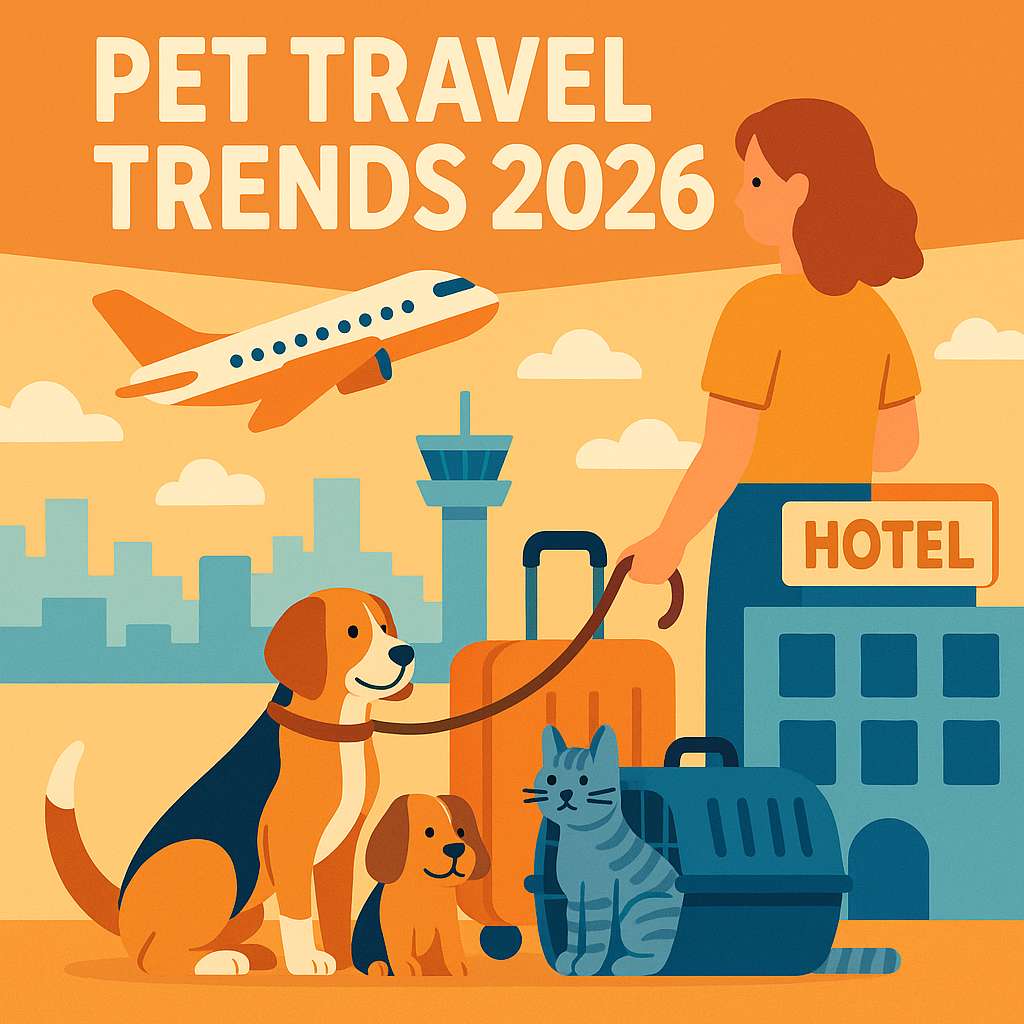
Pet travel no longer looks like a small detail in trip planning.
In the 2026 trends report from Amadeus, pets move right to the front of the story. The report uses the phrase “Pawprint Economy” to show how animals now shape routes, hotel choices and even the tech people buy for home care.
Travel brands watch this shift closely, and pet parents do the same. Many people refuse to pick between their next break and their dog or cat. They want both, and they say it clearly when they book.
Pet travel climbs to the top of the wish list
The new Amadeus trends list includes six main themes for 2026. One theme covers mixed human and AI trip planning. Another looks at new long range aircraft and more direct routes. A third focuses on trips driven by pop culture, and another covers flexible hotel products and stays.
Even so, pet travel sits at the very top of that list. This placement sends a clear signal. Pets guide more and more holiday decisions. People compare airlines based on cabin rules for animals. They check hotel policies before they confirm dates. Then they think about their own seat and room.
Many of these travelers are first time pet owners. Pet numbers grew fast in the past few years. Now that wave reaches airports, train stations and city hotels. So demand rises, and expectations rise with it.
Why the Pawprint Economy keeps growing
Three simple drivers sit behind pet travel trends 2026. There are more pets. Spending on pets goes up. Emotional bonds feel stronger than before.
The report leans on a Mars study of 20,000 people worldwide, published in October 2024, which found that 56% own a pet and 47% describe themselves as first-time owners. That alone puts pressure on transport and lodging. It also cites a Bloomberg forecast that the global pet industry will grow by 45% by 2030, to a value of $500 billion.
Then there is the bond itself. Many people see their dog or cat as a full family member. They want safe trips, clear rules and kind staff. They want simple tools that help them keep animals calm on the road. For new pet parents, a clear safety checklist makes daily life easier, and guides such as the pet safety 101 guide for beginners support that long before the first big trip.
A Shape Insight survey behind the Amadeus report points in the same direction. Of 2,896 travelers in the UK and the US, 27% of the pet parents who took their pet on their main vacation in 2025 were doing so for the first time. So we do not only see talk about “one day” trips with animals. We see real bookings and real journeys.
Even so, many owners still leave the pet at home. In the same survey, the most common reason was that the trip would have been too stressful for the animal (42%). Next came doubt that any accommodation or destination is truly pet friendly (21%) and restrictions on where pets can go at the destination (20%).
Airlines and rail start to change the rules
Transport providers now respond step by step.
In Italy, new rules from the civil aviation authority, ENAC, opened the passenger cabin to medium and large dogs. Cabin travel keeps animals close to their people, and that alone can cut stress for both.
Next, a new group of pet focused carriers enters the scene. Bark Air, K9 Jets and RetrievAir made headlines in 2025 with regional or domestic charters built around pets. SkyePets plans to go further in 2026 with long-haul in-cabin pet flights across the Pacific between Australia and the US.
Rail operators pay attention as well. In 2025, China Railway Express piloted pet-friendly journeys on its busy Beijing to Shanghai route, which the report calls the groundwork for a wider rollout.
Step by step, these moves confirm the core trend. Pet travel shapes core offers in air and rail. It no longer sits in a side tab under “special services”.
Hotels and airports rethink the stay for four legged guests
Once travelers land, the work is not over. Hotels and airport services change as the same wave grows.
Some hotel brands now build pets into their loyalty programs. AKA Hotels launched a Canine Club in April 2025. Returning dogs find an in-room welcome note, a toy, a bowl and a special bed, plus a guide to the best local walks, parks and grooming spots.
At Rome’s Fiumicino airport, the Dog Relais pet hotel has reworked the vacation kennel with underfloor heating and aromatherapy balms meant to ease the stress of separation for pets and owners.
Standard hotels update their policies as well. Clear websites and booking flows now spell out points such as:
- How many pets can stay in one room
- Weight or size limits for each pet
- Extra cleaning or nightly fees
- Access to outdoor space or nearby parks
- Whether beds, bowls and treats come with the room
When guests see these points in advance, check in runs smoother. Staff spend less time on arguments at the desk. Guests feel welcome instead of nervous.
Tech steps in for pets who stay at home
Plenty of pets still stay at home while people travel. Even then, pet travel trends 2026 shape new habits.
One feeder the report names, Petkit’s Yumshare Daily Feast, uses AI to recognize individual pets, reports unusual eating, clears leftovers automatically and sterilizes itself with UV light. Its other example, the PetPace collar, measures biometrics and gives owners round-the-clock access to veterinary telehealth. Home cameras let people see and talk to their pet during the day.
This type of tech helps owners take longer trips with less worry. It links daily care with travel planning in a quiet, practical way.
At the same time, travel and pet safety reach beyond dogs and cats. Exotic animals appear more often in social media and in private homes. That rise creates new pressure on welfare and on local ecosystems. So interest grows in stricter rules and better education for owners. A recent overview on the global effort to slow the exotic pet boom shows how concern about this trend now spreads across many regions.
What pet travel trends 2026 mean for you
For travelers, all of this adds up to more choice and more homework. You can search for pet friendly cabins on certain routes. You can pick hotels that show clear, kind rules for animals. You can plan breaks around safe care, both on the road and at home.
For travel brands, the Pawprint Economy brings a clear business case. Pet parents often stay loyal once they find an airline, route and hotel that treat animals with care. They come back often. They share stories with friends and online groups. They pay for extras that feel fair and helpful.
Amadeus puts pet travel at the top of its 2026 list for good reason. Pets now sit at the center of many holiday plans. Brands that listen and adapt early build trust that can last for years.