
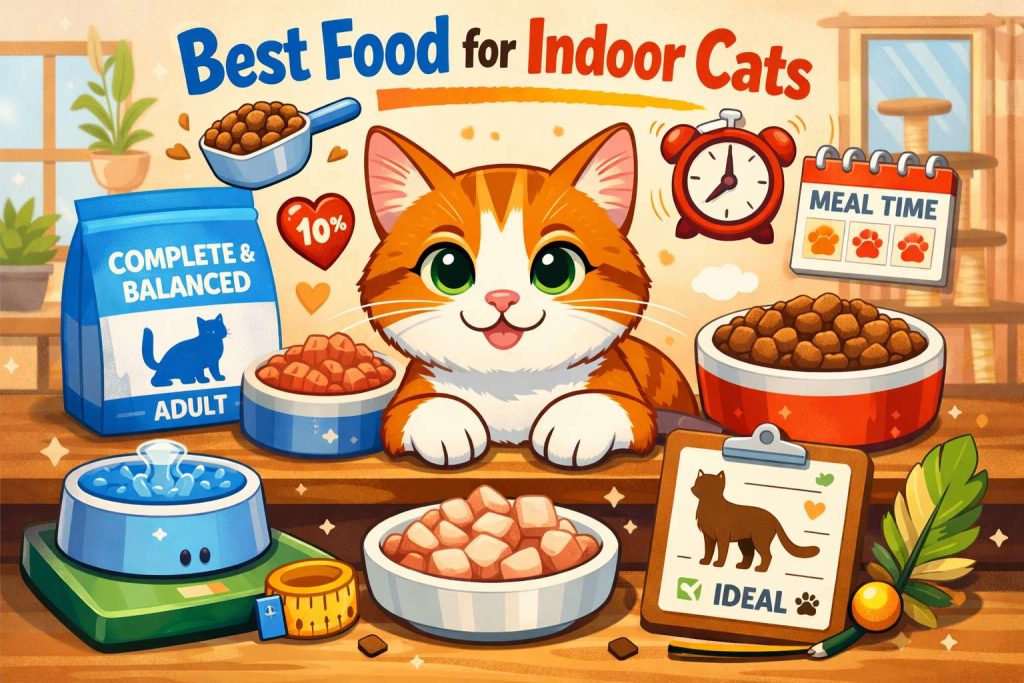
Indoor cats live close to the food bowl. So small choices add up fast. A little extra kibble each day can turn into extra weight over a few months. At the same time, some indoor cats drink less water than they need. So the “best food” is the one that supports a healthy weight, steady energy, and good hydration.
This guide keeps it simple. You will know what to look for on the label, how to pick wet vs dry, and how to feed without guessing.
Start with the one label line that matters most
First, check the life stage. Then, look for wording that says the food is complete for that stage.
Common life stages you will see:
- Kitten
- Adult
- Senior
- All life stages
If the label says “supplemental,” “intermittent,” or “complementary,” skip it as the main diet. Use it as a topper or treat instead. That single step saves you from a lot of problems later.
Indoor cats need fewer calories. So check kcal, not the marketing
Many bags say “indoor.” That can be fine. Still, the calorie number matters more than the word on the front.
So do this every time:
- Find the calories listed as kcal per cup for dry food, or kcal per can or pouch for wet food.
- Measure the daily amount. Use a kitchen scale if you can. It feels annoying at first, then it becomes normal.
- Split the food into set meals. Then pick the bowl up after 20 to 30 minutes.
Now you control the real issue. Calories.
Wet vs dry vs mixed feeding
Next comes the big choice. Wet, dry, or both. Each can work if the food is complete and balanced for your cat’s life stage. The better pick depends on your cat’s habits and your routine.
Wet food
Wet food brings more water per bite. So it often helps indoor cats that drink very little.
Wet food is a strong pick if your cat:
- Gains weight easily
- Has dry stools
- Leaves water bowls untouched most days
It can cost more, and it takes more storage space. Still, many owners like how it supports hydration without extra effort.
Dry food
Dry food is simple to store and simple to measure. That is the good part. The tricky part is calorie density. One “extra little scoop” can be a lot.
So if you use dry food:
- Avoid free feeding all day
- Use a real measuring cup, not a random scoop
- Put the bag away after measuring, so you do not top off the bowl without noticing
Mixed feeding
Mixed feeding is popular for a reason. It keeps life easy, and it can help with both weight and hydration.
A simple pattern looks like this:
- Wet food for one meal
- Dry food for one meal
- Small measured portions, not a full bowl
Then adjust based on your cat’s weight trend and appetite.
What matters on the ingredient list
After that, look at the first few ingredients. You want a named animal protein near the top, such as chicken, turkey, salmon, or beef.
That said, the ingredient list does not tell the full story. So use it as a quick filter, not as the final answer.
A better checklist looks like this:
- Complete and balanced for the right life stage
- Clear calorie information
- A feeding guide that gives portions by weight
- A brand that provides full nutrition details when asked
Ignore buzzwords that do not prove quality. “Indoor,” “premium,” and “natural” can mean many things. The nutrition facts matter more.
Portion control that actually works
Now let’s talk about the part most cats hate. Smaller portions.
Do not change everything overnight. Instead, make small moves you can stick to.
Try this:
- Start with the label feeding guide.
- Feed that amount for 14 days.
- Weigh your cat once a week in the morning.
- Take a quick photo from above once a month.
Then adjust the daily calories in small steps if weight climbs.
If your cat needs weight loss, go slow. Rapid weight loss can be dangerous for cats. So keep changes steady and controlled, then track results.
If weight is a big struggle in your home, you may want to read about new options vets are testing, including a longer term implant approach. This article explains the idea and why it matters for overweight pets: weight loss drug for cats moving into trials.
Use a body check, not the scale alone
The scale helps, yet it can fool you. Coat fluff and body shape matter too. So do a simple monthly body check.
A healthy look often means:
- You can feel ribs with light pressure
- You see a waist from above
- The belly does not swing side to side when the cat walks
If you cannot feel ribs at all, cut calories a little and tighten treat habits. Then recheck in two weeks.
Treats are where plans break
Treats feel small. Then they pile up.
So set one rule and keep it.
- Treats stay under 10% of daily calories.
Easy swaps help a lot:
- Use a few pieces from the daily kibble portion as treats
- Offer tiny bites of plain cooked meat with no seasoning
- Use play as a reward, then give fewer food rewards
If your cat begs hard, try a puzzle feeder or a slow feeder. Then the meal lasts longer, and your cat stays busy too.
A simple daily feeding plan for indoor cats
Here is a plan you can start today. It is boring on purpose. Boring plans get results.
Step one. Pick the main diet.
Choose one complete and balanced food for the right life stage.
Step two. Set meal times.
Feed 2 to 4 meals per day. Set meals make portions easier.
Step three. Support hydration.
Add a water bowl in a second spot. Then clean bowls often. Many cats drink more from fresh, clean bowls. A fountain can help too.
Step four. Add movement.
Short play sessions work well indoors. Five minutes, then a break, then five more. Do this once or twice per day, then build up if your cat enjoys it.
If you are new to pets or you want a simple safety routine at home, this beginner guide can help you cover the basics without stress: Pet Safety 101 for new pet parents.
What to avoid for indoor cats
Some habits cause trouble fast. So watch for these.
- Free feeding dry food all day
- Frequent food switches
- Large treat portions
- “People food” as a daily routine
Skip these as regular diets:
- Dog food
- Homemade diets without a complete nutrition plan
- Raw diets without vet guidance
Red flags that need a vet check
Finally, keep an eye on signs that point to a real health issue.
Call your vet if you see:
- No eating for a full day
- Repeated vomiting
- Big changes in thirst or urination
- Sudden weight loss
- Straining in the litter box
Those signs need medical help. A new bag of food will not fix them.