Bringing home a new pet feels exciting, and a little scary at the same time.
You look at that small face and want to get every detail right.
This guide walks you through the basics of pet safety so you can feel prepared instead of worried.
Think of pet safety as part of daily life, not a separate project.
Good habits protect your pet, protect your family, and reduce last-minute vet visits.
Then you can focus more on the fun parts, like play, training, and quiet cuddles at the end of the day.
In the sections below, you will see how to set up your home, handle food safely, plan for health care, and prepare for travel and emergencies.
The examples focus on dogs and cats, yet many tips apply to small indoor pets as well.
Shifting into the “pet parent” mindset
The first step in Pet Safety 101 happens before you buy a bed or fill a bowl.
It starts with how you think about your new companion.
Your pet depends on you for food, water, shelter, comfort, and protection.
So every choice you make, from the cleaner you spray on the floor to the toys you leave on the carpet, plays a small role in safety.
Instead of aiming for perfection, aim for steady learning.
You will make mistakes, then you will adjust.
What matters is that you pay attention, notice small changes, and act early when something feels wrong.
A simple way to frame this is:
- Try to prevent common problems.
- Watch for early warning signs.
- Ask for help from a vet before an issue grows.
As soon as your new pet comes home, plan a first vet visit.
Booking it within the first week works well for most families.
During that visit, you can talk about vaccines, parasite control, diet, behavior, and specific risks in your area, like ticks or heat.
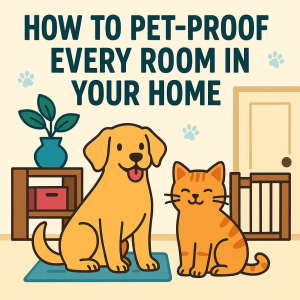
Pet-proofing your home before arrival
Before your pet walks into the house, take ten or fifteen minutes to move through your home at “pet level”.
Look under tables, behind sofas, beside bins, and around cables.
This quick check removes many dangers before they ever appear.
Dealing with everyday indoor hazards
Start with the most obvious physical risks.
Cables and cords run through almost every room, and young animals love to chew.
Tape loose wires to the wall, place them behind furniture, or hide them in cord covers, so curious teeth stay away from them and accidental shocks stay off your list of worries.
Next, pick up small objects.
Coins, batteries, hair ties, Lego bricks, buttons, and tiny toys all look like fun to chase and chew, yet they can lodge in the throat or cause serious gut problems.
It helps to scan under coffee tables and around sofas, since that is where many small items slide and disappear.
Then look for plastic bags, food wrapping, and soft packaging.
Store them inside bins with lids or closed drawers.
Pets can get their heads stuck in a bag or swallow pieces that block digestion.
Windows and balconies deserve a separate look.
Fit solid screens on windows, especially on higher floors, and close tilt windows when you cannot supervise cats.
On balconies, check that railings do not leave gaps wide enough for a small body, and move furniture away from edges so it does not turn into a jumping platform.
Finally, remember appliances.
Make a habit of closing washing machines, dryers, ovens, and dishwashers right after use.
Curious cats and small dogs often climb into warm or dark spaces, and it only takes one rushed day to miss them.
Storing chemicals and other toxic products
Once you clear physical hazards, turn to products that can poison a pet.
Many of them sit in plain sight.
Collect cleaning sprays, bleach, strong disinfectants, laundry pods, softener sheets, paint, solvents, glue, human medicine, vitamins, pest control products, and rodent bait.
Place them in high cabinets or closed closets that your pet cannot open.
If you keep any of these under the sink, add childproof latches to the doors.
Set a simple house rule as well.
No one gives human medicine to the pet unless a veterinarian has approved that exact product and dose.
This keeps painkillers and other common drugs from turning into an emergency.
Plants and home fragrances
Plants and scents make a house feel pleasant, yet some of them do not mix well with pets.
Look through your plants and check whether any of them are known to be toxic to dogs or cats.
If you ever feel unsure, treat the plant as unsafe for now.
Place it on a high shelf or in a room where the pet will not go, or replace it with a safer choice.
Home fragrances also need a bit of care.
Strong sprays and some essential oils can irritate a pet’s nose, eyes, or airways.
Try to use diffusers only in well-ventilated rooms, and avoid applying oils straight to fur or skin unless a vet has recommended a specific product.
Creating a safe, comforting base camp
Once you have handled the obvious hazards, you can think about comfort and emotional safety.
A new home feels noisy and confusing to most animals, so a stable “base camp” helps them relax.
Setting up the rest zone
Choose a quiet corner away from doors, stairs, or loud speakers.
This space will become your pet’s go-to place for rest and calm.
Place a bed or crate there, with soft bedding that you can wash easily.
Add a water bowl that your pet can reach without crossing busy paths.
If you have a cat, put a litter box somewhere nearby, yet not right next to the food and water area.
For a dog, add a couple of safe chew toys and maybe a blanket that smells like you.
Then explain to the family that this is a “no-disturb” zone.
If the pet goes there, it means “I need a break”.
Children can still enjoy time with the animal, yet they should not poke, pull, or lift the pet while it rests in that corner.
Crates help many dogs feel safe, and they are useful for travel and house training.
The crate should be large enough for the dog to stand up, turn around, and lie down comfortably.
Use it as a cozy den, not as a punishment box.
Safe spaces for different kinds of pets
Different pets feel safe in slightly different ways, so small adjustments matter.
Most dogs enjoy a bed on a flat, non-slip surface away from stairs and direct drafts.
Many like to tuck themselves into corners, where two sides of the space already feel protected.
Cats often prefer to combine height and hiding spots.
You can add a cat tree, wall shelves, window perches with solid supports, and simple cardboard boxes with cut-out doors.
This gives them choices, so they can watch the room or retreat when they feel unsure.
Small pets such as rabbits and guinea pigs need sturdy enclosures with solid flooring, gentle bedding, and protection from drafts and direct sunlight.
Place their cage or pen in a part of the home where noise remains moderate and people pass by at a steady, calm pace.
Once everything is in place, take one more look for wires, blind cords, and hanging strings near beds and perches.
It is easier to move them now than to untangle a frightened cat later.
Making indoor life safe day by day
After the first setup, safety becomes part of normal routines.
Daily habits have more impact than any single gadget or product.
Clean, comfortable routines
Food bowls, water bowls, bedding, and litter boxes collect germs and smells over time.
When you wash them on a regular schedule, your home stays fresher and your pet stays healthier.
Aim to wash food bowls after every meal or at least once per day.
Rinse and refill water bowls with fresh water every day, and more often if you live in a warm climate or your pet drinks a lot.
Choose cleaning products that rinse off well, especially on floors and surfaces that pets lick or sleep on.
Whenever you use stronger cleaners, open a window or door for a short time and let the room air out.
After feeding, cleaning litter, or picking up waste, wash your hands with soap and water.
This simple step protects both you and your pet from many common germs.
Safe and engaging indoor play
Play is where safety and happiness meet.
Pick toys that match your pet’s size and play style.
A large dog needs thicker, more durable toys, while a tiny dog or cat does better with smaller, lighter options.
Look for toys that stay in one piece during normal chewing and batting, and discard anything that starts to crack or shed pieces.
Soft toys with sewn features are often safer than ones with hard plastic eyes or noses, since loose plastic parts can be swallowed.
String toys, ribbons, and feather wands work best during supervised play.
Once playtime ends, store them in a drawer or box that your pet cannot open.
Besides physical toys, add mental challenges.
Short training sessions, puzzle feeders, scent games, and hide-and-seek with treats help dogs relax and think.
For cats, moving toys that mimic prey, climbing structures, and window views can turn a small space into an interesting territory.
Rotating toys every week or two keeps things fresh without constant shopping.
The toy feels new again when it appears after a short break.
Staying safe outside and on the road
Many pets spend time outside, travel with the family, or both.
For that reason, Pet Safety 101 has to cover more than the living room.
Identification that stays with your pet
Every pet that can get out of the home needs clear identification.
This applies even to indoor cats, since accidents with open doors happen fast.
Start with a collar and an ID tag that shows your phone number.
Then speak with your vet about a microchip, which is a tiny device placed under the skin that links to your contact details in a registry.
Once your pet has a chip, keep your information in that registry up to date.
Every time you move or change your number, log in and update the record.
It takes only a few minutes, yet it greatly increases the chance of a happy reunion if your pet gets lost.
Yards, gardens, and balconies
Next, step outside and look at the spaces your pet may explore.
Walk along your fence and gate and check for loose boards, bent metal, or holes under posts.
Dogs can squeeze through smaller gaps than most people expect, and some will dig under fences if they see something interesting on the other side.
Fill holes and fix weak spots before you let your dog roam alone.
If your home has a pool, pond, or hot tub, add covers and barriers whenever they are not in use.
Not every animal knows how to swim well on the first try, and some panic when they fall into water, which makes climbing out much harder.
Balconies and high windows need attention too.
Use sturdy mesh or clear panels to close gaps in railings, and move furniture away from edges so it does not become a jump platform for cats or small dogs.
Then check that window screens fit firmly and cannot be pushed out.
Walks and car trips
Safe walks and safe travel go hand in hand.
Choose a collar or harness that fits well.
You should be able to slip two fingers between the strap and your pet’s neck or chest, yet the collar should not slide over the head when gently pulled.
During walks, keep your dog on a leash in busy areas and near roads.
Avoid close contact with stray animals, and try to steer clear of puddles and stagnant water.
Always pick up waste and use bins, which keeps public areas cleaner and reduces the spread of parasites.
In the car, treat pet safety as seriously as seat belts for people.
Use crash-tested harnesses connected to seat belts or fixed crates and carriers in the back seat or cargo area.
Do not let dogs ride on laps or stick their heads out of open windows, since debris, strong wind, and sudden stops all create risks.
Never leave a pet alone in a parked car, even for “just a few minutes”.
Inside temperatures rise quickly, and heat stroke can develop in a very short time, even on mild days.
Before you open car doors in new places, attach the leash to the collar or harness.
Many pets feel nervous in strange parking lots and may bolt if they hear a sudden noise.
Food and water safety
Food is both comfort and medicine for a pet.
Handled well, it supports long-term health.
Handled poorly, it can cause stomach upsets, weight gain, or serious illness.
Choose a complete diet made for your pet’s species, age, and size.
If you feel lost in the number of brands and labels, ask your vet for a simple, solid choice and adjust over time based on how your pet responds.
Fresh water should be available all day.
In warm weather or for very active animals, refill bowls more often.
Keep certain human foods away from your pet completely.
Some of the most common risky foods include chocolate, grapes and raisins, onions and garlic, alcohol, anything with xylitol such as some sugar-free gum and candy, macadamia nuts, and drinks that contain caffeine.
Store these items in closed cupboards or the fridge, not on low tables where a pet can reach them.
If your pet eats something that might be dangerous, call your vet or a pet poison hotline right away.
Do not wait to see whether symptoms appear, since early action often makes treatment easier.
Serve measured meals instead of leaving a bowl full all day.
Use the feeding guide on the package as a starting point, then review the amount with your vet based on body condition and activity.
A steady routine with set meal times helps with house training and keeps weight under better control.
Place food and water bowls in a calm corner, away from heavy foot traffic.
If you have more than one pet, use separate bowls and allow some space between them, so mealtime does not turn into a competition.
Raw meat diets require special hygiene.
If you choose that route after discussing it with your vet, wash hands, tools, and surfaces thoroughly after each preparation and feeding.
Health care as part of safety
A clear health plan is not only about treating illness.
It is a key part of keeping your pet safe throughout life.
Work with your veterinarian to set up a schedule that covers vaccines, parasite control, dental checks, and regular weight reviews.
Vaccines help guard against serious diseases, while deworming and flea or tick control protect both your pet and your family from parasites.
Keep records of each visit in a folder or a digital note.
Store the clinic phone number in your contacts and place it somewhere visible at home, like the fridge, so anyone in the house can find it quickly.
Ask your vet about the best time to spay or neuter your pet.
The right moment can vary with species and breed.
This step lowers the risk of certain cancers and reduces roaming, fighting, and some problem behaviors, and it prevents unplanned litters.
Use grooming time as a simple health check.
As you brush your pet, look for redness, bald areas, or flaky skin.
Take a quick look at ears for redness or strong smell, eyes for cloudiness or heavy tearing, teeth and gums for tartar and swelling, and paws and nails for cracks or pain.
Contact your vet if your pet eats much less than usual, drinks far more, seems unusually tired, limps, vomits repeatedly, has ongoing diarrhea, or has trouble breathing.
Acting early often keeps a small problem from turning into a crisis.
Helping kids and guests interact safely
Many bites, scratches, and frightened reactions come from simple misunderstandings.
So teaching people how to act around animals is just as important as teaching your pet basic manners.
Start with body language.
Explain to children and regular visitors that a stiff body, tucked tail, flattened ears, growling, hissing, lip licking, yawning, or turning the head away are signs that the pet needs space.
Whenever you see those signals, end the interaction gently and let the animal move away.
Set a few clear rules for children.
Let the pet come to them, not the other way around.
Show them how to stroke the back or side instead of grabbing the face or tail.
Make it clear that they must not ride, squeeze, or pull on the animal, and that they should keep their faces away from the pet’s face.
Explain that sleeping, eating, and chewing are “do not disturb” times.
If the pet is in its bed, at the bowl, or working on a chew toy, children should watch from a distance instead of stepping in.
Young kids always need supervision around pets.
If you cannot watch, use gates or closed doors to give everyone a safe break.
For guests, give a short briefing when they arrive.
Ask them to greet the pet calmly, avoid looming over it, and use house rules about food and treats.
A few words at the start of a visit can prevent many small incidents.
Handling holidays, parties, and trips
Special occasions change the usual routine, and that change often raises risk.
Loud sounds, decorations, travel, and rich food all affect your pet.
Fireworks, storms, and noisy parties can scare even confident animals.
Before an event like that, set up a quiet room with closed curtains, a comfortable bed or crate, fresh water, and soft background sound.
Keep doors and windows closed so a startled pet cannot run out.
Take a practical look at decorations.
Tinsel, ribbon, string, and small ornaments can look like toys, yet they cause harm when swallowed or stepped on.
Glass ornaments and light bulbs can shatter, and lit candles can burn fur or start fires.
Keep these items out of reach and never leave open flames unattended in a room with pets.
Party food brings its own set of problems.
Rich dishes, cooked bones, alcohol, and sugary snacks all create risks.
Ask guests not to feed your pet from the table, and clear plates and drinks from low surfaces once people finish.
For travel, help your pet get used to the car or carrier with short practice trips first.
Pack a dedicated pet bag with enough food for the journey and a bit extra, bottled water, bowls, poop bags, cleaning wipes, a spare collar and leash, daily medicines, and copies of health and vaccine records.
Plan regular stops for dogs so they can walk, drink, and relieve themselves in a safe area.
Try to keep feeding and walk times close to your usual routine so your pet feels as settled as possible.
Planning for emergencies
Emergencies rarely fit our schedules, yet planning for them makes a big difference.
Here, a little preparation goes a long way.
Create a pet emergency kit and store it near your main exit.
Fill it with three to seven days of your pet’s normal food in sealed containers, water bottles, lightweight bowls, an extra leash, collar, and harness, spare tags, basic first aid supplies like bandage material and saline, copies of medical records in a plastic sleeve, a list of medicines and doses, and recent printed photos of your pet.
Check this kit twice per year and replace expired items.
It takes a short time and removes one worry from stressful moments.
Then make a simple evacuation plan.
Decide in advance that if your family leaves, pets come too.
List pet-friendly hotels and boarding facilities along likely routes, local shelters or groups that accept animals in emergencies, and trusted friends or family who can take in your pet for a few days.
Keep a sturdy carrier for each cat and small pet, and maintain crate training for dogs, since many emergency shelters rely on crates.
Attach a card with your contact details and a short note about diet and medicine to each crate or carrier, so helpers know exactly what your pet needs.
A friendly daily checklist
In the end, Pet Safety 101 becomes a pattern of small actions you repeat until they feel natural.
This short checklist can sit on your fridge as a reminder.
Morning
- Refill water bowls and check they are clean.
- Serve measured food for the day or the first meal.
- Do a quick body scan during a cuddle.
- Check collar fit and tag condition.
- Confirm that doors, windows, and balconies close and latch properly.
During the day
- Offer walks or active play that fits your pet’s age and health.
- Scoop litter boxes and pick up outdoor waste.
- Inspect toys and discard damaged ones.
- Add a short training or puzzle session for mental exercise.
Evening
- Wash food bowls and wipe water bowls.
- Clean litter boxes if needed.
- Close bin lids and store food in safe places.
- Pick up small objects from floors and tidy loose cords.
- Settle your pet in a safe sleep area with access to water.
These steps might seem small on their own, yet together they build a safe, stable life for your companion.
With time, you learn your pet’s habits, fears, and joys, and you adjust your routines around them.
That is the real heart of Pet Safety 101, and it is what helps your new family member feel truly at home.