
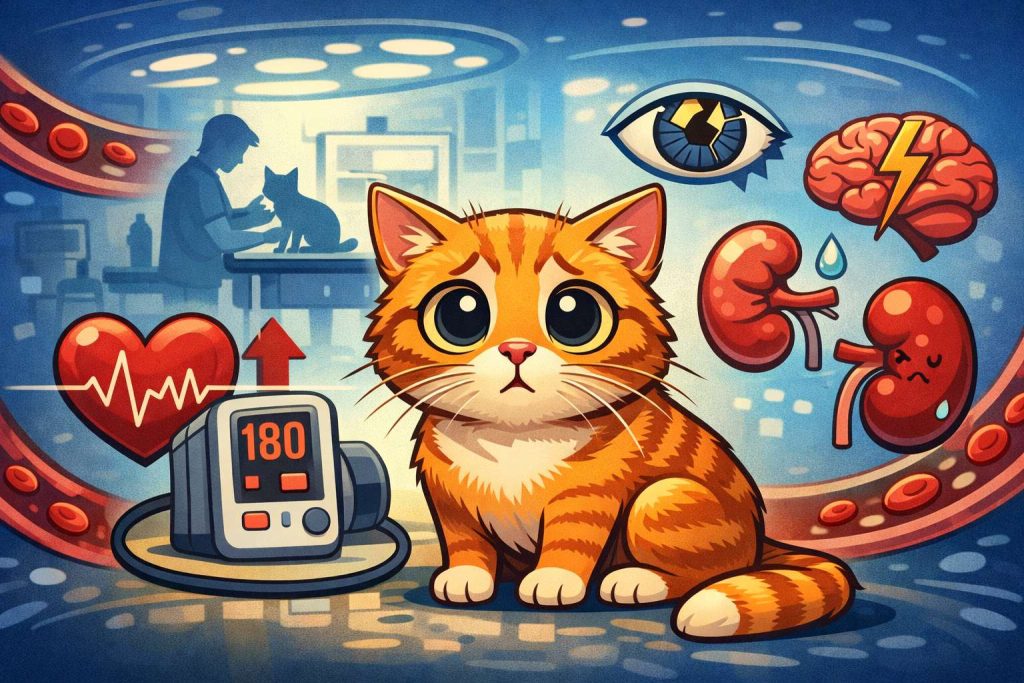
People often ask about the silent killer of cats. High blood pressure, called systemic hypertension, fits that label for a simple reason. Many cats look normal for a long time, yet damage starts inside the body.
This topic matters even more for older cats. Age brings higher risk, and some common senior illnesses can push blood pressure up. So a quick check at the vet can protect eyesight, brain health, and kidney function.
What the silent killer of cats really is
High blood pressure means the force of blood against vessel walls stays too high. Over time, that force harms delicate tissues. The eyes, brain, heart, and kidneys take the biggest hit.
The scary part is the silence. A cat can still eat, sleep, and groom. Yet the pressure keeps rising. Then one day you notice a sudden change, and it feels like it came out of nowhere.
Why high blood pressure stays quiet
Cats hide trouble. They rest more, and that can look normal. They play less, and that can look like maturity. They get picky, and that can look like personality.
Clinic stress plays a part too. Many cats tense up at the vet. So vets take several readings, not just one. Then they look for a steady pattern across calm measurements.
What high blood pressure can do inside the body
When blood pressure stays high, organs pay the price. The damage can happen fast in some cats, so early checks matter.
Eyes. Sudden blindness can be the first sign
Eye damage shows up often. High pressure can cause bleeding inside the eye. It can swell the retina. It can detach the retina. Vision can drop in hours.
Look for these clues:
- Pupils stay wide
- Eyes look cloudy or “glassy”
- Your cat bumps into furniture
- Jumps look shaky or misjudged
- Your cat seems scared in familiar rooms
Brain. Confusion and seizures can appear
High pressure can injure small vessels in the brain. Then you may see:
- Sudden confusion or spacing out
- Circling or pacing
- Head tilt or wobbliness
- Seizures
- Collapse
These signs call for urgent care.
Heart. Extra workload builds over time
The heart must push harder when pressure stays high. Over months, the heart muscle can thicken. A vet may hear a murmur. A vet may hear a gallop rhythm. Then they may suggest imaging.
Kidneys. A tough loop can form
High blood pressure can damage kidney filters. Kidney disease can raise blood pressure too. So each condition can feed the other. That loop can speed up decline if no one steps in.
Cats at higher risk
Any cat can develop hypertension. Still, some cats land in a higher-risk group, so screening helps even more.
Common risk factors include:
- Age over 7
- Chronic kidney disease
- Hyperthyroidism
- Diabetes
- Past eye disease
- Protein in urine on past tests
If your cat fits one of these, talk with your vet about routine blood pressure checks.
Signs you can spot at home
High blood pressure has no perfect early warning sign. Still, owners often notice small changes first. So it helps to watch for patterns, not one odd day.
Common clues include:
- New clumsiness or shaky jumps
- Bumping into objects
- Sudden hiding or new fear
- Staring spells or disorientation
- Dilated pupils that do not settle
- Head tilt or wobble
- Seizures or collapse
- More thirst and larger urine clumps
- Weight loss or appetite drop
- Vomiting that keeps coming back
These signs overlap with other illnesses. So a vet exam gives the real answer.
The blood pressure numbers vets look at
Most clinics focus on systolic blood pressure in awake cats. Many vets use ranges like these:
- Under 140 mmHg. Normal range
- 140 to 159 mmHg. Borderline range
- 160 to 179 mmHg. High range
- 180 mmHg and up. Very high range
One reading does not settle the issue. Repeat readings help confirm true hypertension, especially in nervous cats.
How vets test for the silent killer of cats
A blood pressure check looks simple, yet the details matter. A calm room helps. A few minutes to settle helps. Then the team places a cuff on a leg or tail and takes several readings. After that, they average the stable values.
Next comes the “why” and the “damage” check. Vets often run tests such as:
- Bloodwork for kidney markers and hydration
- Thyroid testing in older cats
- Urinalysis, often with a urine protein check
- An eye exam to look for bleeding or retinal injury
- A heart exam, and sometimes imaging
This step matters. It shows whether the blood pressure is the main problem or a sign of a deeper illness.
How often to check blood pressure
A practical plan depends on age and health history. Many vets follow a rhythm like this:
- Adult cats with no known risks. Add blood pressure checks as the cat ages
- Cats 7 and older. Check at least once a year
- Very senior cats. Check every 6 to 12 months
- Cats with kidney disease, thyroid disease, diabetes, or eye changes. Recheck every 3 to 6 months, based on the vet’s plan
Consistency wins here. A steady schedule catches trouble before it turns into a crisis.
Treatment. What happens after a high reading
Treatment targets two goals. Lower the blood pressure. Treat the disease driving it, if one exists.
Medication
Vets often prescribe a blood pressure medicine and then recheck readings. Then they adjust the dose until the cat reaches a safer range. This can take a few visits, so tracking helps.
Treat the trigger
If the cat has kidney disease or hyperthyroidism, the vet treats that too. When the root problem improves, blood pressure often becomes easier to control.
Home support that makes a difference
Simple habits at home support the plan:
- Give medicine on schedule and note each dose
- Watch appetite, thirst, and litter box output each day
- Weigh your cat weekly and write it down
- Watch the eyes for sudden pupil changes or new cloudiness
- Keep recheck visits, since targets can shift over time
So the plan stays clear, and your vet can fine-tune it faster.
Urgent signs that need same-day care
Some signs suggest organ damage is happening right now. Seek veterinary care the same day if you see:
- Sudden blindness or major vision change
- Seizure, collapse, or severe confusion
- Blood visible in the eye
- Severe weakness or breathing distress
Fast care can save sight and protect the brain.
A quick note for dog owners in the same home
Many families share life with both cats and dogs. So health topics can overlap in your routine, and that helps you stay alert.
If you follow canine cancer research, you may like this update on a simple blood test that could improve osteosarcoma care for dogs and people. Early detection themes show up there too.
If you care for an aging dog, keep an eye on brain health changes as well. This guide on dog dementia signs and early clues many owners miss can help you spot shifts sooner.
Different species, same idea. Small signs matter.
One question many owners ask
Can you stop high blood pressure before it starts. You can lower risk by catching related disease early and by screening on a steady schedule. That is the real win.