
















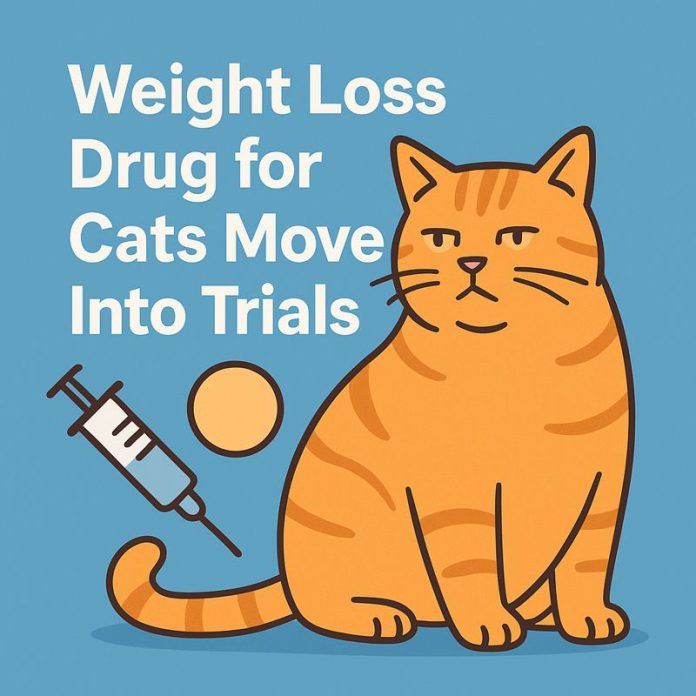
A weight loss drug for cats is now a real research race. So in 2025, veterinary teams started clinical work on GLP 1 treatments designed for cats. And these projects borrow the same drug class that changed human weight care. But they use feline dosing and cat friendly delivery.
It sounds like Ozempic. But it is not Ozempic
Many headlines say “Ozempic for cats.” But clinics are not handing out human Ozempic for pets. Instead, researchers test veterinary candidates and new ways to deliver them.
One of the most discussed programs comes from OKAVA Pharmaceuticals. So the company developed OKV 119, a small implant placed under the skin during a vet visit. Then the implant releases exenatide, a GLP 1 receptor agonist, over months. And exenatide has a long history in human medicine. But this implant format targets feline weight management.
The trial is called MEOW 1, short for “management of overweight cats with OKV 119.” So the study enrolls client owned cats and tracks progress in real homes. Then researchers watch weight change and common side effects during a three month period. And many cats can stay in the study for another three months.
A second major effort runs through Cornell University College of Veterinary Medicine with Akston Biosciences as sponsor. So Cornell evaluates AKS 562c, a once weekly GLP 1 therapy given by injection. Then the team follows client owned cats for about 11 weeks and tracks weight change and tolerability.
Why vets want a weight loss drug for cats
Vets see feline obesity every day. So they see higher diabetes risk, more joint pain, and less movement. And many overweight cats struggle with grooming, too. Then owners notice a drop in play and a rise in “tired days.”
Most clinics start with food changes and calorie targets. So vets set a goal weight and adjust portions over time. Then owners try slow, steady loss at home. But real life gets in the way. Cats beg. Treats sneak in. And multi pet homes make portions messy.
That gap drives interest in GLP 1 drugs for pets. So researchers ask a simple question. Can a cat safe GLP 1 plan reduce appetite and help cats eat less without causing harm. The trials aim to answer that in a measured way.
Two paths. Implant versus weekly shot
The MEOW 1 implant approach tries to remove daily friction. So owners do not need to dose pills or give injections at home. Then a vet places the implant once and checks progress during follow ups. And that model fits families who struggle with routines. But it still needs close monitoring, especially early on.
The Cornell and Akston approach tests weekly dosing. So vets can pause treatment fast if a cat reacts poorly. Then they can adjust the plan with less guesswork. And owners still visit on a clear schedule.
Both paths chase the same goal. So they want steady weight loss, not a sudden drop. And that matters for cats. Rapid weight loss can trigger hepatic lipidosis, a dangerous fatty liver problem. So vets watch intake, energy, and body condition, not only the scale.
What vets watch during these trials
Researchers track more than a number. So they monitor appetite, vomiting, stool changes, and hydration. Then they check body condition score and muscle tone. And muscle loss matters, since cats need strength to jump and move well. But scale weight alone cannot show that.
Owners play a big role in the data, too. So they report energy, play time, and interest in food each day. Then vets can spot patterns early. And that daily feedback helps the team separate “normal adjustment” from “too much appetite loss.”
This work tests clinic reality as well. So vets ask whether these treatments fit normal practice flow. Then they look for simple dosing rules, clear follow ups, and a plan owners can stick to. And regulators will want careful safety tracking.
For a related example of how regulators can open new paths for veterinary care during urgent animal health threats, see this report: FDA emergency use authorization gives vets a new option for screwworm in cats.
What comes next
Early readouts start to arrive in 2026. So the next steps hinge on safety data and real world weight change. Then regulatory review follows later. And broad clinic use comes after that.
For owners, one rule stays clear right now. So do not give a cat human GLP 1 drugs without a veterinarian. Cats need cat specific dosing and monitoring. And these trials exist to build a safer path.