Living with a dog or cat feels great. You get cuddles on the sofa, a happy face at the door, and tiny paws following you around. You also get one honest problem. Most homes are built for people, not for curious animals.
Cords, pills, snacks, plants, and cleaners sit right where noses and paws go. So your job is to spot these troublemakers and fix them before something happens. The good news is that you do not need fancy gear. Simple habits and a few smart tools make a huge difference.
If you are at the very start of your journey with a dog or cat, you may want a bigger picture first. For that part you can read this complete beginner’s guide for new pet parents, then come back to this room-by-room checklist.
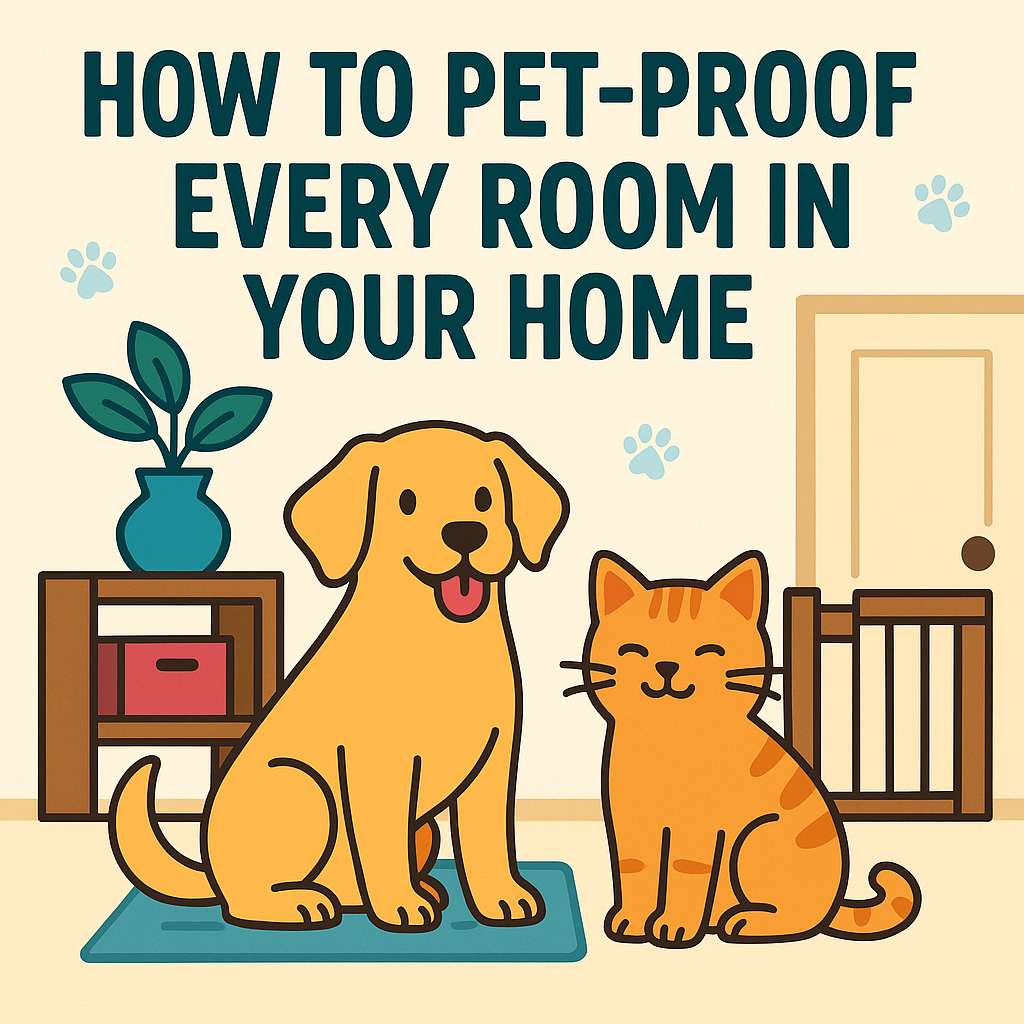
Now let’s walk through your home together. We will move from the front door through each room and out to the balcony or yard. You can follow all steps in one weekend, or you can tackle one room at a time.
Step One. Do a Quick Whole-Home Scan
Before you dig into each room, take a slow walk through the whole place. This part sets the base for everything else.
Look from your pet’s eye level
Sit or kneel on the floor in your main rooms. Then take a long look around. You will spot things that were invisible when you stood up. For example, you might notice:
- Chargers and cables across the floor
- Tiny toys or building bricks
- Coins, batteries, and buttons
- Dropped pills or vitamin tablets
Anything that fits inside a mouth should leave the floor right away. Pick it up and put it in a bowl, drawer, or trash.
Lock away the biggest hazards
Next, make a fast sweep for four main danger groups.
- Human medicine and vitamins
- Cleaning sprays, detergents, and dish tabs
- Pest control products and rodent bait
- Tobacco products, vapes, and alcohol
These items go in high cabinets, locked boxes, or closets. Handbags and backpacks count here as well, since many people keep pills, gum, or candy in them. Try to keep bags off chairs and floors.
Learn your “no” list for food and plants
Some daily foods cause real trouble for pets. For example, chocolate, grapes, raisins, onions, garlic, xylitol sweeteners, raw bread dough, and alcohol stay off the menu. The same goes for cooked bones that splinter.
Many popular plants can hurt pets too. Lilies are very risky for cats, and sago palm is risky for dogs. Before you bring a new plant home, search its name plus “dog” or “cat” on a trusted vet site. Then either place it well out of reach or pick a safer plant.
Once this quick scan looks good, you are ready to pet-proof room by room.
Entryway and Hallways
The entryway is the main path between the outside world and your sofa. Doors open wide here, and excitement runs high. So this is the first spot to fix.
Main risks
- Pets rushing out through open doors
- Slippery floors with no grip
- Chewed shoes and bags that hold gum or pills
- Small items like keys, coins, or screws on the ground
How to make this area safer
Add a gate or barrier near the front door
A solid pet or baby gate keeps fast dogs from bolting outside. It also gives shy pets a place to hang back when guests arrive. Pick a height that your dog cannot jump and bars that your small dog cannot squeeze through.
You can browse options here:
Pet and baby gates on Amazon
Create a landing zone for human stuff
Then set one clear rule. Bags, keys, mail, and shoes go in the same place every time. For example:
- Wall hooks for keys, leashes, and bags
- A tray or bowl for coins and small objects at chest height
- A shoe cabinet or bench with closed storage
This simple habit keeps medicine, snacks, and choking hazards away from the floor.
Add grip to slick floors
If your hallway has smooth wood or tile, add a runner rug with a non-slip backing. Older pets and large breeds benefit a lot from better traction. Kids do too.
You can start with:
Non-slip hallway rugs on Amazon
Living Room and Family Room
Now move to the place where everyone hangs out. The living room holds screens, cables, snacks, and decor. That mix needs a bit of control.
Main risks
- Loose electrical cords and power strips
- Remote controls and gaming gear with batteries
- Fragile glass decor within tail range
- Bowls of snacks and drinks on low tables
- Recliners or rockers that can pinch paws and tails
How to make this area safer
Cover or hide electrical cords
Start with cords. Pets chew them out of boredom or curiosity. So group cables together and use cord covers or sleeves along the floor and walls. Push power bricks and extra loops of cable behind furniture.
Here is a place to look:
Pet cord protectors on Amazon
Secure power strips and chargers
Next, tackle power strips and chargers.
- Mount power strips on the wall or back of a TV stand.
- Use outlet covers for sockets that sit close to the floor.
- Unplug phone and laptop chargers when not in use and store them in a drawer.
Protect remotes and small electronics
Batteries can burn tissue inside the mouth and throat. They can even cause deep internal injury if swallowed. So place remotes, game controllers, earbuds, and other small devices in a basket on a high shelf or in a drawer.
Switch to pet-friendly decor
Then review your decor.
- Swap low glass vases for metal or strong plastic versions.
- Move candles up high and switch to flameless candles where you can.
- Skip bowls of potpourri near the floor, since they invite tasting.
For storage baskets and organizers, you can check:
Living room storage baskets on Amazon
Kitchen and Dining Area
The kitchen smells like heaven to pets. Food, heat, and water all live here. That mix can turn risky fast, so this room deserves extra care.
Main risks
- Toxic human foods on counters and tables
- Hot stovetops, oil splatter, and hot pans
- Sharp knives, broken glass, and dropped cutlery
- Open trash cans and compost bins
- Dish tabs, sprays, and strong detergents
How to make this area safer
Use a strong, lidded trash can
A heavy trash can with a locking or step lid stops dumpster diving. This matters for chicken bones, greasy scraps, coffee grounds, and spoiled food. It also keeps plastic wrap and skewers out of reach.
Take a look at:
Pet-proof trash cans on Amazon
Lock lower cabinets
Next, block access to your most dangerous cupboards.
- Add child safety locks to cabinets with cleaners, dish tabs, or sponges.
- Lock any cabinet that stores chocolate, baking supplies, or snacks.
- Keep plastic bags inside closed storage instead of hanging loose.
These latches work well for many doors:
Child safety cabinet locks on Amazon
Create a safe feeding zone
Then set up a clear feeding corner.
- Place food and water bowls in a low-traffic area.
- Use a non-slip mat under the bowls to catch spills.
- Choose heavy stainless steel or ceramic bowls that do not tip.
- Store dry food in a sealed container to keep it fresh and dry.
Helpful items:
Adopt safer daily cooking habits
Small tweaks in your routine help a lot. For example:
- Wipe up oil, sauce, and water as soon as you see them.
- Use back burners when you can and turn pan handles toward the wall.
- Push plates and glasses toward the center of the table so wagging tails do not hit them.
Bedroom and Home Office
Now move to the rooms where you sleep and work. These spaces feel calm, yet they hide quite a few small and tempting items. Pets spend many quiet hours here, so they explore every corner.
Main risks
- Pill bottles, blister packs, and loose tablets
- Sleep aids, pain relievers, and herbal blends
- Cosmetics, hair ties, and jewelry
- Laptop, lamp, and phone cords
- Essential oil diffusers, wax warmers, and room sprays
How to make this area safer
Lock up medicine and cosmetics
First, gather every pill bottle and packet. Place them all in a drawer or in a small box with a lock. Treat vitamins and supplements the same way. Ointments, nail polish, and perfumes go in closed organizers or cabinets.
A simple lock box keeps everything in one safe place:
Lockable medicine boxes on Amazon
Control small items and cords
Then deal with clutter.
- Use trays or bowls for rings, earrings, and hair ties instead of leaving them loose.
- Keep paperclips, pins, and small office tools in closed containers.
- Run cables along walls or desk legs and clip them down.
- Tie up extra cable length and tuck it out of reach.
You can find cable kits here:
Desk cable management kits on Amazon
Handle scents with care
Many pets react badly to strong scents. Cats are especially sensitive. So try to use mild or unscented cleaners on bedding and rugs. Keep diffusers, wax warmers, and scented candles on high shelves. Plus, let surfaces dry and rooms air out before you let pets lick or walk on them.
Bathroom
Bathrooms look small, yet they pack many concentrated products into a tight space. One open door is enough for trouble.
Main risks
- Pain relievers and cold medicine
- Ointments, creams, and contact lens fluid
- Razor blades, tweezers, and nail tools
- Toilet bowl cleaners and drop-in tablets
- Hair ties, cotton swabs, and dental floss
- Open trash cans with used pads or tissues
How to make this area safer
Guard the door and trash
First, build a habit of closing the bathroom door. Then add a simple hook-and-eye latch if kids often leave it open. Next, replace open trash cans with bins that have firm lids. This step keeps used tissues, dental floss, and hygiene products away from pets.
You can start here:
Small lidded bathroom trash cans on Amazon
Make the toilet off limits
Toilet water mixed with cleaners or tablets is not safe to drink. Close the lid after each use. If your pet learns to nudge the lid up, add a small child toilet lock.
Here is a useful link:
Toilet locks on Amazon
Store bathroom products high and tidy
Then move on to storage.
- Shift shampoos, soaps, and razors from the tub edge into a shower caddy.
- Place floss, cotton swabs, and makeup tools into drawer organizers or boxes.
- Keep hair dryers and straighteners unplugged and off the floor.
You can find many caddies here:
Shower caddies on Amazon
Kids’ Rooms and Play Areas
If you have children, their spaces may be the most chaotic. Bright colors, tiny parts, and snacks attract pets right away. So this room needs a plan that kids can follow too.
Main risks
- Small plastic toys and game pieces
- Stuffed animals with plastic eyes or beans
- Slime, modeling clay, and craft glue
- Snacks, candy wrappers, and chewable vitamins
How to make this area safer
Set simple rules with kids
Start with one short talk. Explain that pets do not know what is safe. Then agree on a few easy rules. For example:
- Tiny toys live in closed boxes, not on the floor.
- Snacks stay at the table, not in bed or on rugs.
- Bedroom doors stay closed when kids leave the room.
Kids often like the idea that they help keep their furry friend safe.
Use closed storage
Next, give them tools that make the rules easier.
- Bins with lids for toys and craft supplies.
- Lidded boxes for board game pieces on higher shelves.
- A laundry hamper with a lid for socks and underwear.
You can browse:
Watch for string, ribbons, and rubber items
Then keep an eye out for long, thin items. String, ribbons, yarn, and rubber bands all tempt pets. Swallowed pieces can knot up inside the gut. So store these in closed boxes and throw away scraps right away.
Laundry Room and Utility Spaces
Now move to the laundry room or utility space. These areas hold harsh liquids, powders, and hot machines. At the same time, many pets love the warm corners here.
Main risks
- Laundry pods, liquid detergent, and powder
- Bleach and drain cleaner
- Fabric softener sheets
- Hot dryers, irons, and ironing boards
- Coins, keys, and other pocket items
How to make this area safer
Store chemicals out of reach
First, put all detergents, pods, and softener sheets into high cabinets or locked storage. Bleach and strong cleaners go there too. Tight caps and closed doors matter a lot here, so double-check them after each use.
Wall cabinets help with this:
Wall storage cabinets on Amazon
Treat machines with extra care
Then think about machines.
- Keep washer and dryer doors shut when not in use.
- Check inside the drum before every cycle, since some cats love to hide there.
- Keep pets out of the room while machines run, in case hot water or steam leaks.
Sort small items before washing
Pocket clutter can turn into choking hazards. So place a small bowl or tray on the washer and empty pockets into it before clothes go in. Throw away or store coins, receipts, and batteries right away.
Useful sets:
Laundry basket sets on Amazon
Balcony, Yard, and Garage
Last, step outside. Balconies, yards, and garages bring fresh air and fun playtime. They also add risk from height, tools, and cars. With a few changes, these spaces can be safer too.
Main risks
- Open railings and high drops
- Fertilizers, weed killers, and ice melt products
- Antifreeze, fuels, paints, and solvents
- Sharp tools and garden equipment
- Car doors and moving vehicles
How to make these areas safer
Secure balconies and decks
First, look at every gap a pet can slip through. Add mesh or clear panels to railings so small dogs and cats stay inside. If your pet climbs or jumps near the edge, block that area off. Window and balcony screens should fit tight with no tears.
You can start with:
Balcony safety netting for pets on Amazon
Lock away garage and garden chemicals
Then gather the risky products.
- Antifreeze, fuels, and motor oils
- Fertilizers, weed killers, and pest sprays
- Paints, solvents, and glue
Place them in locked cabinets or on high shelves in the garage or shed. Clean spills right away and throw used rags into sealed bags.
You can use:
Lockable outdoor storage cabinets on Amazon
Create a safe outdoor pet zone
To finish this part, build a safe hangout spot.
- Use a fenced corner of the yard or a portable exercise pen.
- Add shade, fresh water, and a soft surface to lie on.
- Walk the yard now and then to remove mushrooms or toxic plants.
Helpful gear:
Portable pet playpens on Amazon
Daily Habits That Keep Your Pet Safer
Pet-proofing does not end once the gear is in place. Daily habits make the real difference, and they do not need much extra time.
Tidy small things as you go
Pick up dropped food, toys, and small objects the moment you notice them. Close trash bags and move them to bins instead of leaving them near the floor. Then teach everyone in the house to follow the same rule.
Read labels with your pet in mind
When you buy a new cleaner, pesticide, plant, candle, or room spray, stop for one extra minute and read the warning label. If a product looks harsh, choose a milder version or keep pets away from treated areas until everything dries.
Plan for emergencies in advance
A small plan saves time when you feel stressed.
- Save your regular vet’s number in your phone.
- Add the nearest emergency clinic.
- Write both on a card and place it on the fridge.
Watch for early warning signs
If your pet vomits, drools more than normal, walks in a strange way, acts very tired, or seems confused after time alone, contact a vet right away. Quick action can change the outcome in many cases.
Simple Room-by-Room Checklist
Here is a short list you can print and keep where you see it often.
- Entryway and hallways. Gate by the door, hooks and trays for keys and bags, non-slip runner.
- Living room. Cord covers, safe power strip placement, basket for remotes, sturdy decor.
- Kitchen. Lidded trash can, locked lower cabinets, safe feeding zone, clear counters.
- Bedroom and office. Locked medicine box, tidy small items, cable management, gentle scents.
- Bathroom. Closed door, lidded trash, toilet lid down or locked, high storage for products.
- Kids’ rooms. Bins with lids, easy rules about tiny toys and snacks, doors closed.
- Laundry room. Chemicals in high cabinets, doors shut on machines, pocket check before washing.
- Balcony, yard, garage. Railings blocked, chemicals locked away, safe fenced play zone.
Pick one room this week and fix the top three issues there. Next week, move to the next space. Step by step, your home turns into a place where your pet can roam, nap, and play with far less risk and far more peace for you.