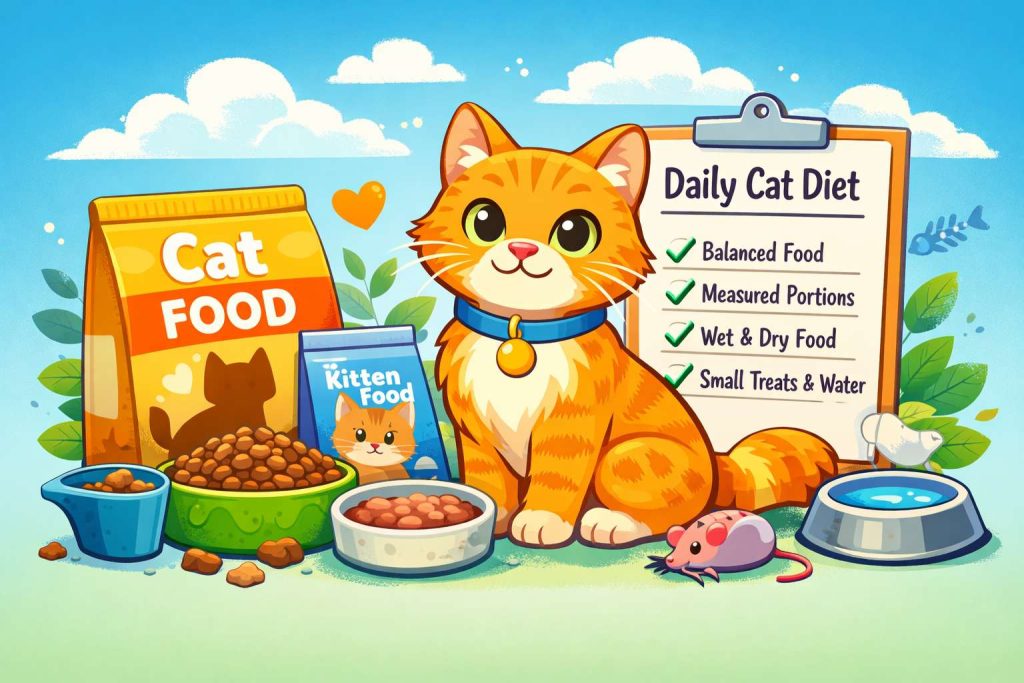
If you want a clean answer to “what should my cat eat daily,” keep it simple. Build the day around a complete and balanced cat food that fits your cat’s age. Then measure the food, watch your cat’s shape, and adjust the portion.
Start with a complete and balanced cat food
Your cat needs nutrients that basic “people food” will not cover. Taurine stands out here. Cats rely on it.
So make a complete and balanced cat food the daily base. Look for a label that says it supports a life stage, like adult maintenance or growth for kittens.
If your cat stays indoors, you may want a tighter short list of good options. This guide can help you choose without overthinking it: best food for indoor cats.
What to check on the label
- A statement that the food is complete and balanced for a life stage
- The right life stage: kitten, adult, then a senior plan that matches your cat’s health
- Clear feeding directions plus calories, so you can measure the daily amount
Daily portions: start with the bag, then adjust
The feeding chart on the package gives you a starting point. It does not fit every cat perfectly. Activity level, age, and body type change the “right” amount.
Here is a simple way to set a daily portion that stays realistic:
- Use your cat’s current weight
- Follow the label’s daily amount for that weight
- Split the total into meals
- Check weight and body shape every few weeks
- Adjust the daily amount in small steps
A good sign you are close to the right amount: your cat keeps a steady weight and feels lean, not bony.
Wet food, dry food, or both
Wet food, dry food, or a mix can all work. The big goal stays the same. Meet nutrition needs and keep daily calories under control.
Many owners like adding wet food since it adds moisture. That can help cats that drink little. Keep fresh water available either way.
A daily schedule most cats handle well
Pick a routine you can keep, even on busy days.
Adult cats
- Two meals per day works for many cats
- A third smaller meal can help cats that beg between meals
- A puzzle feeder can slow fast eaters and make meals last longer
Kittens
Kittens need more calories per pound than adult cats. Feed more often through the day and use a kitten food made for growth.
Senior cats
Keep the routine steady. Watch appetite, weight, and muscle. Call your vet fast if you see a real change.
Treats and extras: keep them small
Treats feel fun, but they can throw off the diet fast. Keep treats as a small part of the day. Many vets use 10 percent of daily calories as a ceiling.
Good simple treats:
- Measured cat treats
- Tiny pieces of plain cooked meat
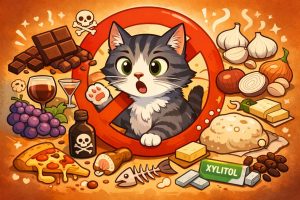
Some foods from the kitchen can hurt cats. Others just upset the stomach. This list is worth a quick read and it covers common surprises: foods cats should never eat.
Skip salty foods, seasoned foods, and fatty scraps. Skip supplements without a vet plan.
Homemade and raw diets
Homemade diets often miss key nutrients unless a veterinary nutrition expert builds the recipe. Raw diets raise a food safety risk in the home. That includes bacteria that can affect pets and people. If you want a homemade plan, ask your vet for a nutrition referral. It saves stress later.
Water still matters every day
Make water easy.
- Wash bowls daily
- Keep water away from the litter box
- Try a fountain if your cat drinks little
- Add wet food if your vet wants higher water intake
Quick daily plan you can follow
Use this as your baseline.
- Complete and balanced cat food for the right life stage
- Measured daily portion, adjusted over time
- Meals split across the day
- Treats kept small
- Fresh water all day
- Vet guidance for health issues like urinary trouble, kidney disease, diabetes, or food allergies