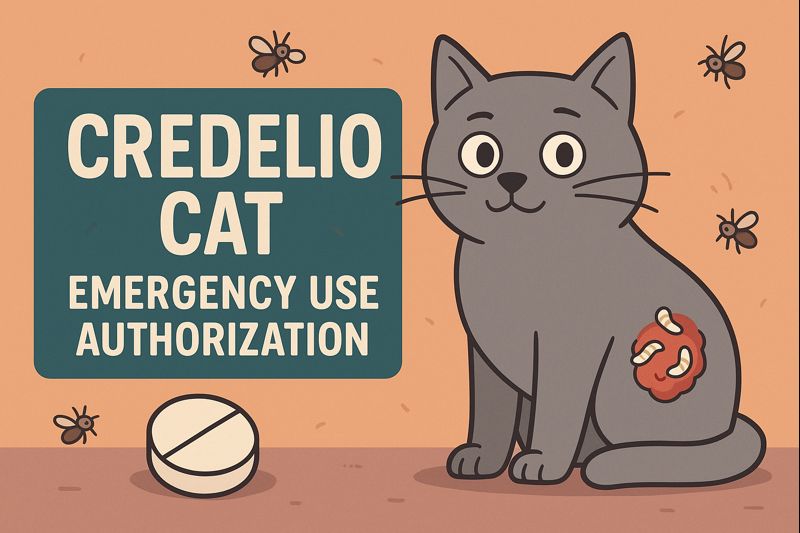
On November 21, 2025, the U.S. Food and Drug Administration issued an Emergency Use Authorization for Credelio CAT, an oral antiparasitic for cats and kittens. The authorization covers treatment of New World screwworm infestations, a condition vets call myiasis. This is the first FDA-authorized drug for treating New World screwworm in cats.
Credelio CAT is a chewable tablet that contains lotilaner. Veterinarians prescribe it. The emergency authorization stays in effect until federal officials end the declaration that supports this type of emergency use, or until the FDA revokes it.
What the FDA authorized for Credelio CAT
The emergency authorization allows veterinarians to use Credelio CAT to treat infestations caused by New World screwworm larvae in cats and kittens. The FDA based the decision on available scientific evidence and a benefit risk review for this emergency setting.
Credelio CAT already had FDA approval for other uses in cats, including flea and tick control. So this emergency step expands how vets can use the same product during the screwworm response.
What New World screwworm is and how it harms animals
Here is the thing. New World screwworm starts with a fly that targets an open wound. The fly lays eggs on the edge of the wound. Then the eggs hatch, and the larvae burrow into the wound and feed on living tissue.
This can turn a small injury into a severe problem fast. So tissue damage can spread. Pain can rise. Infection risk can rise. New cases can get worse in a short time, so early care matters.
Which cats face the highest risk right now
Most cats in the United States face low risk based on geography. Still, risk rises for cats that live near the U.S. Mexico border. Risk rises again for cats that traveled to countries with active New World screwworm activity.
Outdoor cats face more exposure than indoor cats. At the same time, cats with wounds, skin infections, or fresh surgery sites can face higher risk, since flies look for places to lay eggs.
What you should watch for at home
So what should you look for. Start with the wound itself, then watch your cat’s behavior.
Signs that need quick veterinary care include:
- A wound that grows fast or looks wet and raw
- A strong, bad smell from a wound
- Visible larvae in a wound or on matted fur
- Sudden pain, hiding, low energy, or poor appetite
If you see larvae in a wound, call a veterinarian the same day. Then keep your cat indoors and calm. After that, stop licking with an e-collar if you have one. If you do not have one, a soft cone from a local pet shop can help until your visit.
Side effects and why a vet should guide treatment
Credelio CAT belongs to the isoxazoline class. Most cats tolerate this class well. Yet some animals can have neurologic side effects. Reports for this class include muscle tremors, unsteady walking, and seizures.
So a veterinarian should guide treatment. A vet can confirm myiasis, check wound depth, and decide on the right dose and timing. Next, the vet can treat the wound, remove larvae, manage pain, and plan follow-up care. In many cases, that full plan matters as much as the tablet.
How this fits the wider screwworm response
A federal emergency declaration dated August 18, 2025, opened a path for emergency authorizations for animal drugs tied to New World screwworm. Then on October 24, 2025, the FDA issued an emergency authorization for Credelio in dogs and puppies for the same parasite. So the November 21 action expands those tools to cats and kittens too.
Simple prevention steps that help in real life
Even small changes at home can cut risk. So keep cats indoors when you can, especially in higher-risk areas. Next, check your cat daily for cuts, bite marks, or sore spots hidden under fur. Then clean and cover small wounds, and call your vet if a wound looks worse from one day to the next.
If you want a practical home plan that covers each space, use this guide: pet-proof every room checklist for real-life pet parents. It helps you spot common hazards, and it gives you a simple routine you can stick with.