
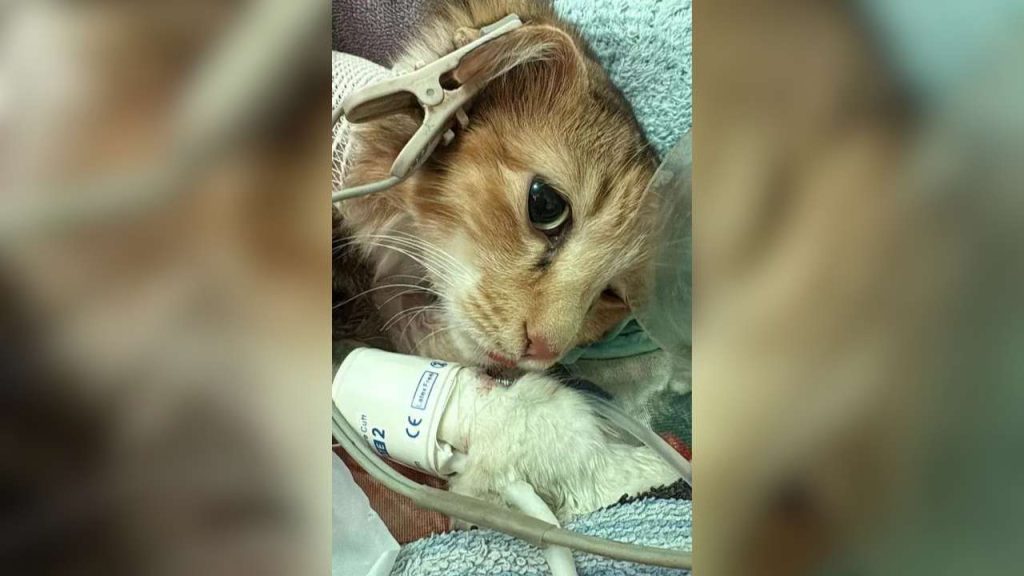
Veterinary specialists in Bangkok have completed Thailand’s first pacemaker surgery on a cat, giving an eight year old domestic shorthair named Pepsi a new chance at a stable and active life. The operation took place at Chulalongkorn University’s Faculty of Veterinary Science, where a multidisciplinary team handled diagnosis, surgery, and follow up care. The case marks a clear step forward for advanced heart treatment in small animals inside the country.
Fainting spells that led to a serious heart diagnosis
Pepsi had fainting spells up to four times a day. She became weak without warning and collapsed, so the family brought her to Chulalongkorn Small Animal Hospital.
At the hospital, the team fitted a 24 hour Holter monitor, which the university describes as more accurate than a standard ECG. The recordings showed a severe atrioventricular block, where electrical signals from the upper chambers failed to reach the lower chambers in a steady way. That cut blood flow to her brain, which explains the collapse episodes seen at home. The university puts this kind of arrhythmia at about 0.03% of heart cases in cats, mostly in older animals.
With the diagnosis confirmed, the cardiologists recommended a pacemaker to keep Pepsi’s heart rate in a safe range and stop the fainting spells.
Inside the operating room
Pacemaker implantation in cats is rare and technically demanding. A cat’s heart walls are thin, so threading the lead through a vein, the method common in dogs, is risky. For Pepsi, the surgeons opened the chest and attached the pacing lead directly to the outer surface of the heart.
They connected the lead to a small generator (the battery unit) placed under the abdominal muscles. The surgery took about an hour and brought together cardiologists, surgeons and anesthesiologists, led by Assoc. Prof. Dr. Anusak Kijtawornrat of the faculty’s Department of Physiology.
The pacemaker is the same device used in people, customized for a cat. It tracks Pepsi’s rhythm and sends a small electrical pulse whenever her heart rate falls below the target level set by the cardiology team. Pepsi’s was a donated, sterilized unit.
Recovery and daily life with a pacemaker
Pepsi made a full recovery. The fainting spells stopped, and the university reports that she has regained her normal strength, her appetite and her playful personality.
She now returns to the hospital for a check every three months and otherwise lives a normal, active life.
Pepsi’s case also reminds many owners that serious conditions can remain hidden behind vague signs like tiredness or brief spells of collapse. Some families focus on heart health, while others worry more about safety outdoors. Owners who track roaming cats or dogs often look at GPS collars, and detailed resources such as this Tractive GPS dog and cat tracker review help them understand how modern trackers follow pets in real time.
What the surgery means for Thai pet owners
This operation is the first reported pacemaker implant in a cat in Thailand. The university presents it as proof that the country can perform complex veterinary procedures to global standards. “What once seemed impossible in Thailand is now achievable through dedication, collaboration, and continuous advancement,” Dr. Anusak said.
The Chulalongkorn team urges owners to seek prompt care when a pet faints or turns suddenly weak. These signs can link to heart disease or other serious disorders, and a basic clinical exam with an electrocardiogram often gives crucial information in a short time. Early diagnosis creates more treatment options and lowers the chance of lasting damage.
Pepsi’s story highlights the value of an observant family and a prepared medical team working toward the same goal. Her owners trusted their instincts, asked for specialist help, and agreed to a complex procedure when they understood the risks and benefits. The hospital staff then applied careful diagnostics and precise surgery to give Pepsi a safer heart rhythm and a realistic chance at many more calm days at home.