
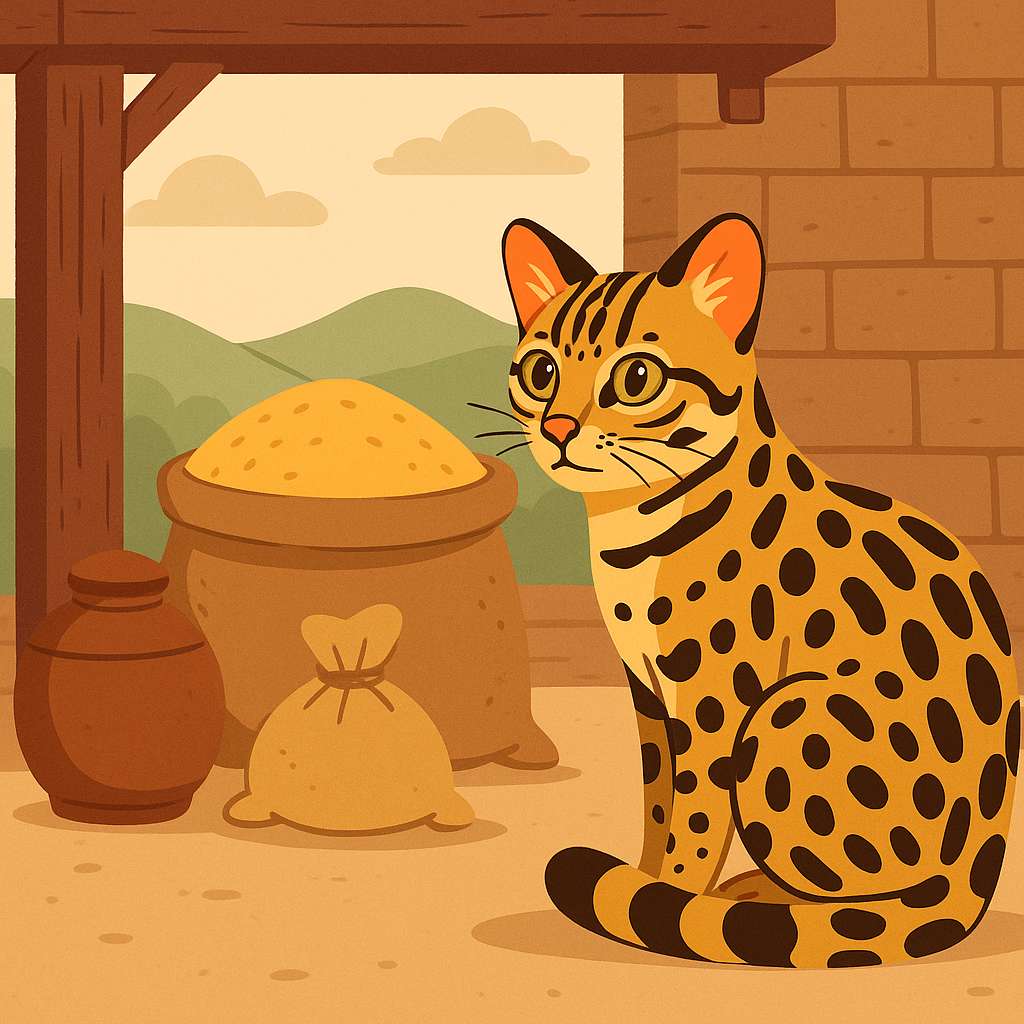
If you share your home with a cat, you probably picture a sleepy pet on the couch. So this new research from China feels both surprising and charming. A study led by Luo Shujin’s team at Peking University, published in Cell Genomics in November 2025, read ancient DNA from 22 cats at 14 archaeological sites. It shows that China’s first “pet” cat was not the modern house cat at all. Instead, early farmers shared their space with the leopard cat, a small wild feline with spotted fur and sharp hunting skills.
A different kind of “pet” in early Chinese villages
Thousands of years ago, farming villages in northern and central China stored millet and other grains. Those stores drew mice and rats. Then, of course, the rodents drew cats.
Archaeologists later found small cat bones at these Neolithic and Bronze Age sites. At first, many experts thought they might belong to early domestic cats. Others suspected a local wild species. The bones alone could not settle the debate.
Ancient DNA work changed that picture. Researchers took tiny samples from teeth and dense parts of bones. Then they pieced together fragile fragments of genetic material. When they compared those sequences with modern cats, the match became clear. The oldest cats living around Chinese grain stores were leopard cats, not the African wildcat line that gave rise to today’s pet cats.
Leopard cats still live across East and Southeast Asia. They are small, fast, and wary. They like thick cover and hunt at night. Long ago, some of them found an easy source of prey around human grain stores. So they kept coming back. Farmers let them stay, since fewer rodents meant safer food stores.
A loose partnership, not a cozy pet life
This early bond looked very different from a cat sleeping on a pillow. Leopard cats stayed wild. They came and went as they pleased. People did not breed them or try to shape their behavior. Even so, both sides gained something.
Farmers enjoyed free pest control. They did not need traps or poison. Leopard cats found a hunting ground packed with rodents. They did not need to stalk far through the forest for every meal. So a quiet partnership formed around the edges of early villages.
If you think about modern pets, this history connects in an interesting way. Today many owners rely on tech to keep their animals safe. For example, some use GPS trackers to follow their dog or cat on walks or outdoor adventures. If that sounds useful, you can look at this detailed Tractive GPS review for 2025, which covers real-world use for both dogs and cats.
How house cats reached China
The cats that curl up on beds today, Felis catus, trace most of their ancestry to the African wildcat. That species never lived in prehistoric China. Instead, it evolved near early farming centers in the Near East and North Africa.
Trade routes later carried these more relaxed, human-tolerant cats across West and Central Asia. Merchants, sailors, and travelers valued them as hunters on ships and in warehouses. Step by step, they spread east.
Bones from Chinese sites show this shift over time. Leopard cats lived around settlements from at least 5,400 years ago until about 150 CE. The earliest domestic cat in the study dates to about 730 CE, from a site in Shaanxi during the Tang dynasty. Its genetic signature matches cats of the same period in Kazakhstan, so house cats seem to have reached China along the Silk Road and then spread into towns and homes.
In the DNA record, about 580 years separate the last leopard cat found near people (around 150 CE) from the first house cat (around 730 CE). Smithsonian Magazine’s report on the study describes the leopard cat episode as a clear example of a “failed domestication”.
How scientists pieced together the story
This new picture comes from a mix of methods. First, zooarchaeologists looked at the bones and confirmed that they came from small cats. Then geneticists worked in clean rooms to avoid modern contamination. They extracted damaged DNA, sequenced it, and checked where each ancient cat sat on the wider feline family tree.
Early cats from Neolithic and Bronze Age villages lined up with the leopard cat branch. Later cats from historic times lined up with the domestic cat branch. Earlier bone studies had already hinted at this pattern, so the DNA results gave strong support and a clearer timeline.
The story fits a broader view of cat history. Cat domestication did not unfold as one smooth, simple wave across Eurasia. Instead, local stories overlapped. In China, people first worked side by side with a native wild cat. Then, much later, imported house cats took over the role of everyday companion.
Why this matters for modern pet owners
Today every true house cat in China belongs to the same species as a pet in Europe or the United States. Yet the leopard cat still lives in many parts of rural Asia. It now stands as a protected wild animal, not a pet, even though its ancestors once patrolled early grain stores.
This long relationship between people and small predators still shapes how we live with pets. We share food, space, and even technology with them. We track them with GPS, monitor their health, and adjust our homes to keep them safe.
If you are new to life with a cat or dog, this deep history connects nicely with modern safety habits. You can learn the basics in this friendly guide to pet safety for new pet parents, which covers everyday risks and simple steps that protect your furry friend.
In the end, the new ancient DNA work shows that China’s first “pet” cat walked a line between wild hunter and tolerated neighbor. That story adds a fresh layer to our understanding of how humans and animals grew used to each other, long before the first house cat climbed into a person’s lap.