

















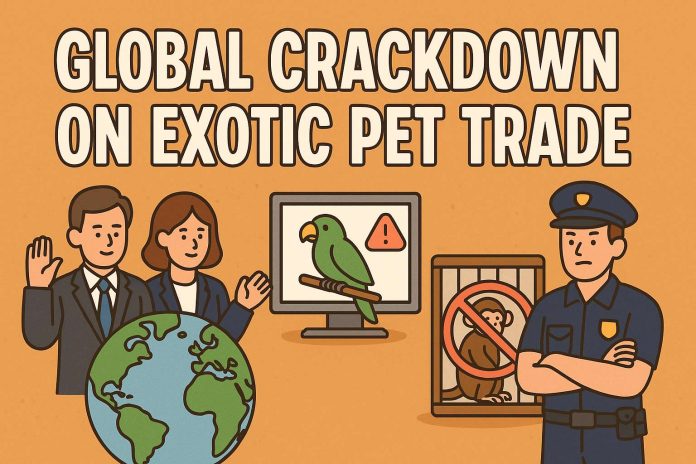
More countries take action as the exotic pet market grows fast. Sales of rare reptiles, primates, birds, and small mammals keep rising online, and many of these animals come from fragile habitats. So leaders agreed that the trade needs much stronger rules. They want to protect wildlife, reduce crime, and lower disease risks for people and animals.
Talks began earlier this year at a major meeting in Geneva. Officials from more than 70 nations took part, and they shared new reports that show a steady rise in illegal transport. Many experts say the current system cannot keep up with the growth. As a result, ministers agreed to draft new global rules that will guide customs checks, online marketplaces, and import controls.
The data raised concern. Forest regions lose rare species as poachers hunt young primates or bright birds for quick profit. Desert regions struggle too because slow-breeding reptiles disappear faster than they can reproduce. Some species lose more than 30 percent of their population in a decade. So leaders plan to publish a shared list of high-risk species and introduce tougher penalties for anyone who moves them illegally across borders.
Online platforms add another challenge. Many sales now start on social networks or small classifieds. Sellers post short clips or photos. Buyers send private messages. Because of this, tracking becomes much harder for law-enforcement teams. Many countries will soon require platforms to flag wildlife listings and add easy reporting tools. These rules will start rolling out in 2026, and officials expect that they will cut the number of hidden listings.
Public health agencies support the plan because they have seen how diseases spread when stressed animals travel long distances. Many exotic pets arrive in boxes or cramped cages, and some show clear signs of illness. So health teams want stronger quarantine steps and fast test kits at border checks. These moves help stop outbreaks and protect families who bring these animals into their homes. For new pet owners who want safer care tips, a simple starter guide sits at this helpful resource.
Leaders also want to limit organized crime. Many groups run hidden breeding sites and claim that wild animals are captive-bred. Microchips and DNA checks help confirm origins, and more countries will share scan data at borders. This creates a trail that makes fraud harder.
Education will play a big role as well. Many people buy exotic pets without knowing how large they grow or how complex their care can be. Because of this, rescue centers now see more abandoned animals each year. New outreach campaigns will explain the real needs of each species before anyone buys them. This can reduce stress on owners and help wildlife stay safe.
The final global plan will be ready next spring. It will include common rules, shared databases, and progress reports from every region. Leaders hope the changes will cut illegal trade by half over the next five years, and they say the effort feels urgent because many species face real danger if action slows.