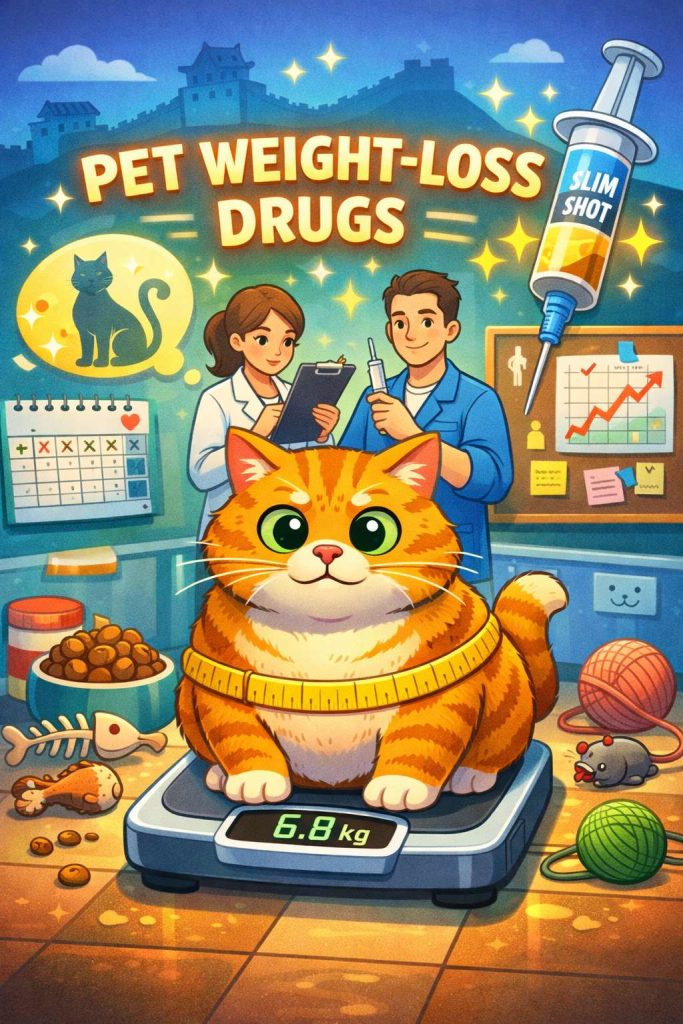
China pet weight-loss drugs just took a real step forward. This time, it is not a rumor or a social media trend. In late December 2025, China’s Ministry of Agriculture and Rural Affairs accepted a weight-loss injection for obese adult cats for review, and that has owners paying attention.
Pet obesity has been creeping up for years, and indoor life plays a big role. Cats sleep a lot, they snack a lot, and they often move less than we think. So weight gain can feel slow and harmless. Still, extra weight can turn into diabetes risk, sore joints, breathing strain, and lower energy. That is why the idea of a medicine option matters.
The cat obesity shot that entered review
The product in question is an injectable drug called pribopeptide. The maker describes it as long-acting and tied to GLP-1 and GIP targets. Those same targets sit behind many of the human weight-loss medicines people talk about right now. So the science is not coming out of nowhere. It is shifting into animal health.
Even so, a review stage is still a review stage. The label details are not the same as a headline. The final approval decision sets rules on who can use it, how often it is given, and what risks owners need to watch for.
What the early results claim
Huadong Medicine, the maker, shared Phase III trial results for obese adult cats. It said cats lost 9.3% of body weight on average after six weeks at the recommended dose. Then it said 72% of cats lost more than 5%. It also said the cats tolerated the drug well and that no adverse reactions related to the drug were seen in the trial.
Those numbers can sound abstract, so here is a quick real-life example. A 6.0 kg cat losing 9.3% drops about 0.56 kg in six weeks. That can reduce strain on hips, knees, and spine. It can also make play easier, and that can lead to more movement.
Still, weight loss that happens fast needs monitoring. So owners should treat this like a vet-guided tool, not a DIY fix.
Why China is pushing into this space now
China’s pet market keeps growing, and city living keeps pets indoors. Then treat culture keeps rising, too. So the obesity problem gets bigger, and the demand for solutions grows with it.
At the same time, GLP-1 style science is hot worldwide. So drugmakers have strong reasons to explore new areas, including pets. That is why this filing feels like a signal, not a one-off experiment.
And if you like pet history, it is interesting to see how the cat story in China keeps evolving. For a deep and surprising look at that long timeline, you can read this piece on ancient DNA and China’s earliest pet cat. It adds context for how cats became part of home life in the first place.
What owners should do now, even without any drug
A medicine can support weight loss, yet daily habits still do most of the work. So if your cat is gaining weight, start with the basics and keep it simple.
- Get a vet exam and ask for a body condition score.
- Set a target weight and a weekly goal.
- Weigh food with a kitchen scale, then stick to it.
- Cut treats, then replace them with low-calorie options.
- Add two short play sessions per day. Ten minutes counts.
- Track weight weekly, at the same time of day.
Then watch behavior, not only the scale. A cat that plays more, climbs more, and breathes easier is often heading the right way.
What comes next for China pet weight-loss drugs
Next comes the regulator’s decision and the final product label. After that, clinics decide how they will prescribe and monitor. Then pricing shapes how many owners can access it.
More filings may follow, too. Once one company shows a path, others often chase it. So 2026 could bring more pet obesity drug news, more debate on long-term safety, and more clear guidance from vets.
For owners, the takeaway is practical. Talk to your vet early, keep routines steady, and treat any new medicine as one piece of a bigger plan.