
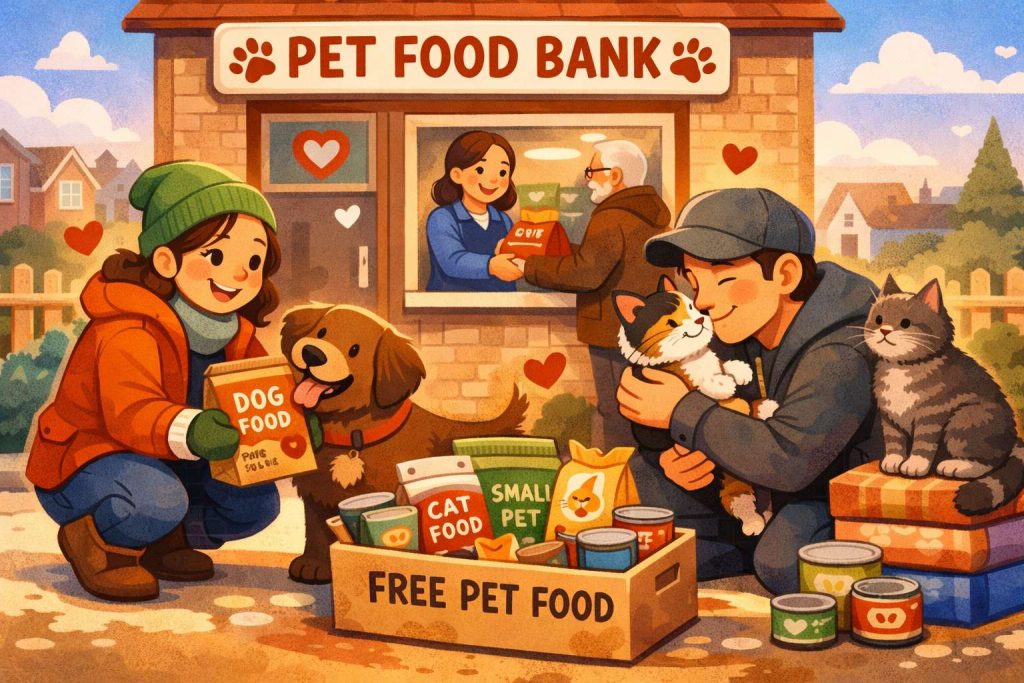
Many families hit the same rough moment. The bills clear, the fridge gets filled, and then the pet food runs out. So the owner stands there with a scoop in hand, doing that quiet math nobody wants to do.
Pet food banks step in right at that point. They hand out free pet food and basic supplies, and they do it with kindness. Then a short money crunch stays short. The pet stays home, and the family keeps its routine.
That routine matters. Pets do not see “temporary” the way adults do. They see their bowl. They see their people. So when food stays steady, a lot else stays steady too.
A small bag of food can stop a surrender
Shelters often hear the same story. An owner did not stop loving the pet. Money just got tight, then panic hit, and surrender felt like the only “responsible” choice.
Food support changes that moment. It buys a week or two. Then the owner can catch up on pay, sort a benefits gap, or get help from a local service. The pet does not need a new home. The pet needs dinner, and the owner needs a bridge.
Yet food is only one part of the squeeze. Vet bills, rent, heating, and transport stack up fast. So many pet food banks share quick guidance too. They point people to low cost clinics, voucher programs, and local charities that can help with care.
What pet food banks usually give out
Pet food banks vary by area, and stock changes week to week. Still, most programs focus on essentials, then they spread support across as many homes as they can.
You will often see:
- Dry food and wet food for dogs and cats
- Food for small animals, based on donations
- Cat litter, pee pads, or bowls when available
- Basic advice on safe feeding and slow diet changes
- A list of local low cost vet options
What should you bring to a visit. Bring what you have, like a carrier for a small pet, a photo of your pet, or a simple note from a partner service if they ask for one. Then show up, and speak plainly. That is enough.
Why demand keeps rising
Living costs hit pets through their owners. Food prices rise, then energy bills rise, and transport costs rise too. So even a careful budget can crack.
At first, many people try to stretch food. They measure smaller portions, then they top up with scraps, then they switch brands fast. But sudden diet changes can upset a pet’s stomach. So the “quick fix” can turn into a bigger problem, and that adds more stress.
Next, owners look for help. Some reach out early, and that works best. Others wait until the cupboard is empty, and that is common too. Either way, pet food banks see more first time visitors now. They also see repeat visitors, and that tells you the pressure is not a one week problem for many homes.
The gap that catches owners off guard
Many people can access help for their own groceries. Still, that support often does not cover pet food. So a household can keep human meals stable and still struggle to fill the pet’s bowl.
Community programs fill that gap. They run on donations, grants, and local partners. Then a supermarket donation day or a local fundraiser can translate into hundreds of meals for pets.
At the same time, the cost squeeze does not only affect dogs and cats. It reaches smaller and less common pets too. For a related example, this report on unwanted exotic pets rising as energy bills squeeze owners shows how quickly money stress can push people into tough decisions.
Why this help protects welfare, not just budgets
Food support does more than prevent hunger. It protects health and behavior.
Pets that miss meals can lose weight, then they can become anxious. Pets that change diets fast can get diarrhea or vomiting. So a steady supply of familiar food reduces risk right away. Then owners can focus on the next step, like a checkup or parasite treatment, instead of scrambling day to day.
But there is another piece that matters just as much. Keeping a pet at home protects the bond. For many people, that bond supports routine, comfort, and mental health. So when a pet stays home, the whole household often feels safer.
What needs to happen next
Pet food banks keep growing, and that is good news. Yet they face real limits. Donations can drop after the holidays. Storage space runs out. Volunteers get tired.
So strong local partnerships matter. A steady pipeline from shops, brands, clinics, and community groups keeps shelves stocked. Then owners get help before things fall apart. And when help arrives early, pets stay where they belong. At home.