
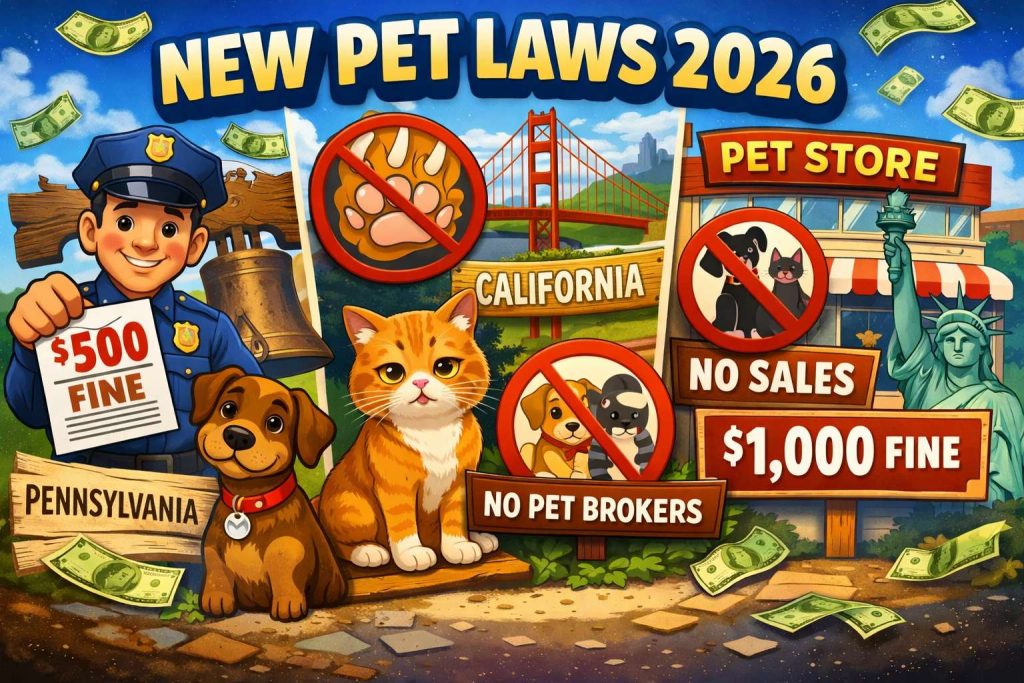
January 2026 starts with several state-level pet law changes that affect owners, vets, and anyone buying a puppy or kitten. These rules do not apply nationwide. Still, they can hit hard in the states that adopted them, so it helps to get clear on the details early.
Below are four January updates that stand out for real penalties, clear deadlines, and big shifts in how pets move from seller to home.
Pennsylvania. Dog license deadline with fines up to $500
Pennsylvania enters the new year with a rule that stays simple on paper, yet it still catches people every January. A dog needs a license once it reaches the legal age. Then, owners buy annual licenses for the new year by January 1.
The state lists a maximum penalty of $500 plus court costs for a dog without a license. That number is not small, so it can turn a minor oversight into a real headache. Many owners assume the license only matters for outdoor dogs. In practice, the rule can still apply, even if your dog spends most of its time indoors.
For 2026, Pennsylvania lists baseline fees at $10.80 for an annual license and $52.80 for a lifetime license. Seniors and residents with disabilities pay less, at $8.80 annually or $36.80 for a lifetime license. After that, totals can vary a bit by county and sales method, since some places add small service fees.
What to do now:
- Check your dog’s 2026 license status.
- Keep your proof of purchase in a safe spot.
- Update your address details if you moved in 2025.
California. A statewide ban on non-medical cat declawing
California begins 2026 with a statewide ban on cat declawing that is not tied to medical need. Vets can still do procedures for therapeutic reasons tied to disease, injury, or infection. The law targets declawing done for convenience or cosmetic reasons.
So, what does this mean for daily life with a cat that loves the couch? It means scratch management has to become the plan, not the backup plan. Start with regular nail trims. Then add stable scratch posts, and place them where your cat already stretches, like near sleep spots and common walkways. After that, protect high-risk furniture with covers during training, so you get fewer setbacks.
At the same time, this can matter for renters. Many leases renew in January. So, if you have a cat, it helps to get clear pet-damage terms in writing, then make your home scratch-friendly before problems start.
California. Tighter limits on third-party pet brokers
California also changes the pet sales chain. The state restricts third-party pet brokers who sell animals bred by someone else for profit. Under the new rules, a broker cannot sell or transfer cats. A broker cannot sell or transfer rabbits. A broker cannot sell or transfer a dog under one year old.
This matters most for buyers who shop through listings that look like casual “rehoming” posts, yet act like retail. These listings show up on social platforms and local marketplaces. So, in 2026, California pushes buyers toward direct breeder sales or toward shelters and rescue groups that place animals for adoption.
If you want a deeper, practical rundown that focuses on the shopping side, read this guide on California’s Jan. 1 pet broker ban. It breaks the topic into steps you can actually use before you pay a deposit.
A simple buyer checklist helps too:
- Ask who bred the animal, and where the litter was raised.
- Ask for vet records and vaccine dates.
- Ask for a written contract with return terms.
- Meet the animal in person, in a safe setting.
Then trust your gut. If the story keeps changing, walk away.
New Jersey. A pet store sales ban bill that rolls into 2026
New Jersey headlines keep circling a proposal that would stop pet shops from selling dogs, cats, and rabbits. The bill still allows pet shops to partner with shelters and rescues to showcase adoptable animals, with no retail-style sale of the animal itself.
The penalties described in the proposal run high. The text sets fines at $1,000 per violation. Each animal sold can count as a separate offense, so costs can pile up fast.
Next comes a key detail that often gets missed. The bill uses a delayed start date tied to enactment. It would take effect 180 days after it becomes law, not on a fixed January calendar day. As of late December 2025, planned votes were canceled, so the final timing still depends on what happens in 2026.
If you live in New Jersey and plan to buy a pet through a retail store, keep an eye on updates. Then double-check any deposit paperwork, so you do not get stuck in a changing legal setup.
A quick January checklist for pet owners and buyers
Here is a simple list to stay out of trouble and avoid rushed choices:
- Check your state rules first. Many pet laws change at the state level.
- If you live in Pennsylvania, handle your dog’s 2026 license early.
- If you live in California and own a cat, plan scratch control with training and home setup.
- If you live in California and plan to buy a pet, avoid third-party reseller patterns.
- If you live in New Jersey, track legislative updates before you place deposits.