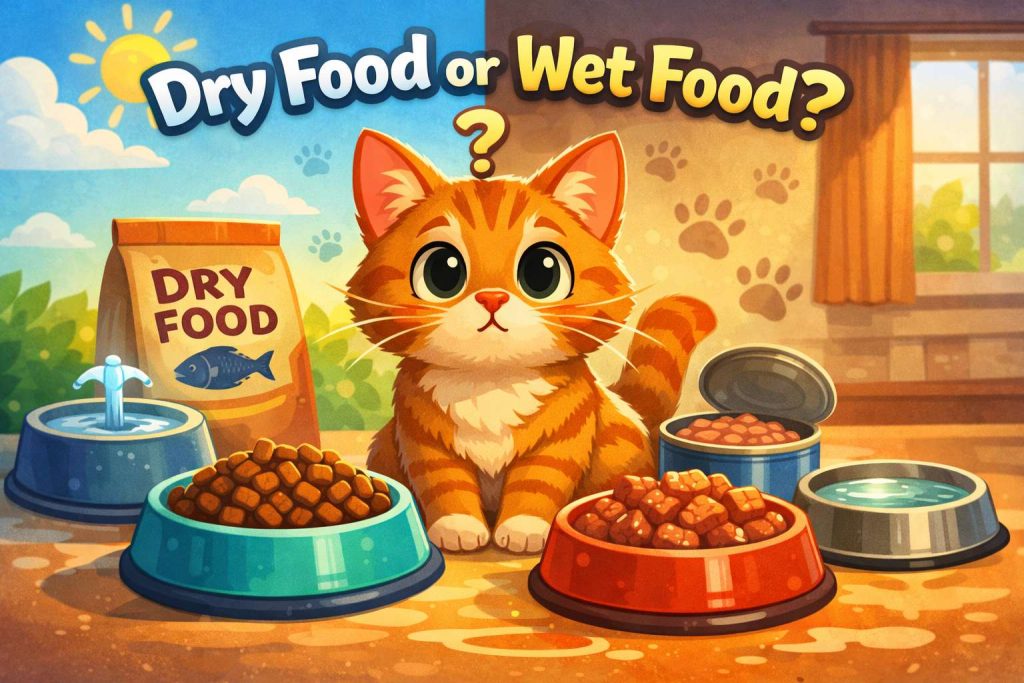
A lot of cat owners worry about this at some point. They run out of wet food, the cat refuses the pate, or the budget gets tight. Then the question pops up. Can a cat live on dry food only?
Yes, many cats do fine on a kibble-only diet. Still, the details matter. Most problems show up in the same two places. Water intake and calories.
If you want a step by step version of the routine in one place, this article lays it out clearly: Dry Food Only for Cats: Safe or Risky? The Simple Plan Most Owners Miss.
Start with one simple rule. The food must be complete and balanced
Dry food can cover a cat’s needs when it is a full diet, not a snack product. Check the bag or label. Look for wording that says it is complete and balanced for your cat’s life stage, like kitten or adult.
This part sounds basic, but it saves a lot of trouble. Some products look like a “main food” but sit closer to treats in nutrition. So read the label once, then you can stop thinking about it.
Water is the big difference between wet and dry
Wet food carries a lot of moisture. Kibble carries very little. So cats on dry food need to drink enough water from bowls or fountains.
Some cats handle that with no drama. Other cats barely drink, even with fresh water nearby. That is when issues can start, most often urinary trouble or constipation.
Here are easy ways to raise water intake without turning your home into a science project.
- Put down more than one water bowl, in calm places.
- Try a fountain. Many cats drink more from moving water.
- Refresh the water daily.
- Wash bowls often. A slimy bowl turns some cats away fast.
- Add a small splash of water to kibble. Go slow so your cat does not protest the texture.
One question comes up a lot. Is wet food required for hydration? No. Some cats drink enough and stay fine. The key is the cat in front of you, not the debate online.
When kibble-only is a bad match
Dry-only feeding can still work for many cats, but some cats need more support. These are common situations where wet food or mixed feeding often fits better.
- Your cat drinks very little.
- Your cat had urinary crystals, urinary blockage, or repeated urinary problems.
- Your cat gets constipated often.
- Your vet talks about kidney support and higher moisture meals.
- Your cat gains weight easily and begs all day.
This does not mean wet food “fixes” everything. It means extra moisture and bigger meal volume can help in real life.
A safer dry-only feeding plan that most owners can actually follow
Choose the right kibble for your cat’s daily life
Pick a full diet that matches your cat, not just the marketing. Indoor cats often need different calorie levels and fiber balance than outdoor cats. You can make shopping a lot less annoying with this breakdown: Best Food for Indoor Cats: A Simple Real World Guide That Makes Buying Easier.
Measure food. Guessing turns into weight gain fast
Kibble is calorie dense. A little extra each day adds up. Use a real measuring cup, or a kitchen scale. Then check your cat’s body once a month.
Look for a visible waist from above. Feel for ribs under a light layer of fat. You should feel ribs with gentle pressure, not digging.
Pick a routine and stick with it
Meal feeding works well for many cats. Timed feeders work well too, mainly for early morning meowing. Free feeding can work for some cats, but it often causes slow weight gain.
Store kibble like it matters
Close the bag well after each use. Store it in a cool, dry spot. Wash the food bowl daily. Kibble oils turn stale, and some cats stop eating when the bowl smells off.
Dry food and teeth. What to expect
Kibble does not clean teeth in a reliable way. So plan dental care directly. Then brush if your cat accepts it, and ask your vet about dental diets or dental treats if you need extra support.
Watch for early signs. So look for bad breath, red gums, drooling, or pawing at the mouth. Then book a dental check, since cats hide mouth pain well.
Red flags to watch for
Dry-only feeding itself is not an emergency. These signs are.
- Straining in the litter box
- Crying or repeated trips with little urine
- Blood in urine
- Vomiting and refusing food
- No stool for more than a day plus obvious discomfort
- Fast weight loss or sudden weakness
Urinary trouble can get serious fast, especially in male cats. Treat straining to pee as urgent.
Want to add wet food later. Do it in a calm way
Some cats do best on mixed feeding. Others eat wet food for a week, then decide they hate it forever. That is normal cat behavior.
Switch slowly across several days. Keep portions steady so total calories stay about the same. Watch litter box changes and appetite. If stools soften too much, slow down the change and hold the new ratio for a few days.
The bottom line
A cat can live on dry food only and stay healthy. Pick a complete and balanced diet, track calories, and treat water intake like part of the meal plan. When you see urinary history, constipation, kidney issues, or low drinking, wet food or mixed feeding often fits better. A vet can help you match the plan to your cat, especially for medical diets.