











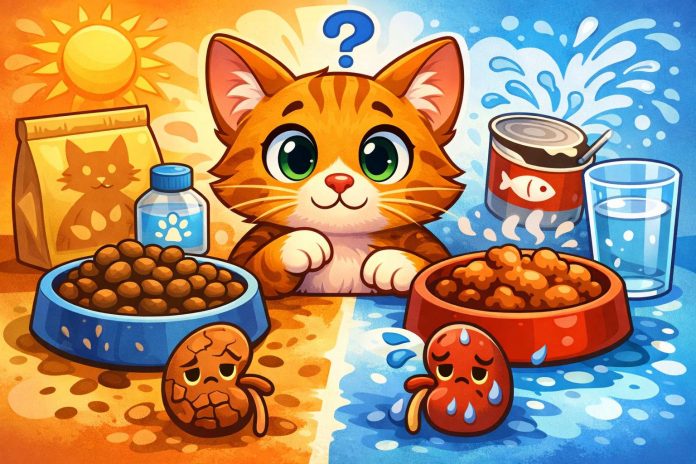
Dry food gets blamed for kidney trouble in cats all the time. The truth is simpler. Dry food, by itself, does not cause chronic kidney disease. Still, dry food has very little water, so some cats run a bit “dry” day to day. Then their urine gets more concentrated, and that can matter more as cats age.
So, the real question is not “dry or wet.” The better question is “how do we keep water intake steady, and keep nutrition solid.”
What kidneys do for your cat
Kidneys filter waste from the blood. They balance water and key minerals. They help control blood pressure. They support red blood cell production through hormone signals.
With chronic kidney disease, often called CKD, the kidneys slowly lose filtering power over time. Many cats look fine early on. Then you may notice more thirst, bigger pee clumps, weight loss, nausea, or lower energy.
Wet vs dry. The water gap is the whole story
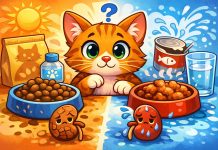
Wet food has a lot of moisture. Dry kibble has very little. That single difference changes how much water your cat gets from meals.
Typical ranges look like this:
- Canned cat food: about 60% to over 85% water
- Dry kibble: about 3% to 11% water
Cats often get a big share of their daily water from food. Some cats drink plenty from a bowl, so they handle dry food well. Yet many cats do not drink enough to fully cover a dry only diet. So they end up taking in less total water.
Does concentrated urine mean kidney damage?
Not by itself. Concentrated urine often means the body saved water. Vets measure this with urine specific gravity. High concentration can show mild dehydration. It can also show normal kidney function in a cat that drinks less.
So, concentrated urine does not prove dry food harmed kidneys. It does show hydration is worth paying attention to, and that is a practical lever you can pull.
What matters more than food format
Phosphorus level
Once CKD starts, phosphorus control matters a lot. Many kidney diets restrict phosphorus for that reason. Food format does not guarantee low phosphorus. Some wet foods run high, and some dry foods run high too. So the product choice matters more than the can or the bag.
Calories and body weight
Older cats can lose weight fast. So steady calories matter. A “perfect” plan fails if your cat eats poorly. That is why taste and routine matter so much.
Protein quality and mineral balance
Cats need animal protein. With CKD, vets often choose diets with adjusted protein levels and controlled minerals. The best target comes from your cat’s lab results, not guesses.
Water habits at home
Bowl type and location can change drinking. Many cats drink more with multiple stations. Many drink more with a fountain. Clean bowls help too, since a stale smell turns some cats away.
A feeding plan that works for many healthy cats
You do not need to ban dry food. You can keep kibble and still support hydration.
Try this simple setup:
- Add one wet meal each day, then keep dry for the other meals
- Mix a spoon of water into wet food, so your cat gets extra fluid without trying harder
- Put water in two or three calm spots, then keep it away from the litter box
- Use wide, shallow bowls, and wash them daily
- Weigh your cat weekly, then log it in a note on your phone
Want a simple way to choose day to day foods for indoor cats too? This guide can help you compare options without overthinking it: best food for indoor cats, a simple real world guide.
What about soaking dry food?
Yes, you can soak it, and many cats accept it. Use warm water and serve it fresh. Then toss leftovers quickly, since wet kibble spoils faster at room temperature. This one habit can boost water intake without changing brands right away.
Dry food only. When it works and when it starts to fail
Some cats do fine on dry food only. They drink well, keep a healthy weight, and show normal urine and blood results at checkups. Other cats struggle with it, and the first hint is often low water intake.
Signs dry only feeding may not suit your cat:
- Small, hard stools or constipation
- Very smelly urine or strong litter box odor
- A cat that rarely drinks from the bowl
- Repeated urinary issues
- Weight loss or picky eating in an older cat
If you want a clear breakdown of safe ways to feed kibble only, plus the common failure points to watch for, this article lays it out in plain language: dry food only for cats, when it works and how to feed it safely.
If your cat already has CKD
Once a vet confirms CKD, the plan gets more specific. Vets stage CKD with blood tests and urine tests, and that staging guides diet choices.
Common goals include:
- A kidney targeted diet that matches the CKD stage
- Phosphorus control, and sometimes phosphorus binders
- Hydration support through wet food, added water, and good water access
- Monitoring blood pressure and protein in urine
So, wet food often becomes more useful at this point. Added water in meals can help too. Some cats need extra support for appetite, nausea, or dehydration, and your vet can tailor that plan.
When to call the vet
Call your vet if you see any of these:
- Drinking more than usual
- Bigger urine clumps, or peeing more often
- Weight loss
- Low appetite that lasts more than a day
- Vomiting, constipation, or less energy
- Breath that smells like ammonia
Regular screening helps older cats. Many kidney changes show up on labs before the signs are obvious.
Bottom line
Dry food is not a direct cause of kidney disease. Yet hydration still matters, and wet food makes hydration easier for many cats. So a mixed plan often fits well, and it stays simple.