
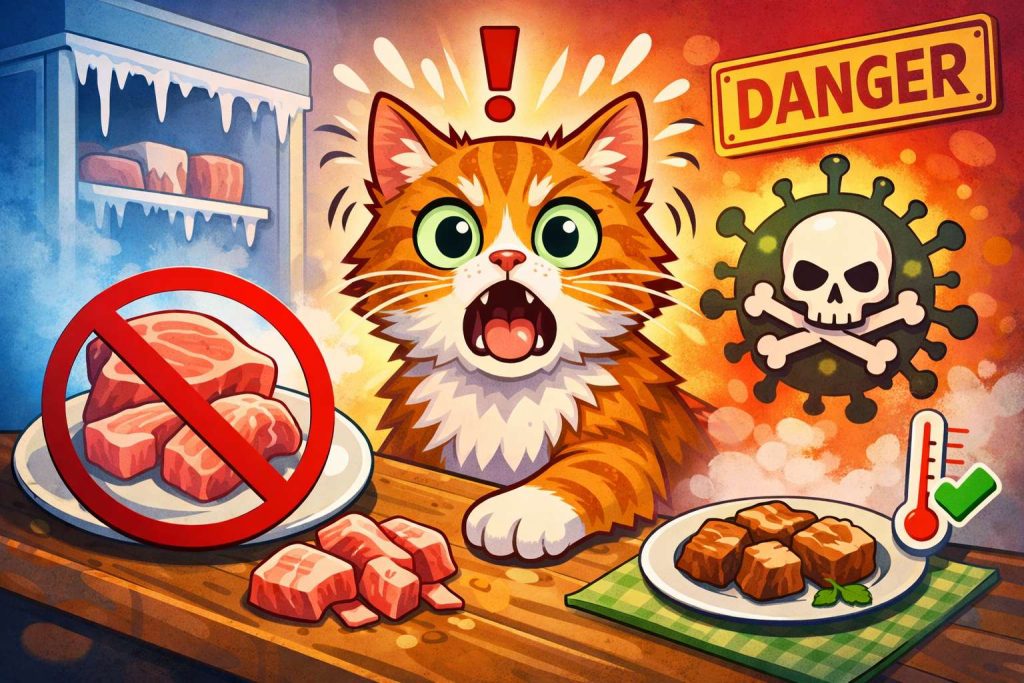
If you want one clear rule, skip raw pork. It can expose cats to Aujeszky’s disease, which people often call pseudorabies. And once it hits, it can turn serious fast.
So yes, this is one of those kitchen habits that feels harmless, then it is not.
Why raw pork is the line you do not cross
Pigs can carry the virus linked to pseudorabies. Then a cat eats raw pork, and the virus has a direct path in. Raw organs raise the worry even more, especially scraps that never went near heat.
But the scary part is the speed. After signs start, some cases crash within a day or two. So you do not get much time to “wait and see.”
What it can look like at home
This illness can look strange, and it can look sudden. So keep an eye out for:
- Intense itching, often around the head or face
- Heavy drooling
- Sudden agitation, pacing, or panic-like behavior
- Wobbling, weakness, tremors, or seizures
And here is the hard truth. There is no simple home fix for this. So prevention stays the main play.
Freezing is not a safety plan
A lot of people freeze meat and feel safer. That helps with some risks in some cases, but it does not turn raw pork into a cat treat. So do not rely on the freezer as a shield here.
And if you keep raw meats in the freezer, treat them like raw. Use a sealed container, keep them away from ready-to-eat foods, and clean the surface after handling.
Raw pork has other problems too
Pseudorabies is the headline risk, but it is not the only one. Raw pork can carry bacteria that upset the stomach and gut. Then you get vomiting, diarrhea, or a cat that stops eating.
Parasites matter too. So even if you never hear the word pseudorabies again, raw pork still brings extra hazards that you can avoid.
If you want a broader “do not feed this” list for the kitchen, this guide makes it easy to scan: foods cats should never eat.
My cat stole a bite of raw pork. What should I do?
Act quickly, then stay calm. Small steps help.
First, remove the meat and any drippings. Then note what it was and when it happened. Raw pork muscle is one thing. Raw organs, wild boar, or hunting scraps raise the concern.
Next, call your vet and share the details. Do it even if your cat looks normal right now. Then watch closely over the next day or two for red flags: intense itching, heavy drooling, sudden restlessness, wobbling, weakness, tremors, seizures, fever, repeated vomiting, or bloody diarrhea.
And keep the rest of the home safe too. Wash hands, wipe counters, and keep other pets away from the same meat.
Want to offer pork anyway? Cook it fully and keep it plain
Cooked pork can work as an occasional treat. So think of it like a tiny topper, not a meal.
Use lean pork and skip seasoning. Then avoid garlic, onion, sauces, and spicy rubs. Remove bones too.
Next, cook it to a real internal temperature with a thermometer. Whole cuts need 63°C (145°F), then rest for 3 minutes. Ground pork needs 71°C (160°F). Then cool it, cut small pieces, and serve a small portion.
Safer meat treats than raw pork
If you want simple and safer, go cooked and plain:
- Chicken or turkey
- Beef
- Lamb
Then keep portions small. Your cat’s main diet still needs to be complete and balanced.
A quick note on recalls and freezer habits
Food safety issues do not stay in one lane. A recall can affect pets and people in the same house, and frozen products can still cause trouble. So it helps to build a habit of checking what is in your freezer and reading recall notices when they pop up.
If you also feed a dog, this is worth a quick read, since it shows how frozen foods can still carry risks in real life: dog owners urged to check freezers after a frozen food recall.
Quick checklist
Raw pork stays out of your cat’s bowl.
Then skip raw pork organs too.
And do not trust freezing to make it safe.
So if you give pork, cook it fully and serve it plain.