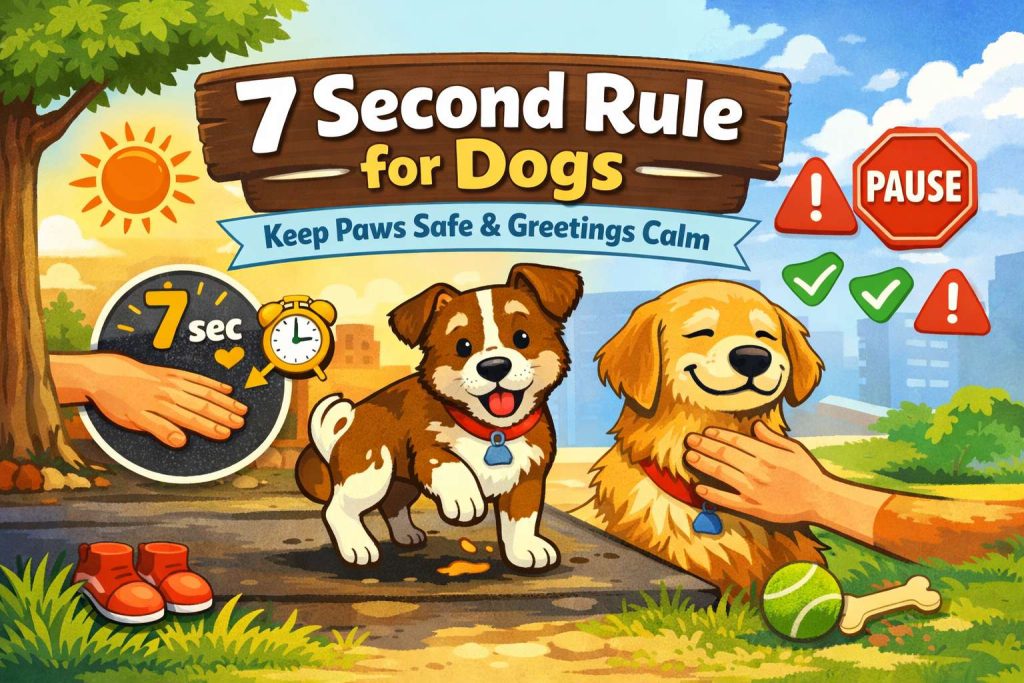
The 7 second rule for dogs shows up in two daily moments. One moment happens on walks, right before your dog steps onto hot pavement. The other moment happens during greetings, right before a dog gets overwhelmed by touch.
So the rule stays simple. You do a quick check, then you pause, then you watch what your dog tells you.
The 7 second rule for dogs for hot pavement
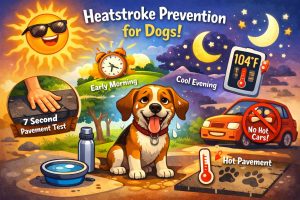
Hot pavement burns paw pads fast. Air temperature can fool you, so you need a direct test on the ground your dog will walk on.
The 7-second hand test
Pick the surface first, like asphalt, concrete, or dark stone. Then place the back of your hand on that exact spot. Count to seven at a steady pace. If you pull away before seven seconds, the surface feels too hot for paws.
So treat that as a clear no. Then switch to grass, dirt, or shaded paths.
If the pavement feels hot, do this next
Take the cooler route. Then shorten the walk and add play indoors. Next, aim for early morning or late evening walks, since the ground cools down more. If your dog accepts boots, use a pair that fits well and does not rub.
Signs your dog’s paws got burned
Look for a sudden limp, frequent paw lifting, or refusing to move. Then check the pads for redness, swelling, or blisters.
So act fast. Rinse paws with cool running water, then call your vet for advice, especially if you see blistering or your dog stays in pain.
The 7 second rule for dogs for petting and greetings
The second version of the rule focuses on consent. You pet for a short time, then you stop. That pause gives the dog room to choose.
Some people use seven seconds. Others keep it shorter, like three seconds. So the number matters less than the pause that follows.
So which version should you use? Use seven seconds as a maximum for light contact, then pause. If your dog gets tense quickly, use a shorter count, then pause.
A quick greeting routine that works in real life
Ask the handler first. Then let the dog come closer instead of stepping into their space. Offer a closed hand for a sniff, then pet the chest or shoulder area. After that, stop and watch.
Green light signs:
- The dog leans in.
- The dog nudges your hand.
- The body stays loose and relaxed.
Red light signs:
- The dog turns away or steps back.
- The dog freezes or stiffens.
- The dog licks lips, yawns, growls, or gives a hard stare.
So treat red light signs as a stop sign. Then give space right away. A dog that can move away stays calmer, and people stay safer.
Where this rule helps the most
New dog days
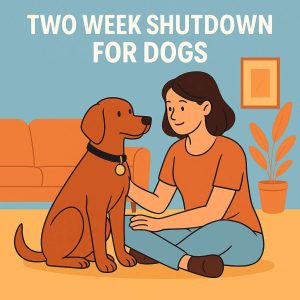
New dogs often need calm, quiet time before they handle busy greetings. So keep interactions short at first, then build up slowly. If you want a clear plan for those early days, this guide on the two-week shutdown for dogs lays out a gentle 14-day reset you can follow.
Dogs on leash
Leashes limit movement, so dogs feel trapped faster. Then greetings get tense. So keep distance, keep the leash loose, and skip face-to-face meetings with unknown dogs.
Kids and dogs
Kids move fast, so adults need to lead every interaction. Then use short petting windows and clear pauses, since dogs handle that better.
Common mistakes that break the rule
People often pet over the head. That bothers many dogs. Then they keep going after a dog freezes, and that freeze counts as a warning. People can misread tail wags too, so they assume the dog feels happy. In reality, dogs wag for many reasons.
So stick to the pause. Then trust what the dog does next.
A quick note about other pets in the home
Petting pauses help with cats too, since cats give small signals before they walk away. Then you get fewer scratches and less stress. If you like research-based pet behavior content, this post on a new Turkish study about cats meowing more to men is a fun read, and it adds context about how pets react to people.
A simple daily checklist
Start with the ground test before you walk. Then pick a cooler route if the surface fails. Next, use short greetings and a clear pause. After that, reward calm choices with a kind voice or a small treat. So you build trust through tiny, repeatable moments.