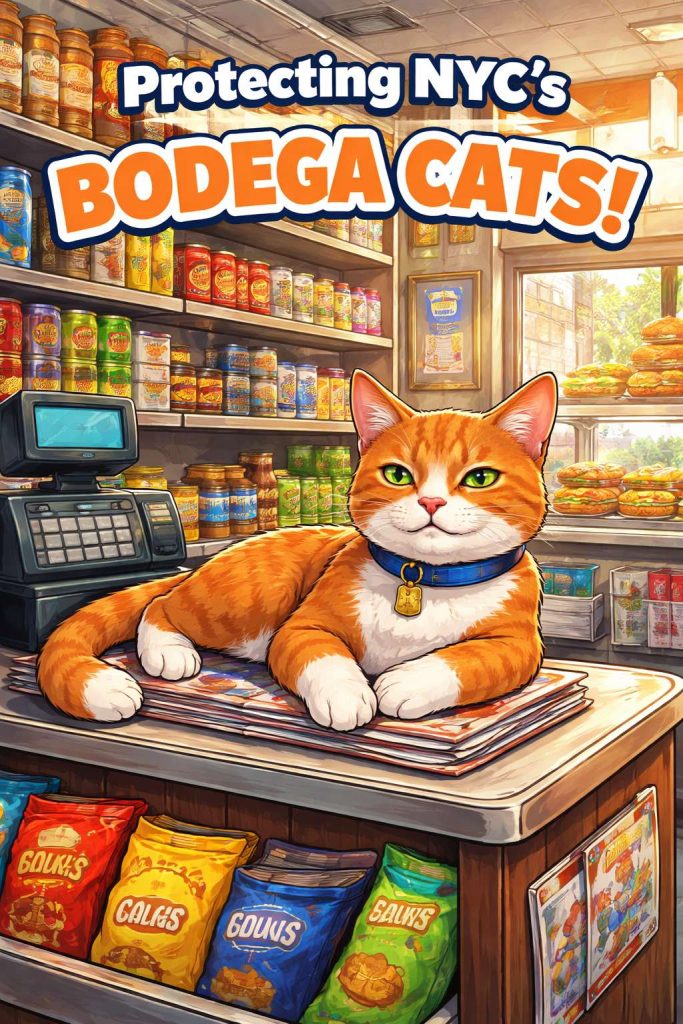
New bodega cats legislation in New York is a state bill, and it has not left committee. It is Assembly Bill A8341, sponsored by Assembly Member Linda Rosenthal. It would have the state Department of Agriculture and Markets set health and safety guidelines for cats living in retail food stores. The bill was referred to the Assembly’s agriculture committee in May 2025 and again on January 7, 2026, and as of October 2026 those referrals are its only actions. Plenty of corner stores keep a cat on site. The cat helps discourage rodents, and it gives the store a calmer vibe on busy days. Still, store owners can end up stuck in a confusing mess of rules, mixed messages, and fear of fines.
The bill tries to do something practical. Its guidelines would let store owners keep cats if they meet care standards that protect the cats and keep stores safe for customers. It focuses on real care requirements, not just penalties. And it treats bodega cats like what they are: living animals that need vet care, a clean space, and steady routines.
Why bodega cats legislation matters right now
Bodega cats do have a job. They hang around the store, they keep pests away, and they turn into part of the daily rhythm. Customers often know them by name. Then the cat becomes a tiny neighborhood celebrity without even trying.
But the legal status is still messy. Many food retail rules do not allow animals inside spaces connected to food handling. Yet bodega cats still exist in real stores, every day, in every borough. That mismatch creates stress fast. A shop owner tries to run a clean store and care for a cat, but the rulebook does not match what is happening in real life.
That is why bodega cats legislation matters. It tries to close the gap between “what people do” and “what the rules say.” It gives everyone a clearer path. It protects public health, and it protects animal welfare too.
What the proposed protections would do
A8341 rests on one straightforward idea. If a store cat is present, the state should set safe conditions and minimum care.
The bill lists the care standards the guidelines must include, at a minimum:
- Basic veterinary care
Cats need routine checkups, vaccines, and parasite control. So a clear standard pushes owners toward normal preventive care, not last-minute fixes. - Spay and neuter rules
Sterilization reduces roaming, fights, and unwanted litters. Then the cat becomes calmer and safer in a busy store environment. - A dedicated cat area inside the store
A defined resting space keeps the cat away from food prep zones. It gives owners and inspectors one clear standard to follow. - Sanitation expectations that fit real stores
The goal stays simple. Clean the right areas, keep litter controlled, and reduce contact with food surfaces. Small stores can do that without major renovations. - Food and water
The guidelines would also cover nutrition, including adequate food and fresh water.
This kind of structure helps everyone. The cat gets better care. Customers get a cleaner environment. Store owners get rules they can follow without constant anxiety.
The biggest problem today: enforcement can feel random
Without guidelines that allow store cats, an inspection can flag a store for having an animal inside even when the cat is healthy and kept away from food.
So owners start reacting in ways that do not help the cat. They hide the cat during inspections. Then the cat ends up in a back room with less light and less comfort. Or the owner keeps the cat out of sight, even from the customers who love it. That is not good for anyone.
Bodega cats legislation can reduce that behavior by replacing uncertainty with rules that reward responsible care. A shop owner should not have to guess what will happen each time an inspector shows up.
What this could mean for small stores
Corner stores already deal with high rent, slim margins, and nonstop foot traffic. Many owners do not have time to decode complicated regulations. They need a clear standard that fits the pace of real work.
So a legal checklist can help in practical ways:
- Owners know what steps keep the cat legal and safe
- Staff can follow one routine for feeding, cleaning, and litter care
- Stores can plan low-cost care like vaccines and flea treatment
- Inspectors can review stores using the same baseline rules
That consistency matters. It lowers stress, and it reduces conflict during inspections. It also supports stores that already treat their cats well. A lot of them really do, and it shows.
What it means for the cats themselves
A store cat can live a long, safe life, but only with steady care. Some bodega cats already get excellent attention. They have vet visits, a clean space, and a predictable routine. Yet other cats are not as lucky. The owner may care, but cost and access get in the way.
So legislation can raise the floor. Minimum standards make it harder for a cat to fall through the cracks. Vet care becomes normal, not optional. Spay and neuter care becomes expected. Basic wellness support becomes part of keeping a store cat at all.
And the “cat zone” idea matters more than people think. A calm spot inside the store gives the cat a place to rest and hide. Then the cat stays out of food storage and prep areas. That helps sanitation, and it helps the cat feel safer too.
If you want a simple guide on keeping animals safe in everyday spaces, this beginner-friendly resource is a good reference: Pet Safety 101: The Complete Beginner’s Guide for New Pet Parents.
Food safety still matters. The balance has to be real
No matter how much people love bodega cats, food safety is still serious. Customers deserve clean environments. Staff deserve rules they can follow without guesswork.
The strongest proposals treat this as a practical balance, not a culture war. Keep the cat away from food prep zones. Keep food surfaces clean. Give the cat a defined area. Then the store stays safer without pretending the cat does not exist.
This approach focuses on outcomes. Clean stores stay clean. Cats stay cared for and controlled. Owners stop living in fear of sudden penalties.
What comes next for bodega cats legislation
A8341 would first have to clear the Assembly’s agriculture committee and pass the full Assembly. It would also need to pass the state Senate and be signed by the governor, and it would take effect 90 days after becoming law. Small changes in wording along the way can affect real enforcement.
Here are the issues that will likely shape the final result:
- How the rules define “retail food store”
- What counts as real separation from food prep and storage
- What proof owners need for vaccines and vet care
- Whether low-cost spay, neuter, and vaccine support becomes part of the plan
- How enforcement changes once standards exist
So what will this look like if it passes? In real life, it should look calm and boring, in a good way. Cleaner standards. Healthier cats. Fewer surprise citations. Less hiding. Less stress. That is the point.
The bottom line
New York’s bodega cats are not a gimmick. They are part of a working system that many stores rely on. Yet the legal risk has stayed real, and the care standards have stayed uneven.
Bodega cats legislation offers a path that fits real life. It can protect cats through basic care rules. It can protect shop owners through clarity and consistent enforcement. Then it can keep stores safer through simple hygiene standards that work in tight spaces.
If New York passes strong, workable protections, the change will feel obvious. Cats stay healthier. Stores stay cleaner. Owners can breathe a little easier. And the neighborhood cat stays right where everyone expects it to be, by the counter, watching people come and go.