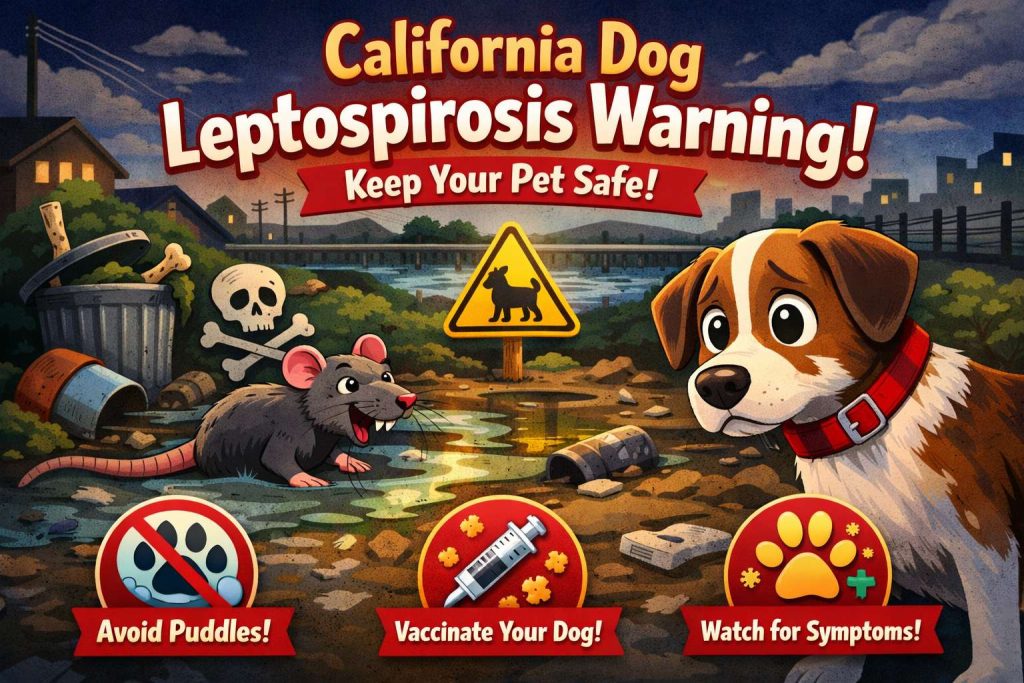
If you live in the Bay Area and walk your dog around Berkeley, this warning matters. Local health officials confirmed leptospirosis in rats and at least two dogs in Berkeley, California. This bacteria can make dogs very sick, and in some cases it can be deadly.
The main concern is focused in northwest Berkeley, near 8th Street and Harrison Street, close to Codornices Creek, near the Berkeley and Albany border. Officials connected these infections to November and December 2025, so the alert is fresh and specific.
What started the warning
Public health teams reported leptospirosis in local rats. Then two dogs tested positive in the same general area. That combination raised the alarm fast, since rats can spread the bacteria through urine, and that urine can end up in puddles, wet soil, and muddy paths.
Leptospirosis often surprises people in cities. Many imagine it as a “country dog” problem. Yet rats live in every type of neighborhood, so urban dogs can run into it too.
Where the risk is highest
In the January 2026 alert, officials pointed to the area near 8th and Harrison as the main hot spot. People living outdoors face the biggest risk since clean water and sanitation can be hard to access. At the same time, dog owners who walk near creek edges, storm drains, and wet grass can face exposure as well.
So even if you do not live in that exact neighborhood, it still helps to understand what to watch for.
How dogs catch leptospirosis
Leptospirosis spreads through water, mud, or soil contaminated by urine from infected animals, and rats are a top source. That sounds scary, but the exposure can be simple.
Here are common ways dogs get infected:
- They sniff or lick wet ground near trash bins, puddles, or alleyways
- They splash through mud after rain
- They drink from standing water in parks
- They investigate areas where rodents hide
A dog does not need to touch a rat directly. One quick drink from a bad puddle can do it. And yes, that can happen on a normal walk.
Signs of leptospirosis in dogs
At first, leptospirosis can look like a basic stomach bug. Then it can turn into a serious emergency. So the timing matters, and the symptom mix matters too.
Watch for these signs:
- Fever
- Low energy and “not acting normal”
- Loss of appetite
- Muscle soreness or stiffness
- Vomiting
- Diarrhea
- Dehydration
- Drinking more water than normal
- Peeing less than normal
- Yellow tint in the eyes or gums
If you spot several of these signs together, call your vet quickly. Early treatment can save a dog’s life, and it can prevent lasting kidney or liver damage.
Can people get leptospirosis too?
Yes, people can get leptospirosis, but it stays uncommon. When the January 2026 alert went out, officials had reported no human cases tied to the Berkeley animal infections.
Even so, it is smart to take basic steps, since humans can get exposed through contaminated water or mud. This mainly happens when it reaches a cut, your eyes, or your mouth.
Update, October 17, 2026. Human cases followed in May 2026, when two Berkeley residents caught leptospirosis. Berkeley public health officials reported on June 10 that one of them died and the other recovered after a long hospital stay. Both lived in a severely rat-infested RV about a mile from the Harrison Street encampment, and officials said delayed access to medical care made their illness worse.
Human symptoms often feel like the flu at the start:
- Fever and chills
- Headache
- Muscle aches
- Nausea or vomiting
- Red or irritated eyes
- Stomach pain
If you feel sick after floodwater exposure or muddy cleanup work, call a medical provider.
What you can do right now to protect your dog
You do not need fear or panic. You just need a few habits that lower risk fast, especially during wet months.
Talk to your vet about the leptospirosis vaccine
A leptospirosis vaccine exists for dogs in the United States. So this is one of the strongest steps you can take, mainly if your dog spends time outdoors in wet areas.
Skip puddles and stagnant water
It sounds obvious, but it works. Treat unknown puddles like a no-go zone, and keep your dog out of standing water near drains and sidewalks.
Keep walks controlled in wet areas
Use a leash near creeks, muddy trails, and trash-heavy zones. Dogs explore with their nose first, and that is where exposure often starts.
Clean paws after rainy walks
Wipe paws and fur when you get home. Then wash your hands with soap and water too. That quick routine reduces the chance of carrying germs inside.
Reduce rat-friendly spaces at home
Rats love easy food. So tighten trash lids, clean up fallen pet food, and avoid leaving kibble outside overnight.
A quick tip that helps with safer walks
Some dogs pull toward puddles or weird smells, and that makes prevention harder. A small training habit can help. Use your hands first to guide your pet, then use your voice after that, and keep the message calm and short.
If your cat is part of the household too, the same idea works at home. This guide is a good read: Hands First, Voice Second: The Cat Calling Trick That Gets Real Results. It keeps the steps simple, and the method feels natural.
What officials are doing in Berkeley
Local health teams and vector control crews are focused on rodent control and risk reduction in the impacted area. Warning notices have been posted nearby to alert residents. Outreach work is happening too, so people understand the risk and know what actions help.
This type of response targets the source, not just the symptoms. And that matters, since cleaner conditions protect pets and people at the same time.
When to call your vet
Call your vet the same day if your dog shows symptoms after:
- Walking through muddy areas
- Drinking from outdoor water sources
- Playing near creek edges
- Spending time around heavy rat activity
Share the details clearly. Mention the location, mention the timing, and mention any puddle contact. That helps your vet decide what to test and treat first.
One quick question people ask is, “Can my dog recover fully?” Yes, most dogs recover with fast treatment, and many return to normal after the infection clears.