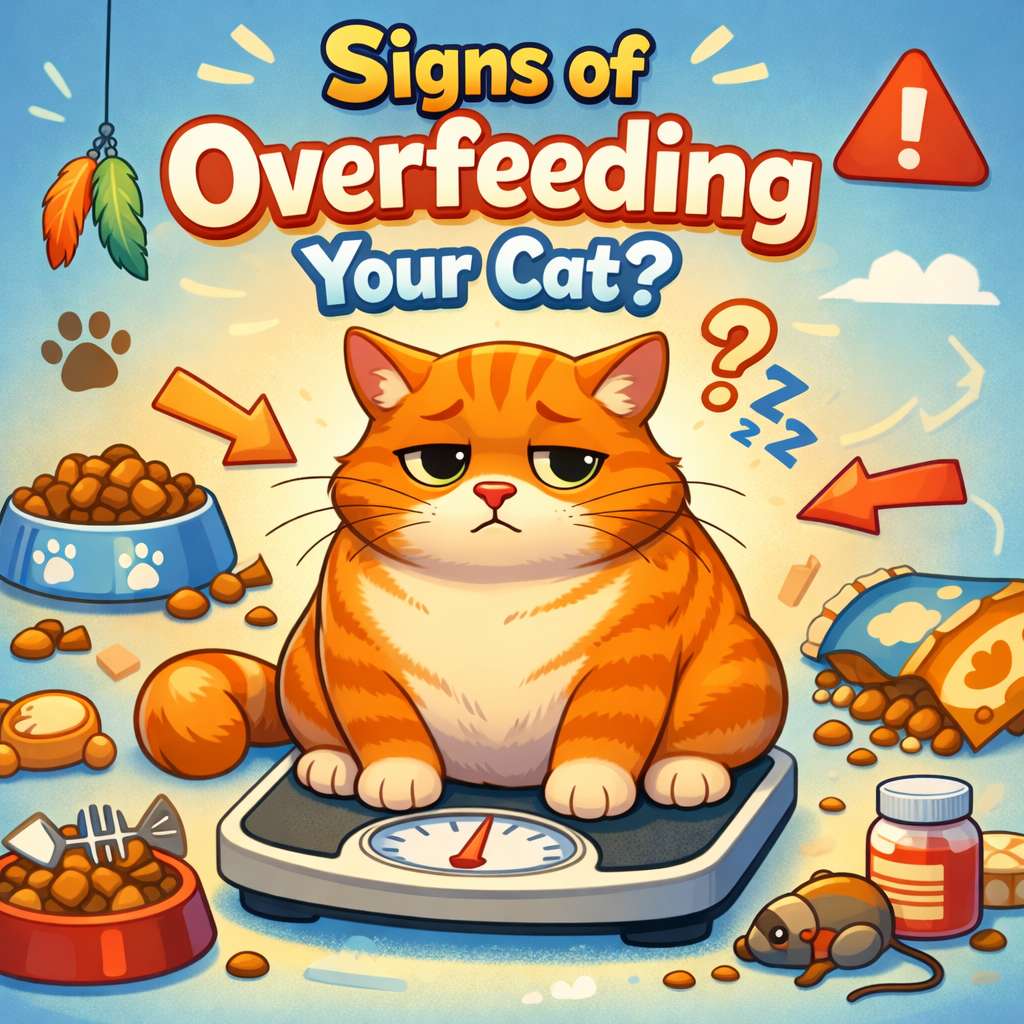
Overfeeding can sneak up on any cat owner. A few extra treats here, a bigger scoop there, and your cat starts to look rounder. Then one day you notice it in photos. Or you notice it when your cat stops jumping up like before.
Can a cat eat too much even when it acts hungry all the time? Yes, that happens a lot. Hunger cues can turn into habits, and some cats learn that begging gets results. So body shape and weight trend give you the real answer.
This guide walks you through a quick body check, clear signs to watch for, and simple steps to get back on track. Then you can feel confident again when you fill the bowl.
What overfeeding looks like in real life
Overfeeding means your cat eats more calories than it uses. So the extra energy turns into body fat over time. Some cats gain slowly, and that makes it easy to miss. Still, the body changes in clear ways, like a fading waistline or a bigger belly fat pad.
Many vets track this with a Body Condition Score. It focuses on what you can see and feel, and that makes it practical at home too. So you do not need fancy gear to start.
A two-minute body check you can do today
Pick a calm moment. Then stand your cat on a flat surface and do three quick checks.
Rib check (hands on).
Run your fingers over the ribs, just behind the front legs. In an ideal body condition, you feel ribs with a light touch and a thin fat layer. So if you need to press to find ribs, your cat likely carries extra fat.
Top view (look down).
Look from above. A healthy shape shows a waist behind the ribs. Then a round, “barrel” shape points to extra fat.
Side view (profile).
Look from the side. A healthy body has a gentle tummy tuck. So a sagging belly and a larger fat pad often point to overfeeding.
Long fur can hide a lot. So trust your hands more than your eyes.
15 signs of overfeeding a cat
You rarely see only one sign. So look for a pattern across body shape, movement, and feeding habits.
Body and shape signs
- Ribs feel hard to find under a thicker layer of fat.
- Waistline fades or disappears when you look from above.
- Belly looks rounder and the tummy tuck is gone.
- Belly fat pad gets larger and swings when your cat walks.
- Fat gathers on the lower back near the tail base.
- Weight creeps up over weeks, and nothing else in the routine changed.
Movement and daily life signs
Extra weight often shows up in the small stuff first. Then, over time, those small changes stack up.
- Less jumping and climbing. Your cat hesitates, takes “half jumps,” or waits for help.
- Play sessions get shorter, and your cat quits sooner.
- Movement looks slower, and rest time goes up.
- Grooming drops, so the coat looks rough or clumpy in spots.
- Hard-to-reach areas get missed, and the belly or lower back stays unkempt.
- The rear end gets messy more often, and you notice a smell sooner.
- Stiffness shows up after naps, and your cat avoids quick turns or sprints.
Feeding pattern signs
Feeding habits can mislead you. Still, they matter when they line up with body changes.
- Begging ramps up and happens on a routine, not just near mealtimes.
- Food disappears fast, then your cat searches for more right after.
- “Bonus calories” happen more than you think, and they add up fast. Treats, lickable snacks, table bites, and food used to hide pills all count.
If your cat begs daily, take a close look at the whole day’s intake. Then compare it to your cat’s body shape, not your cat’s acting skills. For food choices and portion ideas that fit indoor lifestyles, this guide can help: best food for indoor cats.
What overfeeding can lead to
Overfeeding often leads to overweight, then obesity. So the risk for problems like diabetes and joint pain goes up, and normal activity can drop.
At the same time, a sudden hard diet can create trouble too. Cats need steady intake, and they do not handle fasting well. So any weight-loss plan should move in small steps, not big cuts.
How to fix overfeeding without making your cat miserable
Start with a calm reset. Then keep changes small and steady, so your cat stays comfortable.
Measure the full daily intake
Write down everything your cat eats for 3 days. Then you will see the real number.
Include:
- Main food, with the exact amount
- Treats and snacks
- Table food
- Food used for medication
- Anything a second person in the home gives
Cut hidden calories first
Hidden calories do the most damage, and they are the easiest to miss. So look for these common patterns:
- Free-feeding all day
- More than one person topping up the bowl
- Treats given for attention
- Scoops that slowly got bigger over time
Pick one person to own the plan. Then share the plan with everyone in the home.
Keep treats small, and use them with purpose
A simple target keeps treats to a small slice of the day. So give tiny pieces, not handfuls. Then swap some food rewards for play, brushing, or a short calm cuddle on the couch.
Change how you feed, not just how much
Feeding style matters. So try these changes:
- Split food into 2 to 4 smaller meals per day.
- Use puzzle feeders for part of the meal, and slow the pace down.
- Play for a few minutes, then feed right after.
When to call your veterinarian
Sometimes weight gain ties to health issues, not only food. So call your vet if you see any of these:
- Rapid weight gain with no clear change at home
- Breathing trouble, severe lethargy, or collapse
- Repeated vomiting or diarrhea
- A sharp drop in appetite that lasts through the day
- Your cat stops eating for a day, or close to it