

















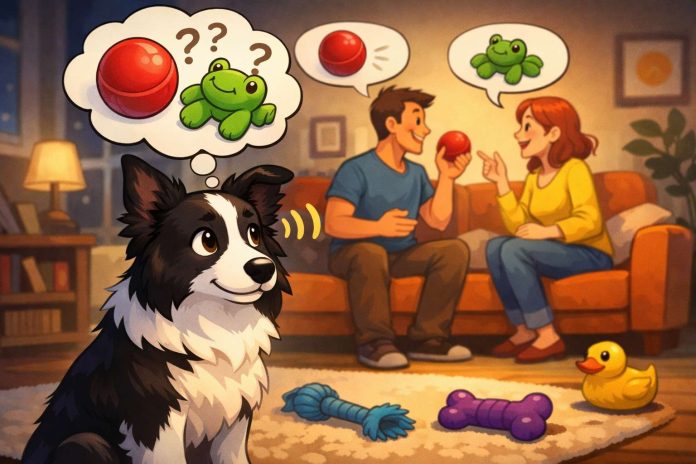
Some dogs do more than react to your tone or follow simple cues. A small group can learn the names of objects. Even better, they can pick up those names just by listening to people talk.
That idea sounds a bit wild at first, but it matches what many pet parents already feel at home. You mention a toy once or twice. Then your dog runs off and grabs it later like it was no big deal.
What “eavesdropping” looks like in real life
Think about an ordinary evening. You talk to a family member, you tidy up, and you say things like “Where’s the red ball” or “Put the rope toy away.” You are not training. You are just living your life.
For most dogs, those words fade into the background. Still, a rare group seems to store the label and connect it to the right object later.
Scientists call these dogs Gifted Word Learner dogs. They already know a lot of toy names, and they learn new ones faster than the average pet dog.
What the tests asked the dogs to do
The basic setup is simple. Give the dog two brand-new toys with brand-new names. Then see if the dog can pick the right toy when the owner says the new name.
In one part of the test, the owner teaches in a normal way. They play with the toy and say the name out loud, like many people do at home.
In another part, the humans talk to each other and use the toy name in conversation. They do not turn it into a lesson. They do not hype the dog up. The dog just hangs around and listens.
Then comes the moment of truth. The owner asks the dog to fetch the toy by name from a pile that includes many familiar toys.
So can a dog really learn a new word just by listening in. Yes, some of them can, and that is the interesting part.
Why this is a big deal for dog learning
Most dogs learn action cues first. Sit. Down. Come. Those words link to movement and routine.
Object names ask for a different skill. The dog has to treat a sound as a label for a thing. Then the dog has to store that label in memory. Then the dog has to use it later, in a messy real room with distractions.
That is a lot of steps for a brain that does not use human language. Yet these dogs manage it.
This does not mean dogs talk in their heads. It also does not mean every dog will learn toy names like this. The point is narrower. Some dogs can build a clean word to object link from everyday speech.
What pet parents can do with this at home
You can take a few practical lessons from this, even if your dog is not a rare “word learner.”
Start with one object. Pick a simple name and stick to it. If you call the same toy “rope,” “tug,” and “blue one,” you make the job harder.
Keep practice short. A couple of minutes is enough. Then stop and move on with your day. Dogs learn well in small bites.
Use real objects your dog likes. A toy that gets ignored will not help much. A favorite toy gives you better attention, and the word sticks faster.
Then test it. Put two toys on the floor. Say the name once. Let the dog choose. If the dog gets it wrong, stay calm and reset. Repetition helps, and pressure often hurts.
Also pay attention to safety during toy play. Broken plastic, loose squeakers, and frayed ropes can cause problems fast. If you want a simple, practical refresher, you can skim this guide on pet safety basics for new pet parents. It pairs well with any new routine you teach at home.
The bigger takeaway
Your dog listens more than you think. The words you repeat during normal life can shape what your dog learns, even when you are not “training.”
At the same time, these headline-level results come from a special group of dogs. Most dogs will need more direct practice to learn object names, and that is fine. You can still build a strong vocabulary with patience, steady labels, and a lot of playful reps.
If you try this at home, start small. Keep it fun. Then see what your dog surprises you with.