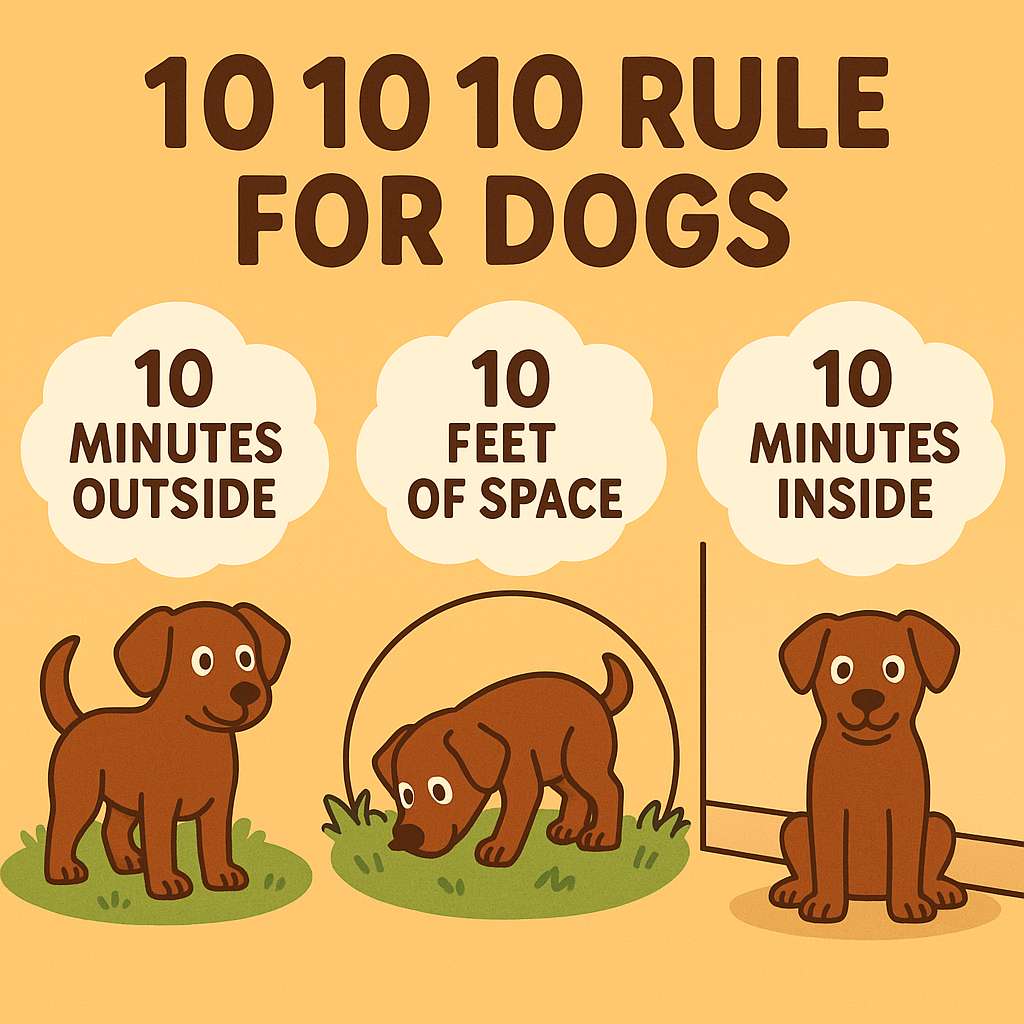
The 10 10 10 rule for dogs is a potty training loop you repeat until your dog goes outside. You take your dog out for 10 minutes. You keep the potty area tight, around 10 feet. Then you bring your dog back inside for 10 minutes as a reset, and you try again.
It sounds basic, and it is. Still, the routine feels calming on hard days, so you stay consistent.
What the 10 10 10 rule means
This routine has three parts.
- 10 minutes outside for a focused potty trip
- 10 feet of space in one small potty zone
- 10 minutes inside as a calm reset after a no go
You repeat the cycle until your dog pees or poops outside. Then you reward right away.
Why this routine works so well
Potty training slips when a dog gets freedom too soon. The dog wanders off, then an accident happens, and you miss the moment.
This rule flips that pattern. Your dog stays focused outside, and you stay ready inside. So accidents drop, and learning speeds up.
How to do the 10 10 10 rule, step by step
Choose one potty spot
Pick one spot you can reach fast. Use the same spot each time for the first weeks, and keep the area small.
Use a leash, even in a yard. The leash keeps the trip focused, and it keeps you close enough to reward.
Do the 10 minute outside trip
Walk to the potty spot, then stand still. Say one cue, like “go potty.”
Let your dog sniff. Stay quiet. Skip play for now.
Stay out for up to 10 minutes. Then make a clear choice.
Reward the exact moment your dog finishes
The second your dog finishes peeing or pooping, reward right away. Use a treat your dog loves. Add calm praise, then give a short walk or a minute of free time. Your dog learns the order, potty first, fun next.
No potty. Do the 10 minute reset inside
Bring your dog inside for 10 minutes.
During the reset, keep your dog close:
- use a leash indoors, or
- keep your dog in a small safe area near you
No play. No roaming. Then go back out and repeat the loop.
Add freedom in small steps
Once your dog goes outside often, widen freedom inside slowly. Give one room first. Then add another room later. Keep watching, and keep the routine steady.
A simple schedule that supports the rule
Timing matters, so build potty trips around daily triggers.
Take your dog out:
- right after waking up
- right after naps
- after play
- after training
- after meals
- after a big drink of water
- right before bed
Many puppies poop around 15 to 30 minutes after meals, so plan a trip in that window, then reward.
For a broader safety routine that supports training at home, this guide helps a lot: new pet safety basics for first time pet parents.
How long until you see progress
Most owners see fewer accidents within 7 to 14 days with strict consistency. Full house training often takes longer, so stick with the loop.
Age matters, and habit history matters, so your job stays the same. Keep trips frequent, keep supervision close, and reward the right moment.
A planning tip helps here. Many puppies can hold their bladder for about their age in months, plus one hour, up to a practical limit. Use it as a scheduling guide, then adjust based on real life.
Common mistakes that slow things down
Too much freedom inside
Your dog sneaks away, sniffs, then pees.
Fix: keep your dog in sight. Use baby gates. Use a leash indoors during training blocks.
Potty trips turn into playtime
Your dog learns that outside time means fun, not potty.
Fix: keep potty trips boring. Then give play after your dog goes.
Long gaps between trips
Accidents build a pattern fast, and the habit sticks.
Fix: shorten the time between trips for a week, then stretch it slowly.
Punishing accidents
Punishment can create fear, and it can teach hiding.
Fix: clean the spot well, then reset the routine. Reward wins outside, and supervise inside.
Weak cleaning
Old odor pulls dogs back to the same place.
Fix: use an enzymatic cleaner and follow the label steps.
Crate training and the 10 10 10 rule
A crate can speed house training. Many dogs avoid soiling their sleep space, so the crate supports the routine.
Use the crate for short reset blocks and naps. Then take your dog out right after crate time ends.
Pick the right crate size. Your dog needs space to stand, turn, and lie down. Extra space can invite a potty corner, so keep it snug.
Adult dogs and rescue dogs
The 10 10 10 rule works for adult dogs too. Many adult dogs learn fast once the pattern stays steady.
Rescue dogs often need structure first. Keep the first days calm, and keep the potty spot the same. Track meals and water, then stick to the loop.
Stories about real medical care can help remind you to watch for health signals, not only training signals. This one is worth reading: a cat named Pepsi gets a life saving pacemaker.
Quick troubleshooting
My dog pees outside, then pees again inside. Stay outside a little longer after the first pee, then reward again.
My dog goes right after we get back inside. Go back out right away, then stand still, then reward the second your dog goes.
My puppy has accidents at the same time daily. Move the potty trip 10 minutes earlier for one week, then keep the rest of the routine the same.
My dog refuses to go in rain or snow. Use a coat for small dogs, then pick a sheltered spot, then reward fast.
When a vet visit makes sense
Call your vet when you see warning signs, not later.
- straining or signs of pain
- blood in urine
- sudden accidents after steady success
- very frequent urination
- excessive thirst plus accidents
A health issue can look like a training issue, so check it out.