
A lot of people ask what word makes dogs calm. So here is the honest answer. No single word works by itself. Still, one word can work really well after you teach it the right way.
The best starter word is “settle.” It is short. It is clear. Then, once your dog links it to a calm action and a reward, the word starts to feel soothing.
Why a word can calm a dog
Dogs learn patterns fast. So your job is simple. You pair one cue word with one calm behavior, then you pay that behavior. Over time, the cue starts to predict calm. Then your dog relaxes sooner.
If you like the “dogs learn early” side of this, read this piece on new puppy research and what dogs learn before 4 months. It helps you train with better timing.
Pick your calm word
Pick one word you will use only for calm behavior. Then stick to it.
Good options:
- Settle
- Mat
- Place
- Bed
- Relax
Choose a word that sounds different from your other cues. Then use the same tone each time. Short and neutral works best.
Teach “settle” with mat training
Mat training works well for most dogs. So you teach your dog to go to a mat, then stay there, then relax there. It gives your dog a clear job, and it gives you a clear way to reward calm.
What you need
- A non-slip mat or dog bed
- Pea-sized treats
- A marker word like “yes”
Step 1. Make the mat pay
Put the mat on the floor. Stay close.
- The moment your dog steps on the mat, say “yes,” then give a treat.
- Toss one treat off the mat, so your dog steps off.
- Wait. The moment your dog steps back on, say “yes,” then treat again.
Do 10 to 15 repeats. Then stop. Short sessions keep it clean.
Step 2. Add the cue word
Now start the same game. This time, say the cue right before your dog steps onto the mat.
- Say “settle.”
- Your dog steps on the mat.
- Say “yes,” then treat.
Keep the cue simple. Then give your dog a second to respond. Repeating the cue teaches your dog to tune you out.
Step 3. Shape the down
Next, wait for more calm.
- Dog steps on the mat. Say “yes,” then treat.
- Pause one second. Then treat again for staying on the mat.
- Wait for a sit or a down. The instant it happens, say “yes,” then treat.
Most dogs offer a down after a few rounds. So reward the down more than the stand.
Step 4. Build calm time in small pieces
Now your dog lies down on the mat. Great. Then you build time.
- Give one treat every 2 to 3 seconds for 15 seconds.
- Stop feeding. Wait 2 seconds.
- Feed again for staying down.
Stretch time little by little. So aim for two short sessions per day. Two minutes each is plenty.
Step 5. Add a release word
A release word ends the job. Pick one word like “free” or “ok.”
- Dog lies on the mat.
- Pause 2 seconds.
- Say “free.”
- Toss a treat off the mat.
Now your dog learns a full loop. Settle means relax. Free means you can move again.
Use the word in real life
Start in easy spots. Then widen the map.
Good practice moments:
- Before meals
- Before you open the door
- During TV time
- During a short work call
- After a quick greeting with guests
Stay close at first. Then take one step back. Then two. Small changes add up fast.
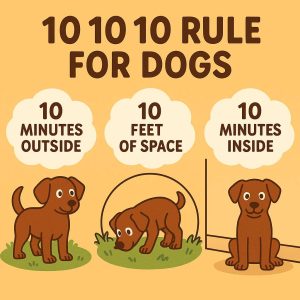
If you are working on house training at the same time, pair calm training with a simple routine. This guide on the 10 10 10 potty training rule fits well with “settle,” since both reward the behavior you want.
Fix common problems fast
Your dog pops up right away
Lower the time goal. Then feed faster for 10 seconds. After that, end the session.
Your dog grabs the mat and runs
Use a heavier mat or a bed. Then reward paws on the mat fast. Next, reward the down.
Your dog gets too excited with treats
Switch to lower-value food. Then use part of your dog’s meal. Keep your hands slow and quiet.
Your dog calms at home, not outside
Outside has motion, smell, and noise. So drop the goal. Ask for one second of calm, reward, then leave.
Big fear needs a different plan
“Settle” helps for normal excitement. Still, it will not fix real panic on its own. Storm fear and firework fear need slow steps, low intensity, and steady rewards. Then your dog builds a new response over time. For severe cases, talk with your veterinarian, then follow a clear plan.