People love to say dogs are getting smarter. New research does not show that, but it does show how early dogs build their thinking skills and how they respond to words. Scientists now track puppy learning step by step, and they test dogs in everyday homes, not just in labs. The story that comes out feels simple. Dogs learn early, and many dogs pick up human words and cues fast.
That does not mean every dog turns into a furry genius. It does mean a lot of “smart” behavior starts sooner than most owners think.
A puppy study shows how fast key skills show up
In one large puppy project, Hannah Salomons and colleagues at Duke University followed more than 100 service dog puppies, in a study published in Animal Behaviour. They tested the pups every two weeks from 8 to 20 weeks of age. The tasks looked at memory, impulse control, and how puppies read human gestures.
By 16 weeks, nine of the 10 cognitive skills the team tested had already developed. That timeline matters for real life. Many owners wait to “start training later,” but puppies already build habits and patterns during that early window. They learn where good things come from. They learn what gets attention. They learn what ends a game.
This research also points out a detail that feels very true in daily life. Puppies do not grow their skills as one neat score. Each skill grows at its own pace. A pup can be great at one task, then struggle with another. One puppy can remember a rule well, then lose control around distractions. Another puppy can stay calm, then forget a cue the next day. That does not mean the puppy is stubborn. It means the brain is still wiring up those systems.
Button “talking” is not just a trend. It is now part of research
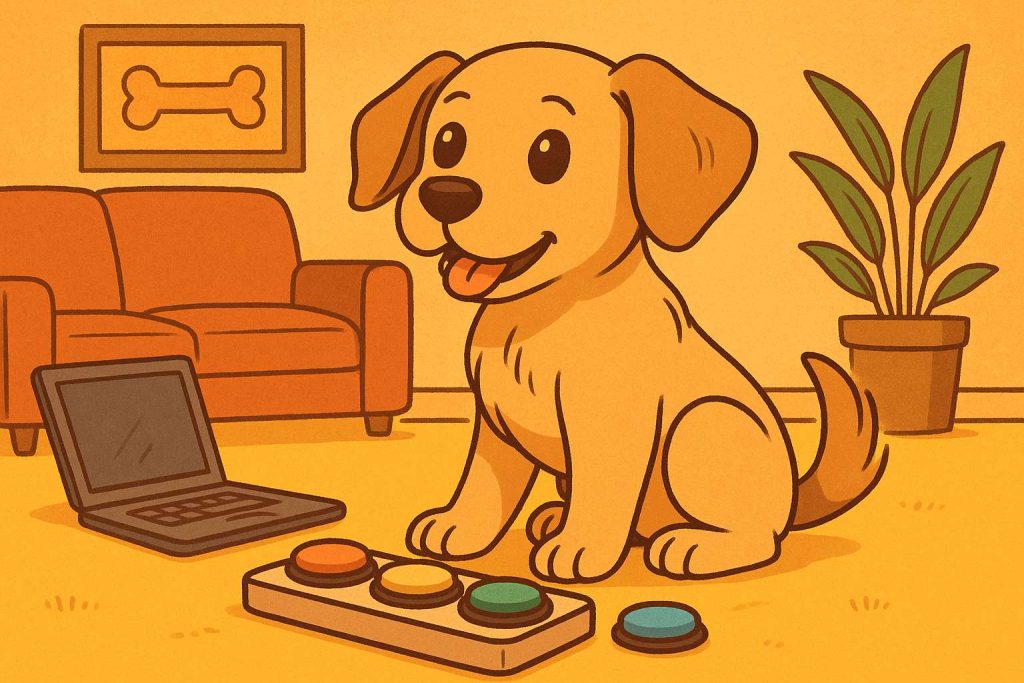
You have probably seen videos of dogs pressing buttons that say “outside” or “play.” The big question is simple. Do dogs understand the words, or do they just react to a person’s tone and body language?
Home tests with button-trained dogs (Bastos and colleagues, PLoS One, 2024) suggest a real link between certain words and certain actions. Dogs responded in ways that matched words like “play” and “outside.” They reacted when a person spoke the word, and they also reacted when a button played the word. Some tests even included an unfamiliar person pressing the button, and the dogs still showed similar patterns.
That does not mean dogs “talk” the way humans do. It means many dogs can connect a sound to a goal, and they keep that link steady across different situations.
Dogs press button pairs in patterns, not at random
There is another concern people raise about soundboards. Some think dogs just smack buttons, then owners read meaning into it.
The same research group checked that idea in a second 2024 paper, in Scientific Reports, using a very large dataset from real homes. It included a huge number of button presses from many dogs over many months. A big share of the presses included more than one button. The pattern was not random at the group level. Certain two-button pairs showed up more than chance would predict.
The analysis also suggested dogs did more than copy humans. Owner button presses did not fully explain what dogs pressed. That points to learning inside the dog, not just imitation or lucky guessing.
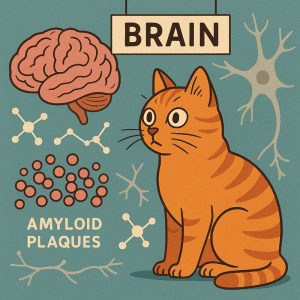
If you like this kind of brain-and-behavior research, you can also read this related piece about aging brains in pets: a cat dementia study that links synapse changes to Alzheimer’s.
What this means for owners in plain terms
This research does not claim dogs evolved into a new species in a few years. It shows something more practical. Many dogs build key thinking skills very early. They also tune in to humans in a special way. They watch our hands, our eyes, and our routines. They also learn that some sounds predict real events.
So the best advice stays basic.
Start training early. Keep cues short and clear. Reward the behavior you want right away. Keep sessions brief, then stop on a good moment. A puppy learns from every day life. It learns from the leash, the door, the bowl, and the way you react.
That is the real reason dogs can feel “smarter” than ever. We see more of what they can do, and we now have better ways to measure it.