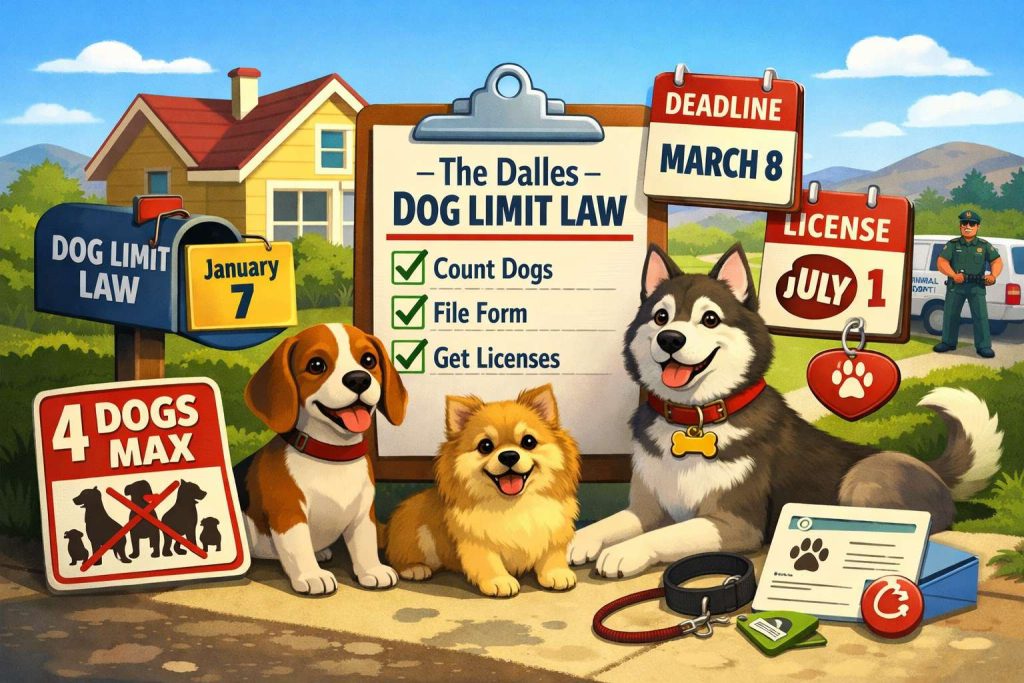
A dog control rule that took effect on January 7, 2026 sets new limits on how many adult dogs a household can keep inside The Dalles city limits. So the first step is simple. Count your adult dogs and match that number to your housing type.
This change hits some homes harder than others. Still, the city built a path for families who already had more dogs than the new cap allows. That path has deadlines, and it needs quick action.
The new caps, in plain terms
The cap depends on the type of home.
Single family homes can keep up to four adult dogs.
Duplexes and multifamily housing are capped at two adult dogs.
There is a separate breeding limit too. A home is limited to one adult female dog for breeding.
Puppies under six months old do not count toward the adult limit. So a young puppy does not push a home over the cap. Then, once a dog reaches six months, that dog counts as an adult.
Homes already over the limit need paperwork
Some households already had more dogs than the new cap on January 7. So the city created a “nonconforming” status that lets those dogs stay in the home.
That status is not automatic. Next, the owner needs to file a Nonconforming Dog Declaration within 60 days of January 7. That sets a clear deadline of March 8, 2026.
After that, each declared nonconforming dog must be licensed by July 1, 2026.
There is one detail that changes long term plans. Nonconforming dogs cannot be replaced. So the total number of dogs at the property has to drop over time until it matches the standard cap for that dwelling type.
Here is what that looks like in real life. A single family home with five adult dogs can keep those dogs after filing the declaration and licensing every adult dog by the deadline. Still, the home must plan for the future. The count has to return to four later, and the extra dog cannot be replaced.
Licensing is a deadline, not a suggestion
All adult dogs in the city must be licensed by July 1, 2026. So families should start gathering the basics early, then avoid a last minute scramble.
Licensing requires a current rabies vaccination certificate. Fees apply too, and the city plans to approve the fee schedule at a City Council meeting on January 26, 2026.
A lot of families already keep vet records in a drawer or on a phone. Great. Now is the time to put them in one easy place, then keep copies ready.
Keep these items together:
- Rabies vaccination certificate for each adult dog
- Proof of your current address
- Declaration paperwork for any nonconforming dogs
Tags and control rules matter day to day
Licensing is not just a record. It connects to identification rules, and it helps the city return a dog faster after a pickup.
So keep collars in good shape. Keep tags attached. Then check that your dog wears the tag during outings, not just on vet days.
Control rules matter in public spaces too. Dogs must stay under the keeper’s control off the owner’s premises. In most places, that means a leash.
That point sounds basic, yet it causes a lot of trouble. A loose dog can lead to a complaint. Then a simple check can turn into questions about licensing and the new household cap.
How “families risk losing animals” spreads
People hear “limits” and think the city will remove pets right away. In practice, families often run into trouble after a chain of small events.
A dog slips out the gate. A neighbor calls it in. The city checks the home. Then the city finds missing licenses, missing declaration paperwork, or more adult dogs than the cap allows.
So the safest plan is boring, and boring is good here. File the declaration for dogs over the cap. License every adult dog by July 1, 2026. Keep dogs under control outside the yard.
Fines can stack up fast
Fines vary by violation and severity. Still, even the smallest fine feels rough during a tight month.
A licensing violation can bring a fine up to $50.
A public nuisance dog case can bring a fine up to $500.
A dangerous dog case can bring a fine up to $1,000.
So it helps to treat licensing like a yearly bill. Put it on the calendar. Then keep rabies shots current and paperwork easy to find.
A quick note on costs and hard choices
For many families, the stress is not only rules. It is money too. Vet visits, vaccines, food, and surprise injuries add up, and multi dog homes feel it first.
Some owners look at pet insurance at this point. That can help in certain cases, but it can bring tradeoffs too. This guide on pet insurance disadvantages lays out what people give up with a policy, so you can decide with open eyes.
A simple checklist to stay on track
- Count adult dogs in the home
- Match your count to your housing type cap
- File the nonconforming declaration by March 8, 2026 for homes over the cap
- Update rabies shots that are not current
- License every adult dog by July 1, 2026
- Keep collars and tags ready for trips outside the yard
- Keep dogs under control off the property