If you grab a plastic bottle of water or soda, you are holding PET. It is the clear, lightweight plastic used for a huge share of drink bottles. People like it for a simple reason. It is convenient.
Still, scientists keep asking a pretty direct question. What chemicals sit inside that plastic, and what can move into the drink during storage?
A recent peer reviewed study took a close look at this. It compared bottles made from virgin PET with bottles made from recycled PET, often called rPET. The goal was not to scare people. The goal was to measure what shows up, then push for better control where it is needed.
What the researchers looked at
The team compared real products, not lab only samples. They tested beverage bottles bought in two different US states. Then they looked at other PET based items too, including textiles tied to everyday use.
They used two testing steps. One step focused on migration into water under set conditions. The next step used extraction methods that pull out a wider mix of compounds stored inside the plastic itself. That second step matters, so it can reveal chemicals that sit quietly in the material and show up later.
So the big theme here is time and conditions. A bottle used right away is one case. A bottle stored for weeks is another case. Heat can matter too.
What showed up in recycled PET
The study grouped findings into a few buckets.
One bucket includes chemicals tied to manufacturing and plastic additives. Another includes organophosphate esters, which can come from additives or contamination. Then there is a large bucket called NIAS, short for non intentionally added substances. These can form during processing, appear as breakdown products, or enter during sorting and recycling.
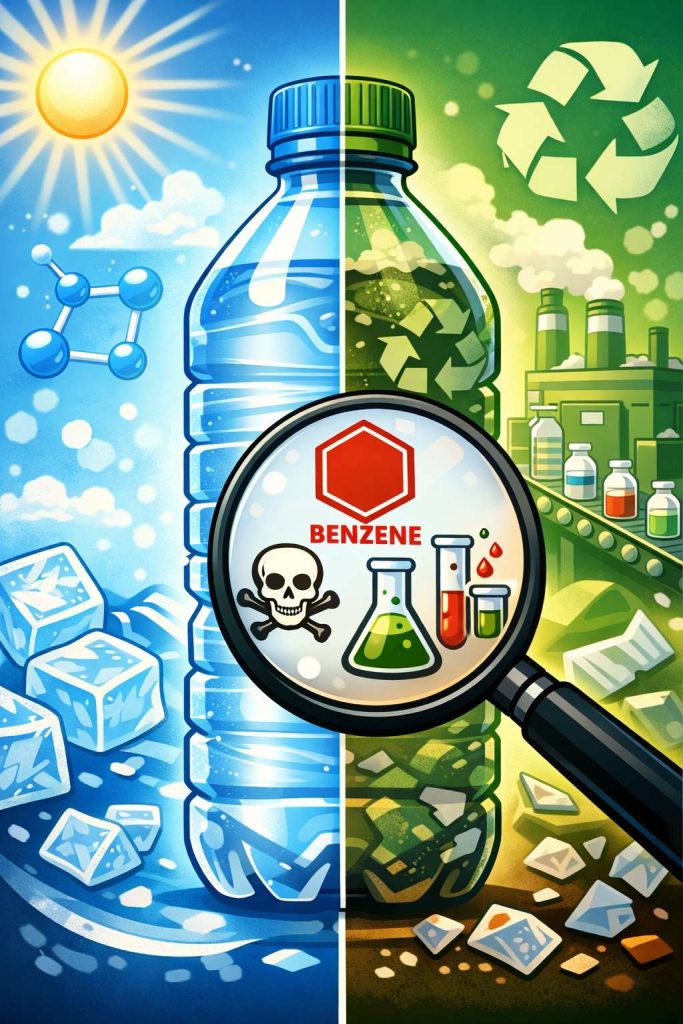
One finding got a lot of attention. In this testing set, the researchers detected benzene in recycled PET bottle samples. That is a big deal on its face, since benzene is widely known as a hazardous chemical at certain exposure levels.
At the same time, the study did not say virgin PET is “clean.” Virgin PET samples showed higher levels of other compounds linked to PET chemistry, including ethylene glycol related signals reported by the authors.
So the takeaway is not “recycled is bad and new is good.” It is closer to this. Recycling can add extra contamination pathways, and both material streams still deserve close screening.
Why location and supply chains matter
The study reported differences between bottles bought in different states. That matters, since it points to real world variation. Sorting quality varies. Recycling inputs vary. Processing details vary.
Then small differences stack up. A cleaner input stream can mean fewer unwanted chemicals. A messy stream can mean more surprises in the final product.
Detection is not the same as health risk
It helps to slow down here. Finding a chemical in a lab test does not automatically mean a person faces harm from normal bottle use. Risk depends on dose, exposure time, and how often exposure happens.
Even so, benzene is not a chemical anyone wants showing up in food contact materials. So this study supports a very practical next step. Better control of recycling feedstock, tighter checks during processing, and stronger screening for chemical mixtures.
The study included lab based bioactivity tests on extracts as well. The authors reported hormone receptor antagonism in those tests. At the same time, they did not show a clear split where one material type always looked safer. So the broader message stays the same. Mixed chemical exposure is complicated, and it needs better measurement.
What you can do right now
You do not need fancy gear or a new routine to lower exposure.
Keep bottled drinks cool and out of direct sun. Heat can speed up chemical migration.
Skip storing bottles in hot places, like a car. Time plus heat is not your friend here.
Avoid reusing single use PET bottles for long periods. They were not built for weeks of reuse.
Use glass or stainless steel for daily water when it fits your day.
Rotate bottled drinks at home, so they do not sit around for months.
Then there is the bigger, everyday point. Plastic shows up in places it should not. You see it in bottle chemistry debates, and you see it in food recalls too. If you want a quick example from the pet world, read this update for dog owners: check freezers after a frozen food recall for plastic pieces.
What to watch next
Recycled content targets are rising in many markets. So rPET use will keep growing. That is good for waste reduction, yet it raises the bar for quality control.
Next, expect more research that tests real bottles across storage time, temperature, and different recycling systems. Then expect more pressure on “food grade recycled” rules, plus more public discussion about which chemicals should trigger action.