A fatal dog attack in Shelburne County has pushed the “dangerous dog” debate back onto council tables across Nova Scotia, and the tone changed fast. People want safer streets, and they want it now, so breed bans come up almost right away. Yet the province has already seen what happens next. Towns pass breed-based rules, and then the rules start to wobble once real enforcement begins.
On January 3, 2026, police responded to a dog attack on Upper Sandy Cove Road in Welshtown, Nova Scotia, and the early reports were grim. A youth riding a bicycle passed a property, and three large dogs attacked. The youth later died in hospital. The RCMP identified the dogs as two Cane Corsos and a Rottweiler, so the public reaction quickly turned toward breed. On August 27, 2026, the RCMP said it had closed its eight-month investigation, finding insufficient grounds to lay charges.
That reaction is human. People look for a clear cause, and a breed label feels clear. But law and enforcement rarely work that way, and Nova Scotia towns have learned that lesson the hard way.
Clark’s Harbour tried a prohibited list, and court questions followed
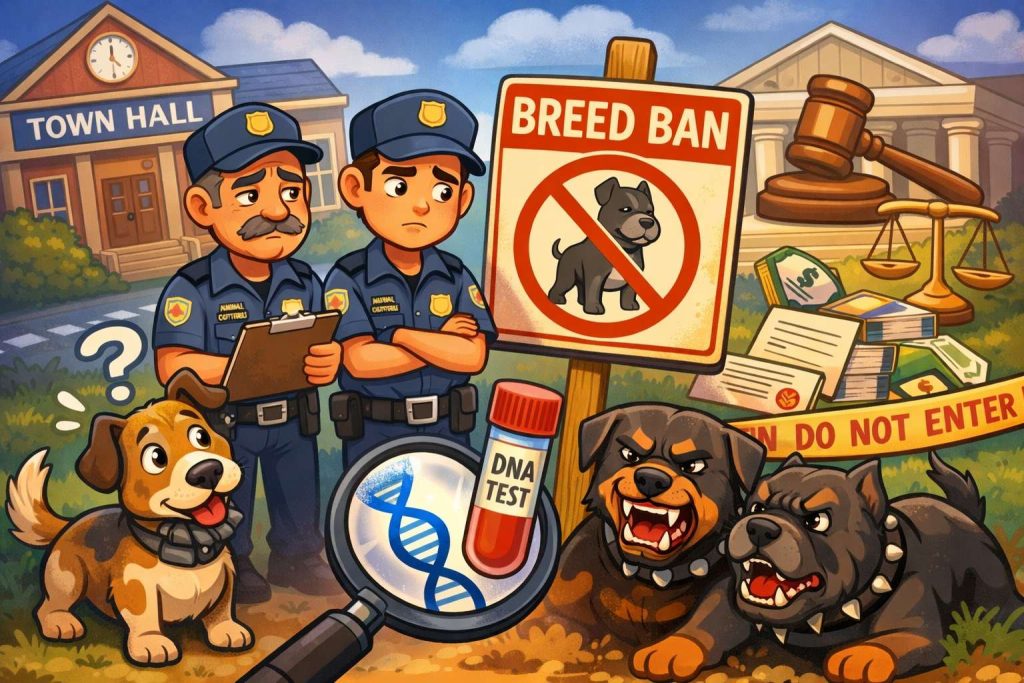
Clark’s Harbour, a small town in Shelburne County, adopted a bylaw that named prohibited breeds and mixes, and it looked straightforward at first. The trouble starts when a town must answer one basic question. What breed is this dog, and who decides.
In one dispute tied to enforcement, the town treated a dog as a banned type, and the owner challenged that label. A DNA test later found the dog was a mix of five breeds, none of them banned by the town. In February 2020 a judge ruled for the owner, finding the town had not backed its breed claim with evidence. The message to other municipalities was simple, and it landed with force. A breed ban can fall apart the moment a town must prove breed, not just point at a dog and say “that one.”
So even if council members feel confident at a meeting, enforcement staff still need a standard that stands up under pressure. That is where breed lists often crack.
Guysborough shifted away from breed labels, and the reason is practical
The Municipality of the District of Guysborough dealt with its own tension around breed language, and then it pivoted. In January 2020 it amended its dog bylaw to say it does not subscribe to or endorse breed-specific legislation. Its rules focus on a dog’s conduct and on owner control, not a breed name.
That shift makes sense in the field. A behaviour-based rule lets an officer document actions, gather statements, and apply the same yardstick to every dog. A breed list can push an officer into a role they never signed up for, and that role is hard to defend when an owner disputes the label.
Why breed bans break down once the paperwork starts
Breed bans often fail for a few plain reasons, and those reasons show up again and again.
Mixed-breed dogs are common, and visual guesses vary from one person to another. A dog can look like a banned type, and then a test or a second opinion tells a different story, so the case turns into a debate about identity, not safety.
Then cost enters the room. Enforcement becomes a proof problem, and a town needs evidence strong enough to survive a legal fight. DNA tests cost money, and they can spark new arguments about what the results mean for a bylaw that talks about “type” or “mix.”
Small municipalities feel that weight quickly, and one contested case can eat staff time and legal budgets. Then enforcement gets uneven, and residents notice. So a bylaw can sit on the books, yet officers avoid using it except in the most extreme cases, and that is not a real safety plan.
What towns can do right now in Nova Scotia
Nova Scotia municipalities already have authority to regulate dogs through local bylaws, and those bylaws can cover the basics that matter every day. Think licensing, dogs running at large, leash rules, containment rules, impound steps, and penalties.
There is another key point, too. Towns can build systems that react to risk based on conduct, not breed. That means clear steps after a bite report or a chase report, and clear consequences for repeat violations. It also means faster follow-up, and better coverage for animal control, so warnings do not sit for weeks.
Those steps are not flashy, but they are workable, and they hold up when a case gets tense.
Why clear facts matter, even outside the dog debate
When fear spreads, stories travel fast, and pet stories can spiral online in a day. You can see that pattern in other animal topics as well. For a good example of how a viral claim can drift away from reality, read this breakdown of the rare Canadian tuxedo cat story. It is a reminder that details matter, and then policy choices should rest on solid ground, not rumor.
What this means for towns weighing new restrictions
After a fatal attack, councils face heavy pressure to act, and residents deserve real action. Breed bans can look like a fast fix, but the 2020 cases in Clark’s Harbour and Guysborough suggest a different path. Towns do better with rules they can apply fairly, consistently, and quickly.
So the real question is not “Can we ban a breed.” The real question is “Can we enforce a rule that cuts risk in daily life.” Behaviour-based bylaws, strong control requirements, and consistent enforcement give municipalities a better shot at that goal, and they avoid the proof problems that keep sinking breed bans.