The cat ownership and schizophrenia link has hovered in the background for years, and people keep sharing it as a rumor. Then it fades again. A 2023 research review by McGrath, Lim and Saha in Schizophrenia Bulletin keeps pulling it back into focus, and it comes with real numbers, not just chatter.
So is the cat ownership and schizophrenia link real. The review found a measurable association across multiple studies, and that is the headline. But it did not prove cause and effect, and it did not label cat owners as “at risk” by default. It simply showed a pattern that appears often enough to take seriously.
What the review found
The researchers gathered past studies that tracked cat exposure and schizophrenia-related diagnoses. They screened a large set of papers, and then they included 17 studies from 11 countries in the final review.
The studies did not all define “exposure” the same way, and that matters. Some counted living with a cat. Some counted cat ownership at any point. Some tracked close contact, and a few looked at events like cat bites. Many studies focused on exposure earlier in life, and that timing keeps coming up in this topic.
When the researchers pooled results from the studies that reported unadjusted data, they reported an odds ratio of 2.14 for schizophrenia-related disorders among people with cat exposure. That number points to higher odds in the exposed group. Then one study stood out with an unusually large effect, so the authors ran a second analysis without it. The pooled estimate dropped to 1.56, and the association still remained.
The review also discussed “psychotic-like experiences,” such as subclinical symptoms. Yet those results did not line up as cleanly across studies, so the strongest headline stayed with schizophrenia-related disorders.
What the cat ownership and schizophrenia link does and does not mean
This is where online posts often go off track. A link in observational research does not prove that cats cause schizophrenia.
Observational studies can reveal patterns, and they can flag risks worth studying. But they cannot fully rule out other factors that shape both cat exposure and mental health outcomes. Cat exposure can track with other life factors, and those factors can matter a lot. For example, household stress, early childhood setting, urban living, family history, and access to care can all shift risk in ways that are hard to capture in one dataset.
Many studies try to adjust for confounders, and that work helps. Still, the adjustment varies from paper to paper, so uncertainty remains.
So should cat owners worry. Not really. Most cat owners never develop schizophrenia, and the research does not say they will.
Why toxoplasma keeps showing up
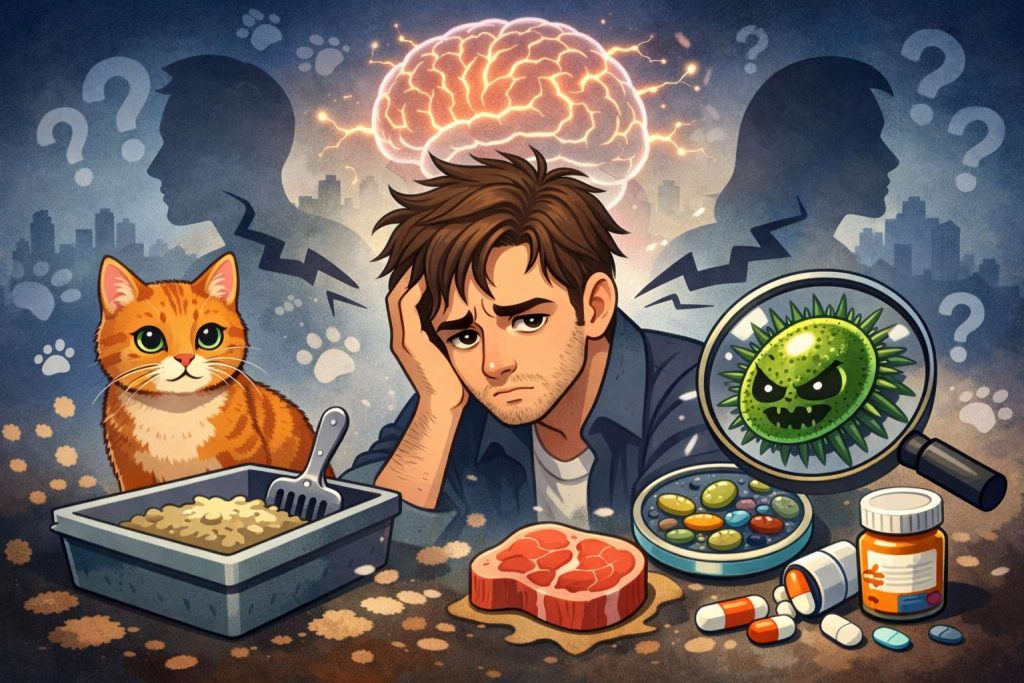
A parasite called Toxoplasma gondii sits at the center of many discussions, and it is easy to see why. Cats can shed the parasite in feces for a period after infection, and that can contaminate litter and soil. Then humans can pick up toxoplasma through more than one route, and this part often gets missed.
Litter contact is one route, so people focus there. Yet soil on unwashed produce can be another route, and undercooked meat can be one more route. So a cat in the home is not the only pathway, and that fact alone should cool down the panic.
There is one practical detail that changes the day-to-day picture, and it is simple. Fresh feces does not become infectious right away. It takes time. So daily litter box cleaning shrinks the window where infectious material can build up, and basic hand washing after litter or gardening cuts risk even more.
Put the numbers in context
Schizophrenia remains uncommon, even at the global level. That is the key context that headlines often skip. So a higher odds ratio does not mean a high absolute chance for any one person. It means researchers see a difference between groups in the data they analyzed, and that difference can shift across studies.
At the same time, schizophrenia can be life-changing for the people who live with it, so research that clarifies any modifiable exposure still matters. And if you follow the pet economy, you can see how these headlines ripple into real choices, from vet visits to litter buying to adoption trends. If you want a wider view of where pet spending is headed next year, read this breakdown on pet industry economics in 2026.
Practical steps that fit real life
You do not need drastic changes at home, and you do not need fear-driven rules. Simple habits cover the main hygiene points that public health groups repeat, and they are easy to keep up.
- Scoop litter daily, then bag it and toss it
- Wash hands right after litter tasks
- Use gloves for gardening and litter chores
- Keep kitchen surfaces clean during food prep
- Cook meat fully, and avoid tasting it undercooked
- Keep cats indoors when possible, and avoid feeding raw meat
These steps help in a broad way, not just for this topic. They cut exposure to germs that travel through soil, food, and hands.
What researchers want next
Researchers want clearer timelines for early-life exposure, and they want consistent exposure definitions. They want tighter controls for confounders, and they want data that separates toxoplasma pathways from other shared factors. Then we can talk about cause in a more grounded way.
For now, the message is straightforward. The association appears in pooled results, and it remains after a key sensitivity check. Yet the “why” is still open, so the smart response is calm curiosity and good hygiene, not panic.