Most pet emergencies start with normal household items. A dog grabs something off the counter. A cat licks pollen from a flower. A pill drops on the floor, and it vanishes in seconds. It feels like a small moment, yet it can turn serious fast.
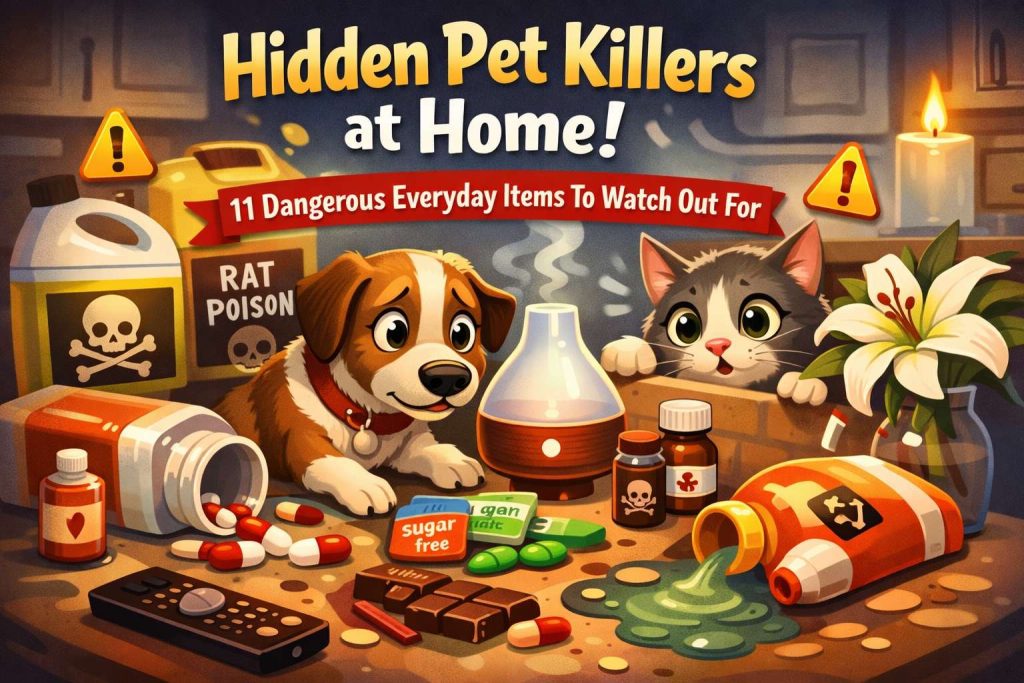
This article covers household items killing your pet that many owners still miss. It sticks to real hazards seen by vets and poison experts, so you can focus on what matters. You will get practical examples, common warning signs, and a simple action plan you can follow even on a stressful day.
1) Sugar-free gum and candy (xylitol)
Xylitol is a sugar substitute used in many “sugar-free” products, and it can kill a dog. Even small amounts can trigger a dangerous blood sugar crash. Then seizures can start, and liver failure can follow.
Check gum, mints, sweets, and baked goods labeled sugar-free. Look at toothpaste too. Some peanut butter brands contain it as well, so read the label every time.
Quick storage tip: Keep anything sugar-free in a high cabinet, not a drawer your dog can nudge open.
2) Painkillers and cold medicine
Human medications can poison pets with one dose. Ibuprofen and acetaminophen are common examples. Cold and flu products can be risky too, especially those with decongestants.
Most accidents happen in the same ways. A pill drops near the sink. A bottle sits on a nightstand. A curious dog chews the cap and swallows what’s inside.
Simple fix: Put all meds in a closed cabinet right after use, even the “safe” ones.
3) Prescription meds in purses, backpacks, and pill organizers
Dogs love the smell of snacks in bags, so they grab the whole thing and tear it apart. That is when pill organizers and blister packs become a big problem. Antidepressants, heart meds, ADHD meds, and sleep aids can cause seizures, extreme agitation, or abnormal heart rhythm.
So treat bags like food containers. Keep them off the floor. Hang them up, or place them behind a closed door.
4) Rat poison and mouse bait
Rodent bait remains one of the most dangerous household products for pets. Some formulas cause internal bleeding. Others affect the brain. Others damage organs over time.
The tricky part is delayed symptoms. A pet can look fine at first, and you may think nothing happened. Then the signs can show up later, and they can hit hard.
Rule to follow: Any exposure is urgent, even if you saw “just a lick.”
5) Antifreeze and coolant leaks
Antifreeze is one of the most lethal poisons a pet can drink. It tastes sweet, so pets may lick it from the driveway or garage floor. Then kidney failure can follow quickly.
Look for wet spots under cars, open containers, and dirty rags used for cleanup. Then block access right away.
Good habit: Keep pets out of the garage during car work, even for quick jobs.
6) Lily flowers and vase water (cats)
Lilies are extremely dangerous for cats. A small exposure can cause rapid kidney failure. Pollen is a major risk. The water in the vase can be toxic too.
So skip lilies completely in a home with cats. A “high shelf” is not a safe plan. Cats climb, and they get curious at the worst times.
7) Fragrance oils and home diffusers
Concentrated fragrance oils can harm dogs and cats. Cats face extra risk since they groom often, and they can ingest what lands on their fur.
Diffusers create a second hazard. A pet can tip the bottle, then oil spills onto the coat, and licking starts right after that. Some oils irritate the mouth and stomach. Others can trigger weakness, tremors, or trouble breathing.
Best move: Use scents carefully, and never place a diffuser where pets can bump it.
8) Laundry pods, liquid detergent, and dryer sheets
Laundry products can burn the mouth and throat. Pods attract pets with bright colors and soft texture, so they bite down, and the contents burst.
Dryer sheets and fabric softeners bring a different risk. A swallowed sheet can cause mouth sores and stomach upset. Then a blockage can happen too, which turns into a surgery case in some pets.
Safe storage: Keep pods and detergents on a high shelf, then close the laundry door after use.
9) Bleach, toilet cleaners, and strong disinfectants
Cleaning products harm pets in two common ways. Some pets drink them directly from a bucket. Others walk on a wet floor, then lick their paws later.
So keep pets in another room during cleaning. Rinse surfaces well. Let floors dry fully before pets return.
Extra detail that helps: Store toilet cleaners and dishwasher tabs in locked storage, not under the sink.
10) Batteries and chewed electronics
Remotes, kids’ toys, and small devices often contain batteries. When a dog chews them, the battery can leak a caustic substance. That can burn tissue fast. Button batteries are even worse, since they can get stuck in the throat and trigger a rapid emergency.
Watch for drooling, pawing at the mouth, refusal to eat, and sudden vomiting. Then call an emergency clinic right away.
Quick prevention: Toss broken remotes immediately. Do not leave “almost dead” toys around.
11) “People food” that turns toxic
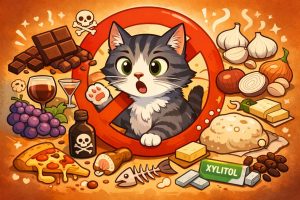
Kitchen risks show up every day. A dog steals food off the table. A cat sneaks a lick from a plate. Then something that seems harmless becomes a poison exposure.
Here are common food hazards:
- Grapes and raisins can trigger kidney failure in dogs
- Onions and garlic can damage red blood cells
- Alcohol can cause seizures and breathing failure
- Sugar-free sweets may contain xylitol
- Greasy leftovers can trigger pancreatitis in many dogs
Trash bins make it worse. Dogs can rip a bag open and swallow dangerous scraps in minutes.
If you want a clear guide focused on cats, read this kitchen safety list here: foods cats should never eat.
Fast warning signs that need urgent action
Poisoning signs vary by substance, but these patterns show up often:
- Repeated vomiting or diarrhea
- Heavy drooling or foaming
- Tremors, wobbling, or weakness
- Seizures or collapse
- Sudden hiding, panic, or unusual restlessness
- Pale gums or blue-tinged tongue
- Trouble breathing
- Severe belly pain or bloating
A pet can look normal early on. That does not mean the danger passed.
What to do right away after suspected exposure
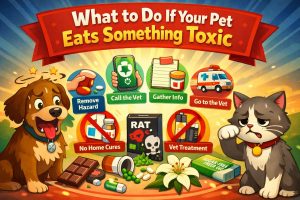
So what should you do if your pet gets into something toxic? Act fast, then get expert help.
1) Remove access and secure the area
Pick up the item, close doors, and block your pet from returning to the spill or trash.
2) Check the mouth and breathing
Look for drool, burns, or swelling. Watch for noisy breathing, coughing, or collapse.
3) Call a veterinary clinic or emergency hospital
Share your pet’s weight, species, and age. Tell them the item and the estimated amount, then give the time of exposure.
4) Do not force vomiting at home
Some toxins burn the throat on the way back up. Others raise the risk of choking.
5) Bring the package, label, or a clear photo
Ingredients matter more than brand names, so the label can speed up correct treatment.
A simple home checklist that prevents most poisonings
A few habits stop most accidents, and you can build them quickly.
- Store all medicine in a closed cabinet
- Keep purses and backpacks off the floor
- Use a lidded trash can, or place trash behind a closed door
- Keep rodent bait out of pet areas, and avoid loose blocks in garages
- Clean antifreeze spills fully, then block access
- Skip lilies and other high-risk flowers in cat homes
- Store laundry pods and detergents on high shelves
- Avoid loose batteries and broken remotes
- Keep cleaning products in locked storage
- Do a quick floor scan after cooking and sorting pills
No home is perfect. Still, small changes cut the risk a lot, and they make your home feel safer for everyone.