Hot days can turn a normal walk into a real emergency for dogs. Dogs overheat faster than people, and heatstroke can become life-threatening in minutes. The good news is that you can prevent most cases with a few simple habits and a calmer routine.
This guide covers the three things that matter most in summer. Walk times, water, and pavement rules. Stick to these basics, and you cut the risk by a lot.
Why dogs overheat so fast
Dogs cool down mainly by panting. They sweat very little, and most of that happens through the paw pads. So, hot air and strong sun can overwhelm their cooling system quickly, and humidity can make it worse.
Dogs stay closer to the ground too. That means they absorb heat from the surface, and they breathe warmer air that gets trapped near the pavement. So even a short walk can feel much tougher for them than it feels for you.
Heat problems often follow a simple pattern. Heat stress comes first, then heat exhaustion, then heatstroke. Once it hits heatstroke, you need urgent veterinary care.
The safest walk times on hot days
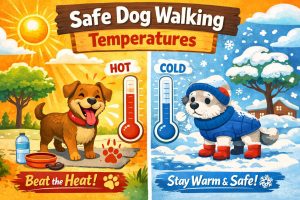
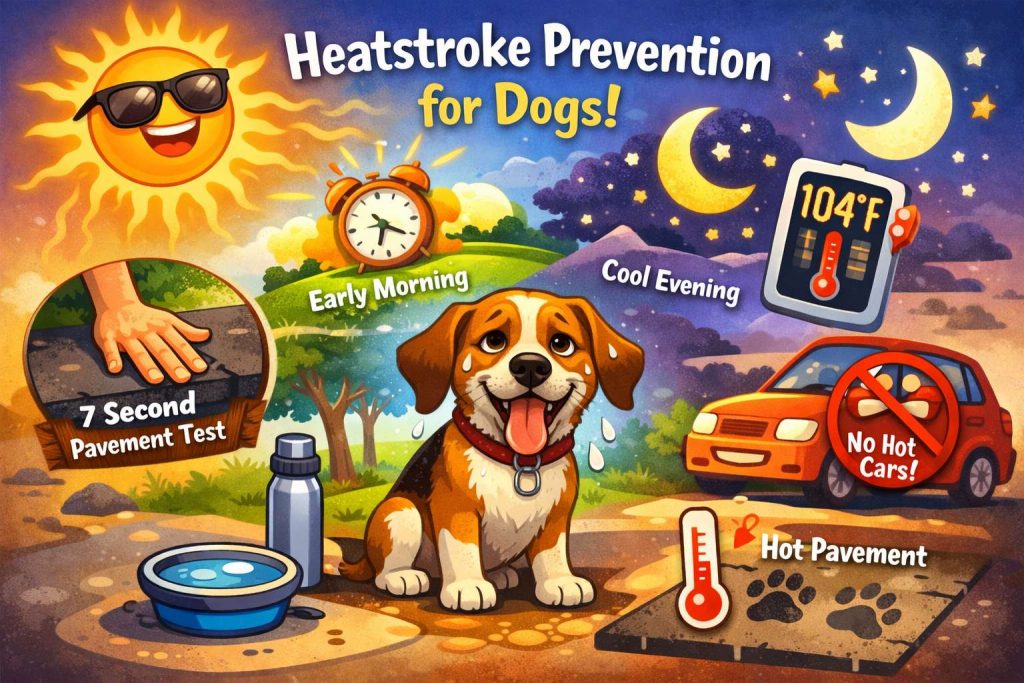
Your best rule is easy to follow. Walk early, walk late, and rest midday. Most hot-weather guidance for dogs points to early morning or cooler evenings as the safest times for exercise.
A simple daily schedule that works
Use this as your default plan:
- Morning walk: early, before the sun feels harsh
- Midday: quick potty break only, then go back inside
- Evening walk: later, after the ground cools down
If the day feels hot at the start of the walk, it will feel hotter 10 minutes later. So start small, then build up only when conditions feel safe.
Keep summer walks short and calm
On warm days, swap distance for comfort. That means:
- A shorter loop close to home
- More sniffing, less speed
- More shade, less direct sun
- More pauses, then a slower finish
Skip fetch, sprints, and long hill climbs in heat. Those sound fun, but they raise body temperature fast, and dogs cannot cool down on demand.
Pick cooler routes, not the fastest ones
Your route choice matters just as much as your walk time. So aim for:
- Grass and dirt trails
- Tree-lined streets
- Shaded parks
- Paths with steady airflow
Try to avoid big open areas like parking lots and wide sidewalks in full sun. They store heat, and they radiate it back up.
Water rules that keep dogs safer
Water helps, but timing matters. You want steady hydration, and you want it without stomach upset.
Before you leave the house
Offer fresh water at home and keep it relaxed. Let your dog drink naturally, then wait a few minutes before you head out. If your dog refuses water, do not force it. Instead, keep the walk shorter, and bring water with you.
During the walk
Carry water on any warm day. Even a small bottle can make a big difference.
A good rhythm looks like this:
- Stop in shade
- Offer a few sips
- Walk again at an easy pace
Small drinks work better than one big gulp, and they feel easier on the stomach. So treat water breaks like normal parts of the walk, not a special event.
After the walk
Once you are back indoors:
- Offer water again
- Give your dog a cool place to rest
- Keep activity low for a bit
Then wait for panting to settle before you do anything active. A calm cool-down keeps the body from drifting into overheating after the walk ends.
Hot pavement rules that protect paws and body temperature
Hot pavement can burn paw pads, and it can push body temperature up at the same time. So you need a quick test you can do every day.
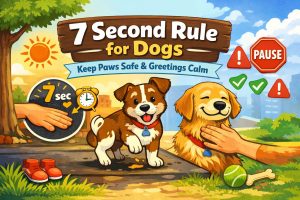
Use the 7-second pavement check
Before you commit to a sidewalk walk, do this:
- Put the back of your hand on the pavement
- Hold it there for 7 seconds
- If it feels too hot for your hand, it is too hot for paws
If you want a simple reminder you can share with family, this guide explains it clearly: 7-second rule for dogs.
Why pavement can be a hidden danger
Asphalt and dark concrete soak up heat and hold it. So even when the air feels “okay,” the ground can still be unsafe. Grass stays cooler, and shaded dirt paths usually feel safer too.
Signs your dog’s paws got burned
Check paws after walking on any warm surface, even if the walk was short. Watch for:
- Limping or stopping
- Licking or chewing the feet
- Redness or swelling
- Blisters or raw spots
- A sudden refusal to walk
If you see any of these, get your dog off the hot surface right away, then call your vet for advice.
Dogs that need extra caution in heat
Some dogs struggle sooner, even on days that do not feel extreme.
Higher-risk dogs include:
- Flat-faced breeds like Pugs and French Bulldogs
- Overweight dogs
- Older dogs
- Puppies
- Dogs with heart or breathing problems
For these dogs, use stricter rules. Keep walks short, keep them shaded, and skip outdoor play when it feels warm.
Safe cooling at home that actually helps
Heatstroke prevention is not only about walks. Your home routine matters too, and small changes can keep your dog much more comfortable.
Shade, airflow, and cool floors
Set up a cool spot your dog can choose at any time:
- A shaded room
- A tile or wood floor area
- A fan or air-conditioning if you have it
Even simple airflow helps, so aim the fan across the room, not directly into your dog’s face.
Cool towels, used the right way
A damp towel can help your dog cool down, but placement matters. A wet towel draped over the body can trap heat instead of releasing it. So use the towel on the floor like a cool mat, then let your dog lie on it if they want.
Cooling treats that keep things simple
Many dogs enjoy cooling snacks, and they can help after a warm walk. Try:
- A few ice cubes in the water bowl
- A frozen, pet-safe treat
- A toy frozen with water and small snacks
Keep portions small, and keep it calm. Your goal is cooling and comfort, not a big meal.
Grooming that supports comfort
Brushing removes loose undercoat and helps air move through the fur. That can help some dogs handle warm days better. If your dog has a heavy coat, ask your groomer what is safe for your breed and coat type.
Never leave a dog in a parked car
A parked car can become deadly fast, even when the weather feels mild. The RSPCA warns that when it is 22°C outside, a car can reach 47°C within an hour, and that can be fatal.
So if you have errands, leave your dog at home. Even “just five minutes” can turn into a crisis.
Early warning signs of overheating
Heat problems do not always look dramatic at first. Sometimes it starts with small changes, then it escalates fast.
Watch for these warning signs:
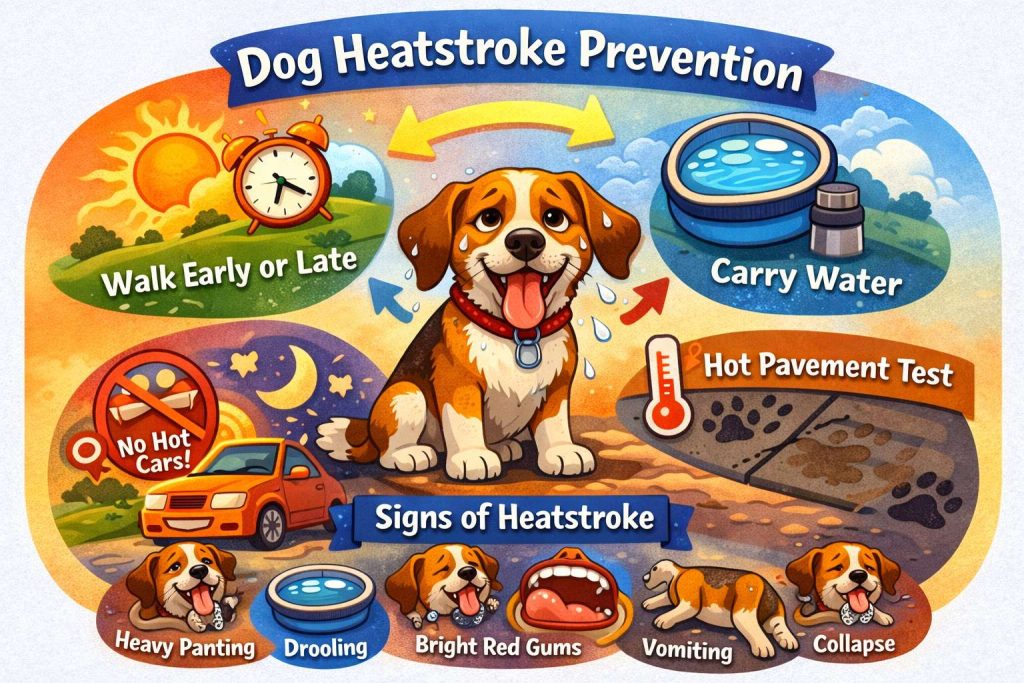
- Heavy panting that does not settle
- Drooling
- Restlessness and pacing
- Stopping, sitting, or lying down mid-walk
- Vomiting or diarrhea
- Bright red gums or tongue
- Weakness, wobbling, collapse
Temperature numbers matter too. A dog’s body temperature rising above 104°F (40°C) signals dangerous overheating, and heatstroke risk rises as the temperature continues upward.
What to do right away if you suspect heatstroke
Heatstroke is an emergency. You need fast action, and you need veterinary help.
Step-by-step actions
- Stop activity immediately
- Move to shade or indoors
- Offer small sips of water
- Start active cooling
- Call your vet and go in as directed
One widely shared approach is “cool first, transport second.” That means start cooling right away, then head to the vet.
Safe cooling methods
Pick the method that fits your dog’s condition:
- Wet the coat with cool water, then add airflow with a fan
- Place cool wet cloths on the body, then refresh them often
- Focus cooling around the belly and inner thighs
Avoid ice-cold shock cooling for most dogs. Instead, cool them down steadily, then keep moving toward veterinary care.
If your dog collapses, cannot stand, or struggles to breathe, treat it as urgent and go immediately.
A quick daily checklist for hot weather
Use this list on any warm day, even if you only plan a short walk:
- Walk early morning or later evening
- Choose shade and grass when possible
- Bring water and a small bowl
- Do the 7-second pavement check
- Keep walks short and calm
- Watch for heavy panting and stopping
- Keep shade and water available indoors
- Never leave your dog in a parked car
Most dogs can skip a long walk for a day. They will be fine with short potty breaks and indoor play. Heatstroke recovery can take a long time, so prevention is the smarter choice.
A quick note for owners under pressure
Summer care costs can rise. Cooling, fans, travel changes, and vet visits can all add up. If you ever feel stuck and you cannot give an animal the conditions they need, asking for help is the responsible move. This story shows how often that situation happens with non-traditional pets too: unwanted exotic pets are rising as energy bills squeeze owners.
It is not a failure to ask for support. It is a safety decision.