
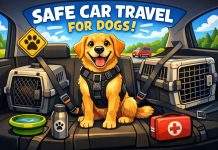















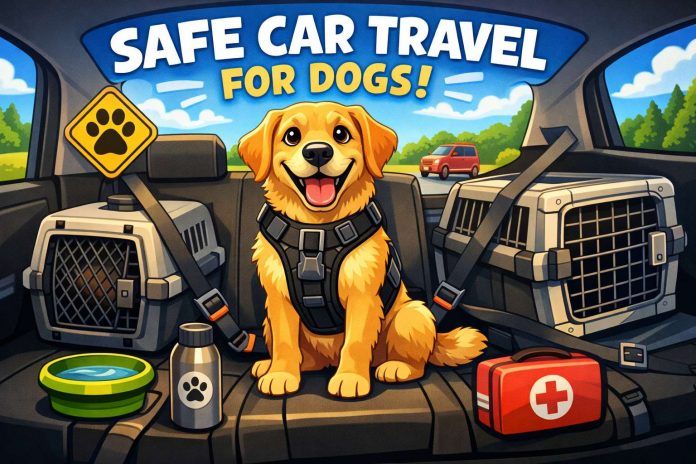
A safe car travel setup for dogs keeps your dog protected and keeps you focused on the road. It sounds simple, and it really can be. You just need a smart restraint, a solid spot in the car, and a routine you follow every single time.
Most people start with good intentions. Then real life happens. You do a “quick trip” to the store. Your dog hops into the front. Or your dog paces in the back seat and whines the whole drive. So you loosen the setup, and the problem grows from there.
Let’s fix that with a clear plan.
What “crash safety” means for your dog
If your car stops fast, your dog keeps moving forward. That can happen in a crash. It can happen in a sudden stop. It can even happen when you hit a pothole and slam the brakes.
So crash safety means one thing. Your dog stays contained and supported.
A safer setup does a few key jobs:
- It keeps your dog in one spot, not flying around the cabin.
- It spreads force across the chest and body, not the neck.
- It connects to the car in a stable way.
- It reduces distractions, so you can drive normally.
That last point matters more than most people think. A calm dog helps you stay calm too. Then you make better decisions behind the wheel.
Where your dog should sit in the car
Start with placement, since it shapes everything else.
The back seat is the best place for most dogs
The back seat gives you a solid belt system and space for a safe setup. It also keeps your dog away from the dash and front airbags.
The cargo area can work well for crate setups
If you drive an SUV or wagon, the cargo area can be a good choice. It works best with a properly secured crate. Then your dog has a stable “zone” that stays put.
Skip the front seat
The front seat is risky for dogs. It has hard surfaces. It puts your dog close to airbags and the dashboard. It also invites distractions, like pawing your arm or climbing toward your face.
So yes, it looks cute. Still, it is not worth it.
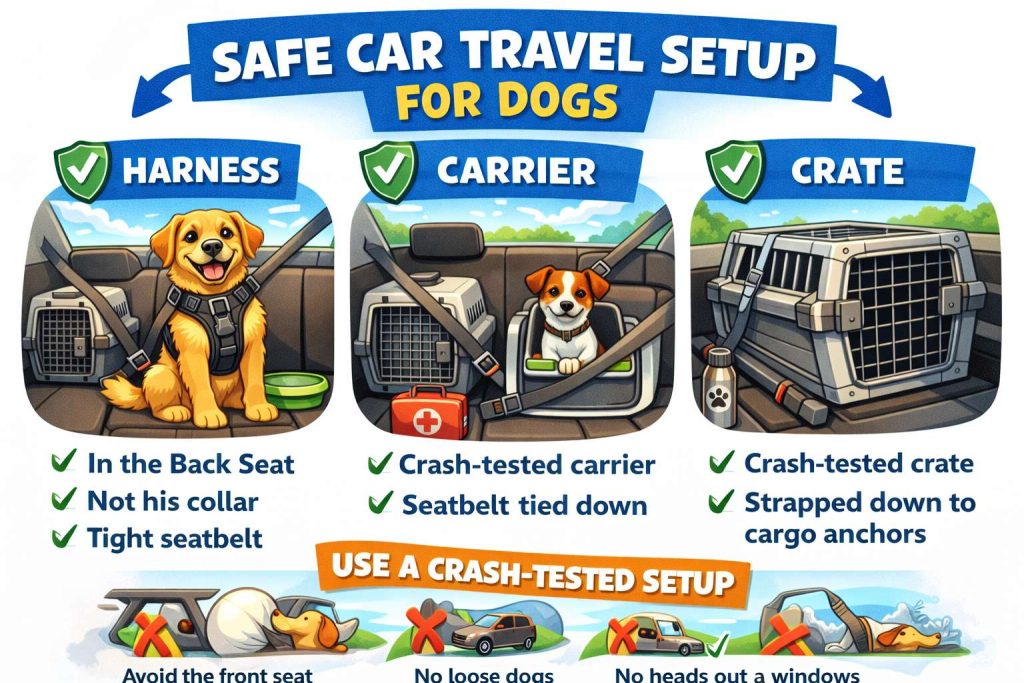
The three safest restraint options
A safe car travel setup for dogs usually falls into one of these categories.
Option 1: A car safety harness (best everyday choice)
A good car harness wraps around the chest and torso. Then it connects to the seat belt system in a controlled way.
This option is great for medium and large dogs. It works well for dogs that hate crates too.
What to look for
- Strong straps with secure stitching
- A wide chest panel for support
- A design that stays stable when your dog shifts position
What to avoid
- Clip-on tethers that look thin or flimsy
- Collar-only attachments
- Loose fit that lets your dog bounce forward
If you want help choosing, use a curated list like these vet recommended dog harnesses. It makes the search faster, and it keeps you away from gimmicky gear.
Option 2: A secured travel carrier (best for small dogs)
Small dogs often feel safer in a carrier. It gives a cozy space, and it keeps them from wandering the seat.
That said, the carrier must stay anchored. If it slides or tips, your dog can still get hurt.
What to look for
- A carrier that holds its shape
- A door that closes securely
- A belt path or strap points for anchoring
Option 3: A secured crate (great for many large dogs)
A travel crate can be an excellent setup, especially for big dogs or anxious dogs. Many dogs relax once they know the crate means “safe ride time.”
The crate must be strapped down to the vehicle. If it is loose, it can become a heavy object that moves forward in a crash.
What to look for
- A rigid build with a strong door
- A size that fits your dog well
- Clear tie-down points for straps
Step-by-step: Safe harness setup in the back seat
This is the setup most dog owners use, so let’s make it rock solid.
Step 1: Get the right fit
Measure your dog’s chest girth and follow the brand size chart. Then aim for a snug fit that stays stable.
A quick check helps:
- Straps lie flat, with no twisting
- The harness sits centered on the chest
- Nothing digs into the armpits
Step 2: Let your dog try it on at home first
Put the harness on indoors. Then let your dog walk around for a few minutes. Give a treat. Let your dog sit and lie down.
This step feels slow, but it saves you stress later.
Step 3: Connect the harness to the seat belt the right way
Follow the harness instructions exactly. Many harnesses use a seat belt routing method, like threading the belt through the harness and buckling it like a normal passenger.
Then tighten the belt. Then tighten it again.
Step 4: Set the slack for comfort and control
Your dog should be able to sit, stand, and lie down. That’s it.
Your dog should not be able to reach:
- The front seats
- The center console
- Your shoulder area
Less roaming means less chaos. So you will feel the difference right away.
Step 5: Do a 10-second safety check before driving
Make it a habit:
- Seat belt buckled
- Belt tight
- Harness flat
- Dog stays behind you
Then you can drive without constantly looking back.
Step-by-step: Safe carrier setup for small dogs
Carriers work well when they stay stable. So your goal is simple. Lock it in place.
Step 1: Place the carrier flat on the back seat
Pick the side that feels easiest for you to reach, then place it level on the seat.
Step 2: Anchor the carrier with the seat belt
Route the seat belt through the carrier’s belt path. If the carrier does not have one, follow its strap instructions.
Buckle the belt. Pull it tight. Press the carrier into the seat cushion. Then pull it tight again.
Step 3: Stop tipping and rocking
Try to move it side-to-side. If it shifts a lot, tighten the belt again. If it still moves, reposition the carrier and try again.
Step 4: Keep it closed during the drive
If you open it mid-drive, your dog can scramble out fast. So keep it closed until you are parked and ready.
Step-by-step: Safe crate setup in the cargo area
A crate setup can feel “next level,” but it is still straightforward.
Step 1: Choose the right size crate
Your dog should be able to:
- Stand up
- Turn around
- Lie down naturally
Do not go oversized. Extra space lets your dog slide more during sharp stops.
Step 2: Place the crate against the rear seat backs
Set the crate close to the back of the rear seats. Keep it straight, not angled.
Step 3: Strap it down to cargo anchors
Use strong cargo straps and attach them to the vehicle’s anchor points. Tighten until the crate barely moves.
Then test it with your hands:
- Push forward
- Push backward
- Push side-to-side
It should feel stable and “locked in.”
Step 4: Keep the inside simple
Use a thin mat that grips. Skip thick beds that bunch up. Keep toys minimal too, since they can roll and distract your dog.
Step 5: Keep airflow steady
Cargo areas can heat up. So run the AC and check your dog at stops. A calm dog breathes normally and rests more.
Mistakes to avoid (these are common and easy to fix)
Some risky choices look normal, so people repeat them. Let’s fix the big ones.
Do not attach a travel tether to a collar
Collars put force on the neck. That can lead to serious injury in a sudden stop. Use a body harness or secured carrier instead.
Do not let your dog sit on your lap
Your dog can block the wheel, shift your arms, or slide under the pedals. It can happen in one second. So keep your lap empty.
Do not let your dog roam free in the cabin
A loose dog can jump forward, knock your phone, or press against your side. Then your focus breaks. Then your risk goes up.
Do not treat barriers as “complete safety”
A barrier can block access to the front. It does not stop your dog from slamming forward inside the rear space. So treat barriers as extra support, not the main restraint.
Do not let your dog hang out the window
Flying debris can hit the face. Sudden braking can unbalance your dog. So keep windows only slightly open, and keep your dog contained.
Make the ride calmer. Your dog will settle faster
Safety gear matters, but comfort and routine matter too. A stressed dog pulls against the restraint, and that creates a constant struggle.
So focus on calm habits.
Build a simple car routine
Try this every time:
- Put the restraint on
- Give one small treat
- Start the engine
- Wait 10 seconds
- Drive
Dogs learn patterns quickly. Then they relax faster.
Keep food light before long trips
Some dogs get motion sickness. A full meal can make it worse. So feed earlier, then bring the normal meal for later.
Use planned breaks
On longer drives, stop for water and a short walk. Clip the leash before opening any door. Then step out calmly.
Keep the cabin cool
Heat rises fast, even on mild days. So never leave your dog alone in the car. Even “two minutes” can turn into a problem.
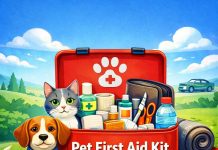
Pack a simple road trip safety kit
A small kit makes travel easier. It helps in traffic delays, flat tires, and stressful moments.
Pack these items:
- Leash and backup leash
- A walking harness with ID tag
- Water and a bowl
- Waste bags
- Towel or blanket
- Basic first-aid supplies
- Daily meds in a labeled container
- A recent photo of your dog on your phone
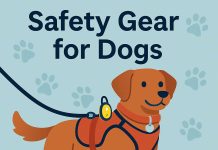
If you want a full checklist, this guide covers it well: 14 must-have safety gear items every dog needs for walks and road trips.
30-second checklist before you drive
Use this quick check every time. It becomes automatic fast.
- Dog rides in the back seat or secured cargo area
- Harness, carrier, or crate is attached to the vehicle
- Slack allows sitting and lying down only
- No loose gear can slide around the cabin
- Windows stay at a safe opening
- Water is packed for longer trips
Then you can drive with a clear head.
Quick answers to common questions
What is the fastest safety upgrade you can do today?
Put your dog in the back seat and use a proper restraint. That alone cuts risk and reduces distractions.
Should you restrain your dog on short rides too?
Yes. Short rides still include sudden stops and unpredictable traffic.
Can two dogs ride safely at the same time?
Yes, and each dog needs their own restraint. Keep space between them so they do not tangle.
Final thoughts
A safe car travel setup for dogs does not need to be complicated. Pick a harness, carrier, or crate that fits your dog. Then place your dog in the back seat or a secured cargo area. Strap everything down the right way, and keep the routine consistent.
Your dog will feel calmer. You will drive calmer too. Then every trip gets easier.