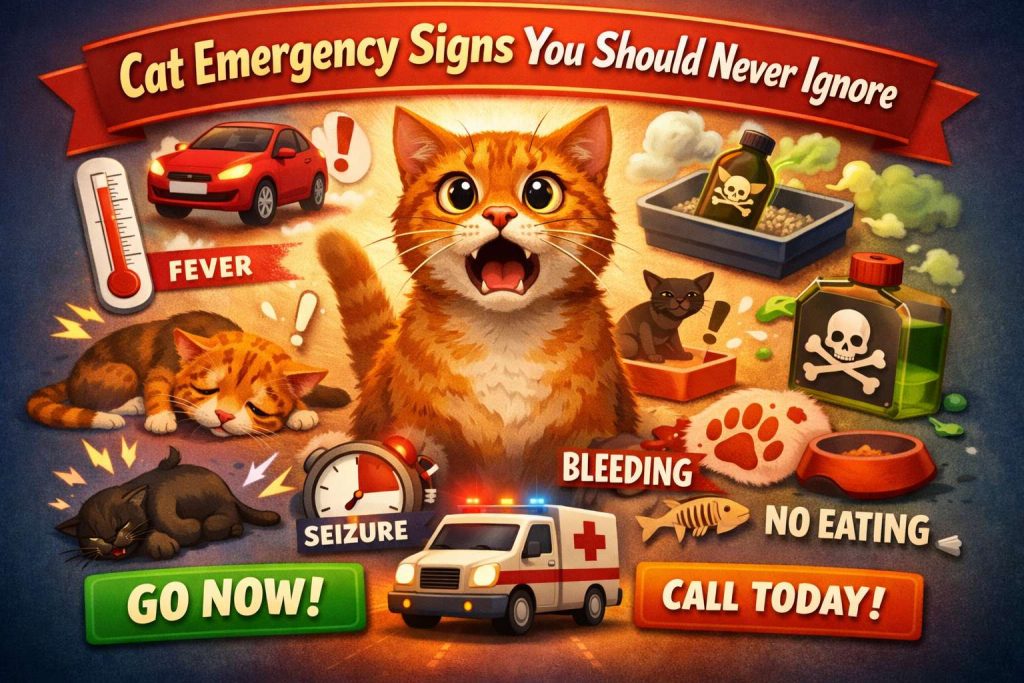
A Fast, Real-World Triage Checklist for Owners (Go Now vs Call Today)
Cats are masters at hiding pain. So an emergency can look small at first. Still, a few warning signs mean you should stop guessing and get help right away.
This guide is a fast triage checklist. It helps you decide what needs an emergency vet now, what needs a same-day call, and what you can monitor for a short time.
If your gut says “this is serious,” listen to it. You know your cat’s normal better than anyone.
The first 60 seconds
Do this before you scoop your cat up
When you feel stressed, it helps to follow a quick routine. So start here.
1) Check breathing first (10 seconds)
Stand back and watch the chest. Count breaths for 15 seconds, then multiply by 4.
A relaxed cat often breathes around 15 to 30 times per minute at rest. So if the number stays over 30, or the effort looks heavy, treat it as urgent.
Emergency breathing signs
- Open-mouth breathing
- Loud wheezing, gasping, or choking sounds
- Belly pushing hard with each breath
- Neck stretched forward, elbows out, tense posture
- Blue, gray, or very pale gums
If breathing looks wrong, keep handling minimal. Then go.
2) Check alertness (10 seconds)
Say their name. Tap a paw gently.
Normal cats react fast, even if they feel grumpy. A cat in trouble may seem “far away.”
Go now if you see:
- Collapse
- Severe weakness
- Trouble standing
- No real response to your voice or touch
3) Check gum color (10 seconds)
Lift the lip and look at the gums.
- Normal: pink gums
- Danger: white, gray, blue-tinged, or very pale gums
4) Scan for blood, poison, or injury (30 seconds)
Look for active bleeding, swollen belly, limping, or a painful reaction when your cat tries to move. Then check the room. Open pill bottles, chewed packaging, broken plants, spilled cleaners, and string on the floor matter more than people think.
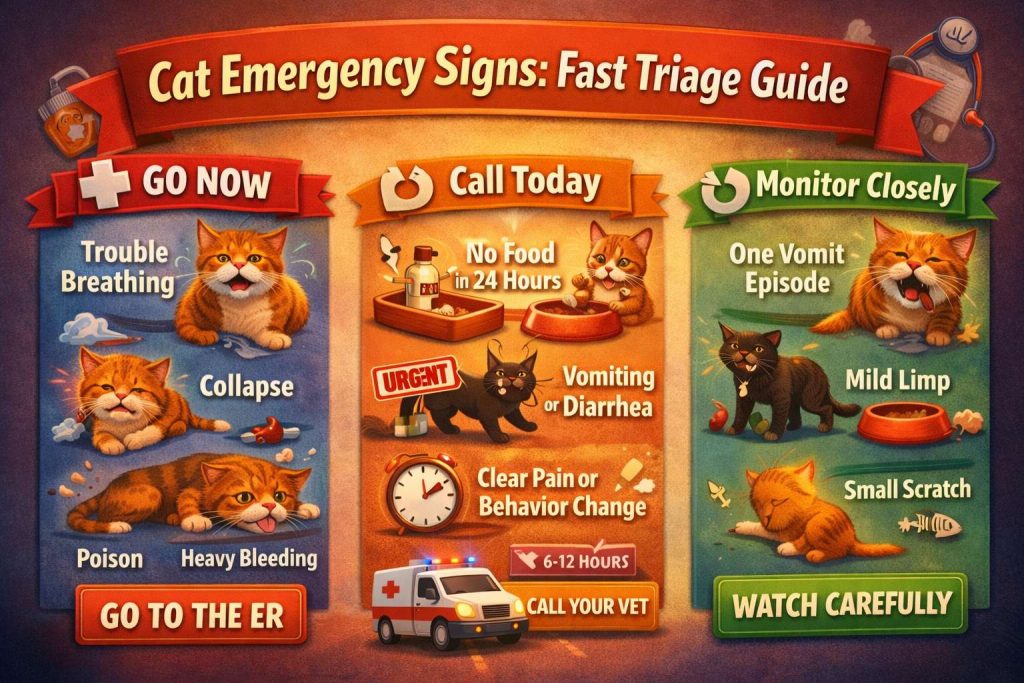
Go to an emergency vet now
These signs should never wait
This is the “don’t watch and see” list. So if you spot any of these, pack the carrier and go.
Trouble breathing or open-mouth breathing
Breathing issues can turn critical fast. So treat this as an emergency every time.
Go now if you see:
- Open-mouth breathing or panting
- Fast breathing that stays over 30 breaths per minute at rest
- Loud breathing, gasping, or choking sounds
- Blue, gray, or very pale gums
- A stiff posture, low body, elbows out, neck stretched
On the way: keep your cat calm, keep them in the carrier, and keep the car quiet. Then let them sit in the position that feels easiest. Do not force food or water.
Collapse, extreme weakness, or “not present” behavior
Some cats crash fast. So you should not wait for this to “pass.”
Go now if your cat:
- Collapses
- Cannot stand or keeps falling
- Acts confused, glassy-eyed, or unresponsive
- Suddenly seems limp or very floppy
A seizure that lasts over 5 minutes, or repeated seizures
A short seizure can still be serious. A long seizure needs emergency treatment.
Go now if:
- The seizure lasts more than 5 minutes
- Two seizures happen close together
- Your cat does not recover between episodes
What to do during a seizure
- Move furniture and sharp objects away
- Keep hands away from the mouth
- Lower lights and reduce noise
- Time the seizure on your phone
Afterward, your cat may act confused or unsteady. So keep them in a quiet, safe space until you leave.
Straining to pee, crying in the litter box, or producing no urine
This is one of the biggest cat emergencies, and it can get deadly quickly. Male cats face a higher risk of a full blockage.
Go now if you see:
- Repeated litter box trips with little or no urine
- Straining, crying, or obvious pain
- Licking the genital area nonstop
- Vomiting, weakness, hiding, or a tight belly
This one should not wait overnight. So go.
Heavy bleeding or a deep wound
Bleeding that does not slow down needs urgent care. Bite wounds matter too, even when they look small.
Go now if:
- Blood keeps flowing after firm pressure
- A wound looks deep, wide, or gaping
- A puncture wound is present, especially from a bite
- Blood soaks through cloth quickly
Fast first aid for bleeding
Press clean gauze or a towel firmly on the wound. Hold steady pressure. Then keep pressure in place during transport.
Hit by a car, fall from height, crush injury, or major trauma
Even when your cat walks after an accident, internal injuries can still exist. So take trauma seriously.
Go now if your cat had:
- A car impact
- A fall from a window, balcony, or stairs
- A heavy object accident
- A dog attack or serious fight
Keep your cat still in the carrier. Then drive carefully.
Poison exposure or suspected toxin ingestion
Poisons act fast in cats. So time matters.
Go now if your cat:
- Chewed pills or licked medication
- Licked cleaners, pesticides, or unknown chemicals
- Ate a toxic plant
- Has sudden drooling, vomiting, shaking, weakness, or collapse
Bring the packaging or take photos. Then call the emergency clinic while you travel. Do not try home treatments unless a vet guides you.
Swollen belly, repeated retching, or sudden severe belly pain
A tight, swollen belly can point to a blockage, internal bleeding, or other emergencies. So treat it seriously.
Go now if you see:
- Sudden belly swelling
- Repeated gagging or retching with little coming up
- Crying when picked up
- Hunched posture and a tense belly
- Pale gums or weakness
Eye injury, bulging eye, or sudden vision changes
Eyes can worsen fast. So do not wait days.
Go now if you see:
- Squinting hard or keeping the eye shut
- Pawing at the eye nonstop
- Cloudy eye, blood in the eye, swelling
- Sudden blindness signs like bumping into objects
Skip human eye drops. Then get seen quickly.
Heatstroke signs
Cats can overheat in hot rooms and closed spaces.
Go now if your cat has:
- Open-mouth breathing
- Drooling and weakness
- Wobbling, collapse, or bright red gums
Move your cat into a cooler area right away. Then head to the emergency vet.
Call a vet today
Same-day urgent signs that still need quick care
These are serious, just less likely to collapse in minutes. So aim for same-day advice.
Not eating for 24 hours
Cats do not tolerate fasting well. So a day without food matters.
Call today if:
- Your cat eats almost nothing for 24 hours
- Your cat refuses food and hides
- Your cat skips meals and looks weak
Do not force-feed unless your vet tells you exactly how.
Vomiting or diarrhea that keeps going for 6 to 12 hours
One vomit can happen. Repeated vomiting is different. Same for diarrhea that won’t stop.
Call today if:
- Vomiting repeats for hours
- Diarrhea keeps happening and your cat looks tired
- You see blood in vomit or stool
- Your cat cannot keep water down
Dehydration can build quickly. So do not drag this out.
Pain signs that do not stop
Cats often show pain through posture and mood changes. So watch the whole body.
Call today if you see:
- Growling or hissing when touched
- Hunched posture, tight belly, tense legs
- Refusing to jump, climb, or move normally
- Hiding in unusual places
- Limping that does not improve
Do not give human pain meds. Many are toxic to cats.
Fever you can confirm with a thermometer
If your cat lets you check safely, a typical rectal range sits around 38.1 to 39.2°C.
Call today if:
- Temperature rises above 39.2°C
- Your cat looks sick and feels hot
If your cat fights hard, stop. Stress can make things worse, so skip the struggle and call your vet.
A sudden big behavior change
Behavior changes often show pain or illness first. So pay attention.
Call today if:
- A social cat suddenly isolates
- Your cat seems confused, restless, or unsettled
- Your cat cries, growls, or acts fearful with no clear reason
Coughing or sneezing with breathing discomfort
A little sneeze can be nothing. Still, breathing discomfort is not nothing.
Call today if:
- Coughing repeats through the day
- Breathing looks fast, hard, or noisy
- Your cat cannot relax when lying down
- You hear wheezing
Monitor closely
Signs that can wait a short time if your cat stays stable
Some problems improve on their own. So you can watch briefly when your cat stays bright, stable, and comfortable.
- One vomit episode, then normal behavior returns
- Mild limp, still walking and eating
- Small surface scratch with no swelling
- Mild sneezing with normal energy
- One missed meal, then normal appetite returns
Still, patterns matter. So if symptoms repeat the same day, call.
Safe transport tips
Get to the vet without making things worse
A smooth ride helps. So keep it simple.
- Use a carrier and add a towel for grip
- Cover the carrier with a light cloth to reduce stress
- Keep the car quiet and steady
- Keep your cat flat and supported if you suspect injury
- Handle less if breathing looks hard
If vomiting continues, skip food until a vet guides you. Keep water available at home, yet do not force it into your cat’s mouth.
If your cat is choking or you worry about airway blockage, you may want to read this quick, practical guide on fast action in the first minute: Hands First, Voice Second: The Cat Calling Trick That Gets Real Results.
And if you have a dog at home too, keep this lifesaving CPR and choking checklist saved on your phone: Dog CPR and Choking: The First 60 Seconds That Can Save Your Dog’s Life.
What to tell the vet
Clear details help the team act fast. So keep notes on your phone.
Share:
- The time the problem started
- What you saw first, then what changed
- Breathing rate you counted at rest
- How many vomiting or diarrhea episodes happened
- Last time your cat ate, drank, peed, and pooped
- Any possible pills, plants, or chemicals involved
- Any falls, fights, or outdoor time
- Any known medical problems and current medications
A short video can help too. So if your cat breathes oddly or wobbles, record a few seconds before you leave.
A simple cat emergency kit to keep at home
Keep these items together near the carrier. Then you will not search for them in panic.
- Carrier with a clean towel
- Gauze pads and medical tape
- Clean towel for bleeding pressure
- Gloves
- Saline for gentle skin rinse around a wound
- Digital thermometer and lubricant
- Emergency vet phone numbers and directions
- Small flashlight
Also, reduce common hazards now. So store medications securely and keep string, rubber bands, and small chewable items off the floor.
Fast decision rule
When you feel stuck, use this shortcut. It is not perfect, yet it helps.
Go now:
- Trouble breathing
- Collapse or extreme weakness
- Seizure over 5 minutes or repeated seizures
- Heavy bleeding
- Straining to pee or no urine
- Poison exposure
- Severe belly pain or sudden swelling
- Eye injury or sudden vision changes
- Major trauma
Call today:
- No food for 24 hours
- Vomiting or diarrhea that keeps going for 6 to 12 hours
- Clear pain that does not stop
- Fever with a sick-looking cat
- Sudden big behavior change
Cats can look “quiet” right before they crash. So if your cat looks worse over minutes or hours, treat it as urgent.