
















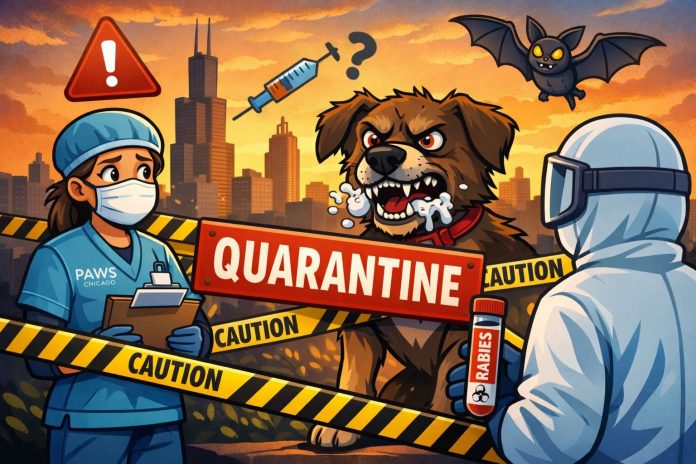
A confirmed rabies case in a Chicago dog has prompted a fast response from local animal and public health teams. Rabies in dogs is rare in this area, which is why this case is getting so much attention. Even one confirmed case means officials need to move quickly, find anyone who may have been exposed, and keep other pets safe.
Timeline of the case
PAWS Chicago received the puppy on May 26, 2025 through a rescue partner transfer. The dog went through intake care and routine vaccinations. PAWS reports the dog received a rabies vaccine in June 2025.
PAWS says the dog was adopted on July 26, 2025 and lived in a private home for several months.
On December 17, 2025, the adopters returned the dog to PAWS after a bite in the home and behavior changes that raised concerns. PAWS staff evaluated the dog, then euthanized the dog on December 18, 2025. Testing confirmed rabies on December 19, 2025.
Why this case stands out
Local officials described the case as extremely rare for Cook County. That fact alone explains the strong reaction. Health teams also started contact tracing right away. They reported that 13 people with known direct contact began post-exposure treatment. At the time of the update, officials said those people were not showing symptoms.
How can a Chicago dog get rabies after a vaccine
Investigators have not pointed to one clear source of infection yet. That missing piece is the big question in this case.
One practical possibility is timing. The dog may have been exposed before the June vaccination. Another possibility is wildlife exposure after adoption. In Illinois, bats are often linked to animal rabies, so investigators pay close attention to any bat contact, even contact that felt minor at the time.
Teams are also doing lab work to narrow the origin. Virus strain testing can help show where it most likely came from. Officials have also discussed retesting retained samples tied to the vaccine lot used for the dog. That step helps rule out manufacturing or handling problems, even if those issues are uncommon.
Who may be at risk
For most people, the risk stays low. Rabies spreads through saliva, most often through bites. So the focus stays on direct contact with the infected dog, especially close to the time symptoms began.
Officials worked to notify anyone who handled the dog during the relevant period. They also contacted pet owners whose animals may have had contact with the dog. That way, quarantine rules and booster shots can start quickly, without guesswork.
What pet owners in Chicago should do right now
Most families will never deal with rabies firsthand. Still, a few simple steps go a long way.
- Check your pet’s rabies vaccination status today. If a shot is overdue, call your veterinarian and get it scheduled.
- Keep distance from bats and other wild animals. Do not handle a bat, even if it looks sick or injured.
- Report any bite or scratch from an unknown animal to a healthcare provider the same day. Early care matters, and post-exposure treatment works best when it starts quickly.
- If your pet had contact with a confirmed rabid animal, follow local animal control guidance. That often includes a booster shot and a defined home quarantine period with daily monitoring.
If you want more details, read this: https://petsafenest.com/rare-rabies-positive-dog-found-in-chicago-what-pet-owners-can-do-right-now
What happens next
Investigators will keep reviewing records tied to the dog’s history, transfers, and possible wildlife exposure. Lab strain typing may also narrow the search and point to the likely source. Officials may share more details once they confirm the remaining facts.
This case is unsettling, and that reaction makes sense. Still, the takeaway is simple. Rabies prevention works. Vaccination matters. Quick reporting matters too. And when officials act fast, they can protect both people and pets.