
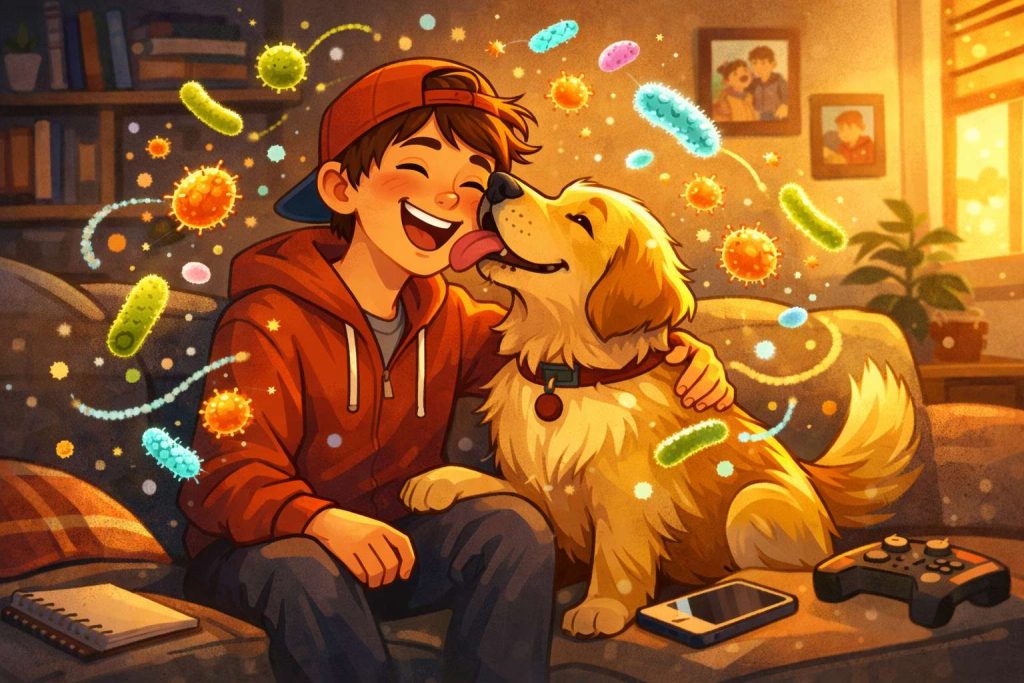
Most families already sense it. A teen comes home tense, the dog trots over, and the room softens a little. That moment can feel small, yet it can reset the evening. Now, newer research gives that familiar scene a biological angle. The idea is simple. Living with a dog can shift the microbes teens share at home, and that shift may link to better social and emotional health.
This does not turn dogs into a cure. Still, it does add a practical lens. Daily life shapes the body, and the body shapes mood and behavior. So it makes sense to look at what happens in the home, not only what happens in a clinic.
What researchers saw in real teens
The research followed teens over time and compared two groups. One group lived with a dog. The other group did not. The dog group showed better scores in measures tied to social functioning and behavior. The pattern held over time too, not just on one day of testing.
That matters for a basic reason. Teen years move fast. Friend groups change. School demands ramp up. Sleep can slide. So a steady, warm presence at home can carry more weight than it seems at first.
The “shared microbes” part, in plain language
Here is the core idea. Homes have microbes. People share them through touch, air, and surfaces. Dogs change that mix, then the family shares it day after day.
Researchers looked at microbes in saliva. They did not claim one perfect germ fixed anything. Instead, they found that teens in dog homes carried a different balance of common bacteria. In fact, the overall diversity looked similar between groups, yet the mix differed.
That may sound abstract, so picture a normal day. A dog goes outside, then comes back in. The dog lies on a mat, then hops on the couch. A teen scratches behind the ears, then grabs a snack, then scrolls their phone. So microbes can travel through the home without anyone noticing.
Lab work adds another piece
The research team took it a step further and tested whether microbiome differences tied to dog homes could shift social behavior signals in animals. In those experiments, animals that received microbiota linked to dog homes showed stronger social approach behavior in standard social tests. That does not prove the same effect plays out in every teen. Yet it supports the idea that the link is not only about routine or personality.
So the story is not “dogs make teens happy.” It is closer to this. Dogs may support a healthier social baseline through daily connection, and the shared home microbiome may be one part of that.
A bigger trend. Pet owners want wellbeing, not just “pet food”
This research lands in a moment where many pet owners already think about health as a whole. They look at food, activity, stress, and long term wellbeing. They want brands to take that seriously too, not just sell a bag and disappear.
If you want a quick snapshot of that shift, read this piece on UK pet owners putting health first and pushing pet food brands to focus on wellbeing. It fits the same theme. Pets shape the home, and health starts at home.
What this means for families in real life
A dog can help many teens, but a dog can raise stress in some homes. So the home setup matters.
If a dog adds calm, then lean into the parts that support that calm. Keep routines steady. Keep expectations clear. Keep care tasks shared in a fair way. Then the dog stays a comfort, not a source of tension.
Here are a few practical ideas that tend to work well.
- Short daily walks can help. Then the teen gets movement and a break from screens.
- Calm play time can help too, and it can fit in ten minutes.
- Basic hygiene protects everyone. Wash hands after cleanup. Keep up with vet care.
- A dog is one support. So keep sleep, food, and safe social time on the list.
The simple takeaway
A family dog can add connection that feels easy. Plus, a dog can shape the home environment in a hands on way. So the “shared microbes” idea does not feel far fetched. It feels like a science backed explanation for something many families already notice. The dog shows up every day, and small daily inputs can add up.