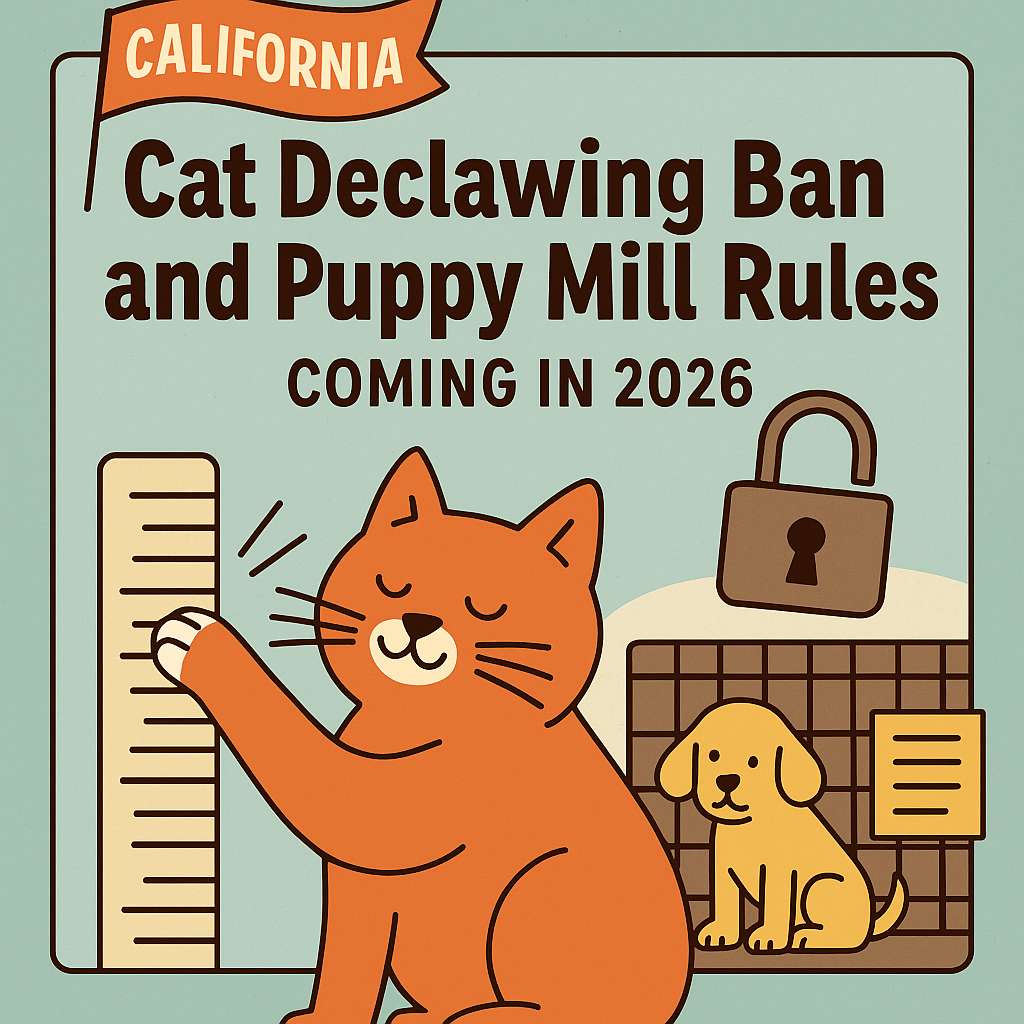
Starting January 1, 2026, pet families in California will live under some of the strongest animal welfare rules in the country. The state will ban non-medical cat declawing and tighten controls on how dogs, cats, and rabbits reach new homes. Governor Gavin Newsom signed the four bills behind these changes (AB 867, AB 506, AB 519 and SB 312) on October 9, 2025. These changes touch vets, breeders, shelters, online sellers, and everyday owners who just want a healthy pet by their side.
Over the past years, several cities such as Los Angeles and San Francisco adopted local declawing bans. Those city rules showed that many people no longer accept declawing as a routine option. Now the state steps in with one clear standard, so the same rules will apply everywhere in California.
What the new declawing ban will cover
The California cat declawing ban 2026 (AB 867, by Assemblymember Alex Lee) focuses on non-medical surgeries. In simple terms, the law says that a healthy cat cannot be declawed just to protect furniture or to make life easier for people. The law will block:
- Declawing done for “convenience” or cosmetic reasons
- Any surgery that changes a cat’s claws or toes without a real health need
At the same time, vets will keep options for serious medical cases. The Animal Legal Defense Fund’s summary gives disease and traumatic injury as examples. A cat with a badly crushed toe, a stubborn infection, or a tumor in the bone can still receive surgery. This way the door stays open for true medical care, and routine amputations close.
Why the state decided to act
Many people still picture declawing as a fancy nail trim. In reality, the surgery removes the last bone in each toe. If you think of your own hand, it lines up more with cutting off the end of every finger. That is a big change for any body.
Announcing the ban, the governor’s office said declawing “can lead to pain, infection, and behavioral changes.” Cats can develop chronic pain. Biting often rises, and some cats stop using the litter box. They lose a key tool for balance and normal movement, then their body has to adjust every single day.
At the same time, humane options keep growing. Scratching posts, cardboard pads, sisal poles, cat trees, and nail caps all help protect furniture. Regular nail trims make a clear difference as well. When people pick these tools early, they guide the cat toward “approved” scratching spots and away from the couch or the door frame. So the state now treats surgery as a last resort, not a simple quick fix.
New pressure on puppy mills and pet brokers
The 2026 package does not stop with cat claws. It will press hard on the puppy mill trade and on the long chain of brokers that sits between large breeding farms and a family looking at a cute face on a website.
Earlier rules already changed how pet stores work. Stores in California cannot sell dogs, cats, or rabbits from commercial breeders and must work with shelters and rescues. Even then, mass breeders found new paths. They leaned on online listings, transport companies, and third-party brokers.
Now the new rules will make those paths harder to use. AB 519 bars third-party brokers, online brokers in particular, from selling cats, puppies and rabbits bred by others for profit in California. AB 506 requires sellers to disclose a pet’s origin and health information, and it voids contracts that include non-refundable deposits. Under SB 312, dog importers will have to submit health certificates electronically to the California Department of Food and Agriculture within 10 days of shipment. That should make patterns of sick or underage puppies easier to spot.
If you care about how laws shape life with pets in other parts of the country, you might like this handy guide to the new D.C. pet housing law that helps keep families and their pets together. It shows how rules on housing and rules on breeding often work side by side.
What this means for vets, breeders, and regular owners
Daily work in many clinics will change. Vets who still list declawing as a standard service will remove it from price sheets and websites. Staff will spend more time on scratch training tips, nail care, and home setup. Many clinics already work this way, so the shift will feel natural for them. Others will review their consent forms and update how they explain options to clients.
Breeders with small numbers of animals, clear health testing plans, and open contact with buyers will stay active. The biggest change will fall on high-volume kennels and catteries that move animals through a maze of brokers. These firms will handle more paperwork, more record checks, and more risk if they hide the true source of a litter.
For families, the laws bring both protection and a bit more homework. People who plan to add a cat can think early about scratching habits, nail trims, and the right mix of posts and pads. This planning matters more now, since declawing will no longer sit on the table as a simple “later fix”.
People who want a puppy or a purebred dog can expect to see:
- Clear breeder names and addresses, not just a broker label
- Vaccine and health records that match the animal in front of them
- Contracts without non-refundable deposits, hidden fees or confusing add-ons
If a seller refuses to share these details, or pushes hard for a fast deposit with little proof, that should act as a strong warning sign.
How pet families can get ready for 2026
There is still time to prepare. Cat owners can start by placing sturdy scratching posts near doors, beds, and favorite nap spots. Then they can reward their cats when they use the posts. They can schedule nail trims on a calm, steady routine. If scratching still feels hard to manage, they can ask a vet or trainer for help.
Dog and cat buyers can stretch out their search as well. They can plan more calls and visits. They can keep copies of every record, from vaccines to microchip documents. Good breeders already welcome this level of care, and the new laws will support those habits instead of blocking them.
Bit by bit, California is moving away from painful, non-medical surgeries and from mass breeding that hides behind pretty photos. The California cat declawing ban 2026 and the stronger rules on the puppy mill trade point toward a simple goal. Pets should come from honest, transparent systems, and they should keep the claws, paws, and health they need for a long and comfortable life.