Phoenix, December 2025. Fireworks season is here again in Arizona. People get excited, and the nights feel loud and bright. Pets feel something else. Many dogs and cats hear danger, so they panic.
That fear can show up fast. A dog may shake, pant, pace, or cling to you. A cat may disappear under the bed and stay there for hours. Then, at the worst time, a pet may bolt. One open door is enough.
So the goal stays simple. Keep your pet inside. Block escape routes. Set up one calm space. Then stick to the plan until the noise fades.
Why fireworks hit pets so hard
Pets hear higher sounds than people. They also react to sudden booms more intensely. So a firework that feels “far away” to you can feel close to your dog. The flashes add to it, and the smell of smoke can add even more stress.
Some pets get nervous and freeze. Others run first and think later. That is why a normal night routine can break down so easily during fireworks.
Set up a safe room before sunset
Pick one small room and use it as your pet’s calm zone. Smaller often works better than bigger. A bedroom, laundry room, or even a walk-in closet can work well.
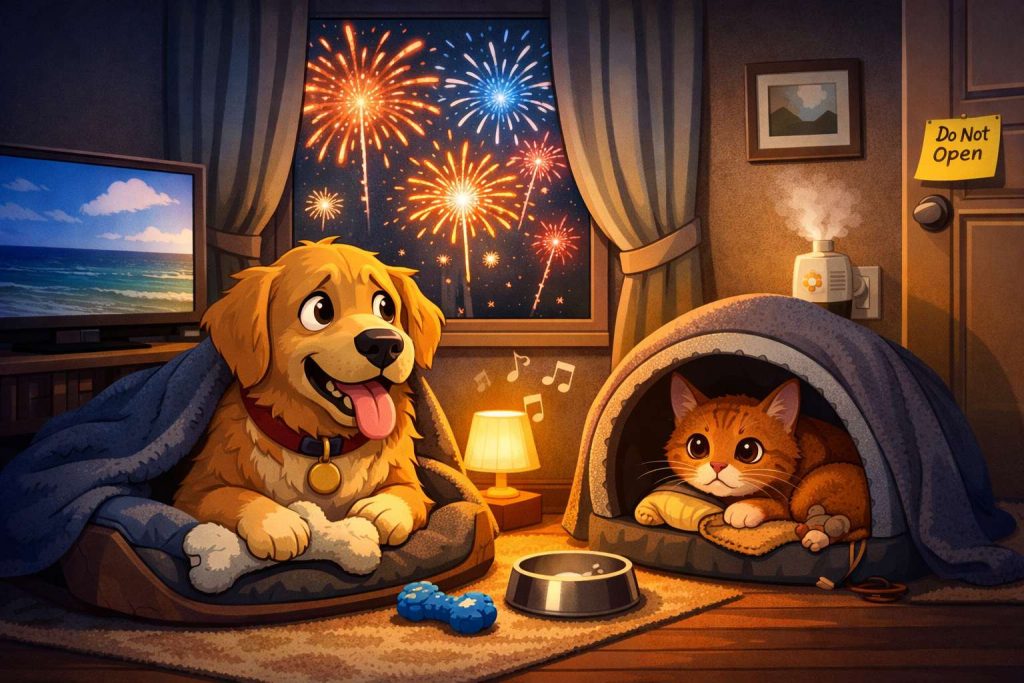
Close the windows and blinds, then add steady background sound. A fan helps. A TV helps too. Next, add a crate or covered bed, then place a blanket that smells like home.
Give fresh water, then offer a comfort activity. For dogs, a long-lasting chew or lick mat can help them settle. For cats, a soft blanket and a hiding spot can do a lot. In the meantime, keep that room quiet and limit visitors going in and out.
If you want a simple room-by-room plan that covers small hazards and escape points, use this checklist: pet-proof every room in your home.
Lock down exits early, not at 11 p.m.
Most escapes happen during small moments. A guest arrives. Someone steps out for a second. A gate latch does not catch. Then the pet is gone.
So do a quick sweep before dark.
- Keep dogs on a leash for every potty break, even in your yard.
- Check gates and latches, then add a clip or zip tie if the latch feels loose.
- Put a note on the front door so guests remember to close it fast.
- Keep collars on and check ID tags for your current phone number.
- Update microchip contact details, then confirm the phone number still works.
That takes a few minutes. Still, it can save you hours later.
Use a simple schedule that matches the noisy hours
A steady plan helps your pet feel less trapped.
Start with exercise earlier in the day. Then feed dinner a bit earlier than normal. After that, take one last calm leash potty break before fireworks pick up.
Turn on the fan or TV before the first pops. That timing matters. If the sound is already running, it feels normal. Then keep lights soft and movement slow. Your pet will watch you, so your calm tone helps more than you think.
Some pets want to sit close. Others want space. So let your pet choose. Stay nearby, but do not force cuddles.
Calm tools that many owners use
Mild fear often improves with structure and sound cover. Strong panic needs extra help.
A snug wrap can work for some dogs. A pheromone diffuser can help some cats and dogs too, especially if you start it earlier in the day. Then, if your pet has true noise phobia, talk with your vet about prescription options. That can make a huge difference on nights like New Year’s Eve.
Skip punishment. Fear is not disobedience. Instead, reward calm moments with gentle praise and a small treat.
Watch for the next-day stress, too
Fireworks do not always stop when you want them to. Some pops happen late. Then some pets stay tense the next day.
So keep the morning simple. Do normal meals. Do calm walks. Give extra rest. If your pet skips food for a bit, offer a smaller meal later. Then keep the house quiet until they reset.
If your pet gets out, move fast and stay organized
Most lost pets stay close at first. They hide under cars, bushes, or porch steps. So search nearby right away.
Bring a flashlight, treats, and a leash. Call in a calm voice, then pause and listen. Ask neighbors to check garages and sheds. Then post a clear photo and your phone number in local lost-pet groups. After that, file a lost report with your local shelter or animal control.
Speed helps. A clear plan helps even more.
A quick neighbor talk can lower the noise
If you know a neighbor who loves fireworks, try a polite ask. Request that they set fireworks farther from fences and front doors. Mention pets and small kids. Keep it short. Many people will adjust, especially if you ask before the night gets loud.
Fireworks nights will pass. So focus on what you can control. Prep one calm room, lock down exits, and keep your pet safely inside until the last boom fades.