

















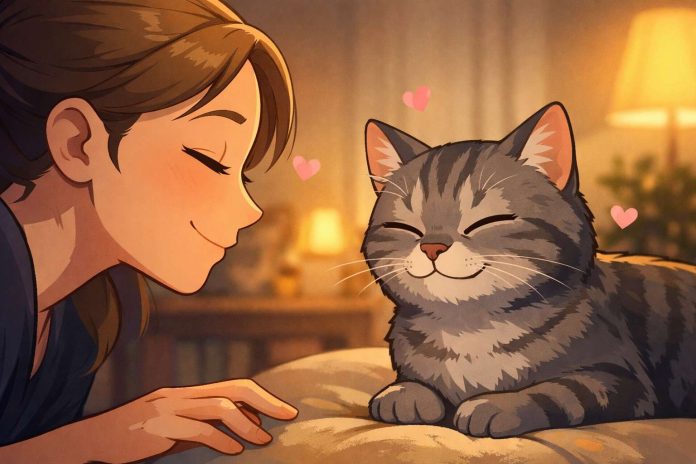
Cat owners spend a lot of time trying to decode the little things. A tiny tail twitch. A quick ear turn. A pause at the doorway that feels like a silent question. And then there is that slow, sleepy blink that makes your cat look calm and cozy.
That slow blink is not just a cute habit. It works as a friendly signal in cat body language. Even better, you can copy it in seconds. Then, many cats respond with a slow blink back, and some even come closer after they see it.
This is not “talking” with words. It is a quiet, clear message in a style cats already use. So it can change the tone of daily life with your cat in a simple way.
What the slow blink can mean
Cats do not show comfort the same way people do. A direct stare can feel tense to them. So a soft face and half-closed eyes can feel safer.
A slow blink often shows a relaxed state. Then it can act like a low-pressure “I’m okay with you” signal. When you offer the same signal back, you match your cat’s style. So the moment can feel calmer for both of you.
That matters in real life. You try to pet your cat, and the cat freezes. Or you’re meeting a shy cat for the first time, and the room feels stiff. So a slow blink can be a gentle reset.
How to do the slow blink the right way
Keep it simple, and keep it calm.
Sit or stand at a comfortable distance, then let your cat stay in control of space. Relax your face, and drop your shoulders. Look toward your cat with soft eyes, then skip the hard stare.
Now narrow your eyes slowly. Close your eyes for about one to two seconds. Open them slowly, then repeat two or three times. After that, pause and stay still.
Next, watch what your cat does. Some cats blink back right away. Others look away first, then blink later. And some will walk off like they have a schedule. That is normal too.
Add one extra step that often helps
Once your cat looks calm, extend a relaxed hand at their level. Keep your fingers loose, and keep your hand low. Then stay patient.
Do not push your hand into your cat’s face. Do not reach over the head. Instead, let your cat decide.
At that point, a cat that feels safe may step forward and sniff. Then you may get a cheek rub. And then, if you’re lucky, you get the slow lean-in that turns into a cuddle.
Signs you are getting a good response
Focus on the whole body, not just the eyes. The blink is one piece of the picture, so the rest still matters.
Good signs include:
- A slow blink back, then another
- A soft face and loose whiskers
- Ears in a neutral position
- A body that looks loose, not stiff
- A slow approach or a gentle sniff
Stop signs include:
- Tail lashing that does not slow down
- Ears pinned back
- A tense body that stays low
- A sudden freeze
- A growl, hiss, or swat
If you see stop signs, pause the interaction. Then give space, and try again later during a quieter moment.
Common mistakes that break the message
A slow blink works best when your body matches the calm signal. So the details matter.
These moves can ruin it:
- Staring without blinking
- Leaning forward fast
- Walking straight at the cat
- Reaching out too soon
- Trying it during loud stress, like vacuum noise
- Chasing eye contact when your cat turns away
Cats read pressure fast. So a gentle approach keeps the signal clean.
Where this fits best in everyday life
This trick is small, yet it can help in many situations.
Try it when your cat enters the room and looks at you. Try it before you pick up a shy cat, then wait for a soft response. Try it after playtime during the cool-down, so your cat shifts from high energy to calm.
It can help during introductions too. A new person walks in, and your cat sits across the room like a little statue. So the person can slow blink from a distance, then stay neutral and still.
And if you just brought home a dog and you are juggling both pets, then routines matter even more. In that case, the 3-3-3 method for dogs can help your new dog settle in, and that calmer home vibe can make your cat feel safer too.
A small move that can change the tone of your day
Most cat communication is quiet. So the slow blink stands out as one of the easiest signals you can copy. No gear. No training. No big setup.
Use it as a greeting, then let your cat choose the next move. Use it as a peace offer after a tense moment, then give your cat room to breathe. Use it during calm times, and you may see a pattern form.
You may get a blink back. Then you may get a slow walk over. Or you may get the classic cat response, a blink and a stroll away like nothing happened. Still, that calm exit is a good sign.