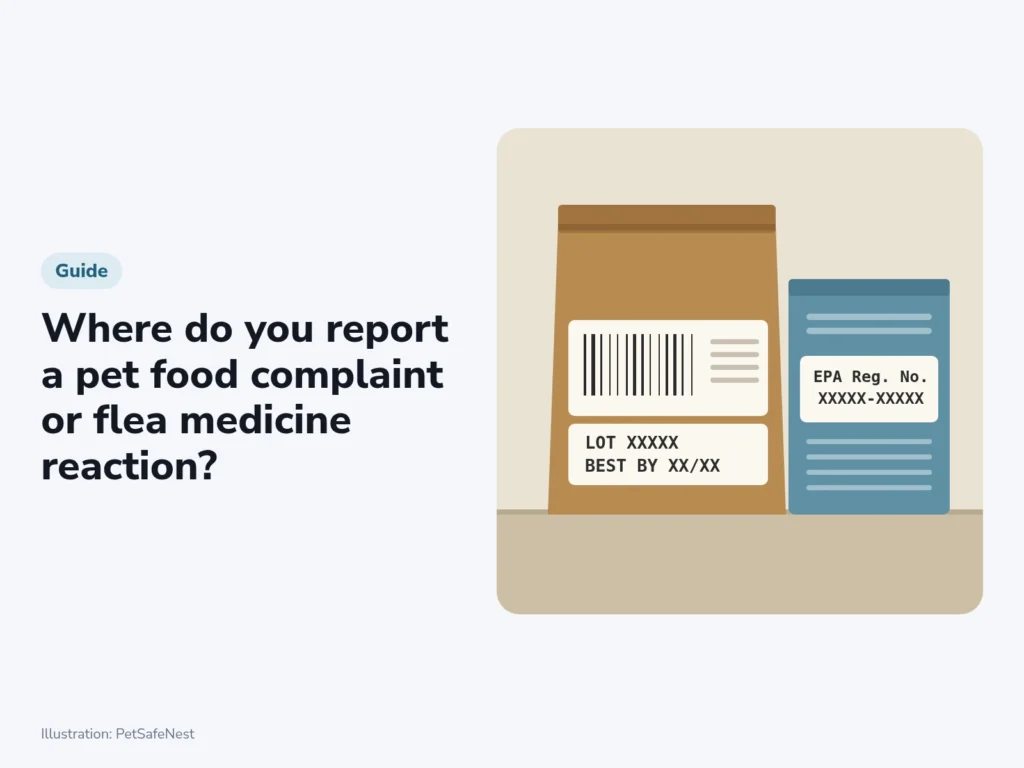
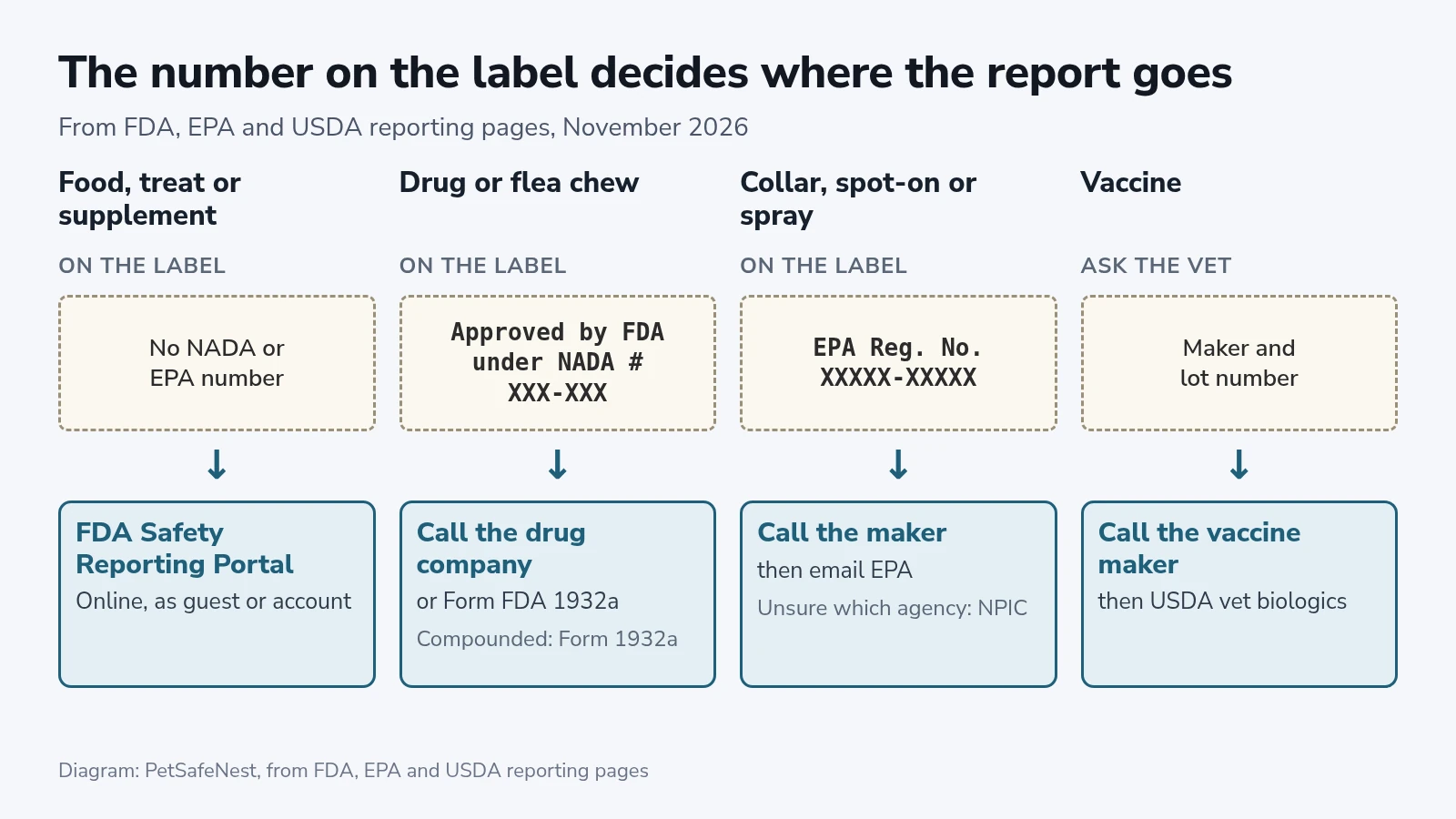
Call your veterinarian first if your pet is sick. Keep the package so you can report what happened. In the US, the FDA handles pet food and animal drug reports, the EPA handles registered pesticides, and USDA handles veterinary vaccines. Use the product’s label to choose the right route.
What to gather first
- The product name and package size, with photos of the lot code, date and barcode.
- Where and when you bought the product, when you used it and when signs appeared.
- Your veterinary clinic’s contact details and any diagnosis, results or records you have.
Photograph the whole label before you discard the box or pour food into a different container. You can still report suspected contamination or a packaging defect if no animal became ill.
Read the label before picking a form
An FDA approval number can be labeled “NADA” or “ANADA.” Some indexed animal drugs carry an “MIF” number. A registered pesticide carries “EPA Reg. No.” Check the label of a flea product carefully. A chew such as Bravecto is an animal drug, and many collars and spot-ons are EPA pesticides. Ask the clinic for the name and maker if a reaction followed a vaccine.
Keep the food and its lot code
Set the suspect food aside, keep it in its original package if possible and prevent other animals from reaching it. Ask the vet what to feed next. Record the brand, lot code, best-by date and UPC. Those details identify the batch for both the report and a recall check. The FDA may ask for a sample. Follow its instructions if it does.
File a pet food report with the FDA
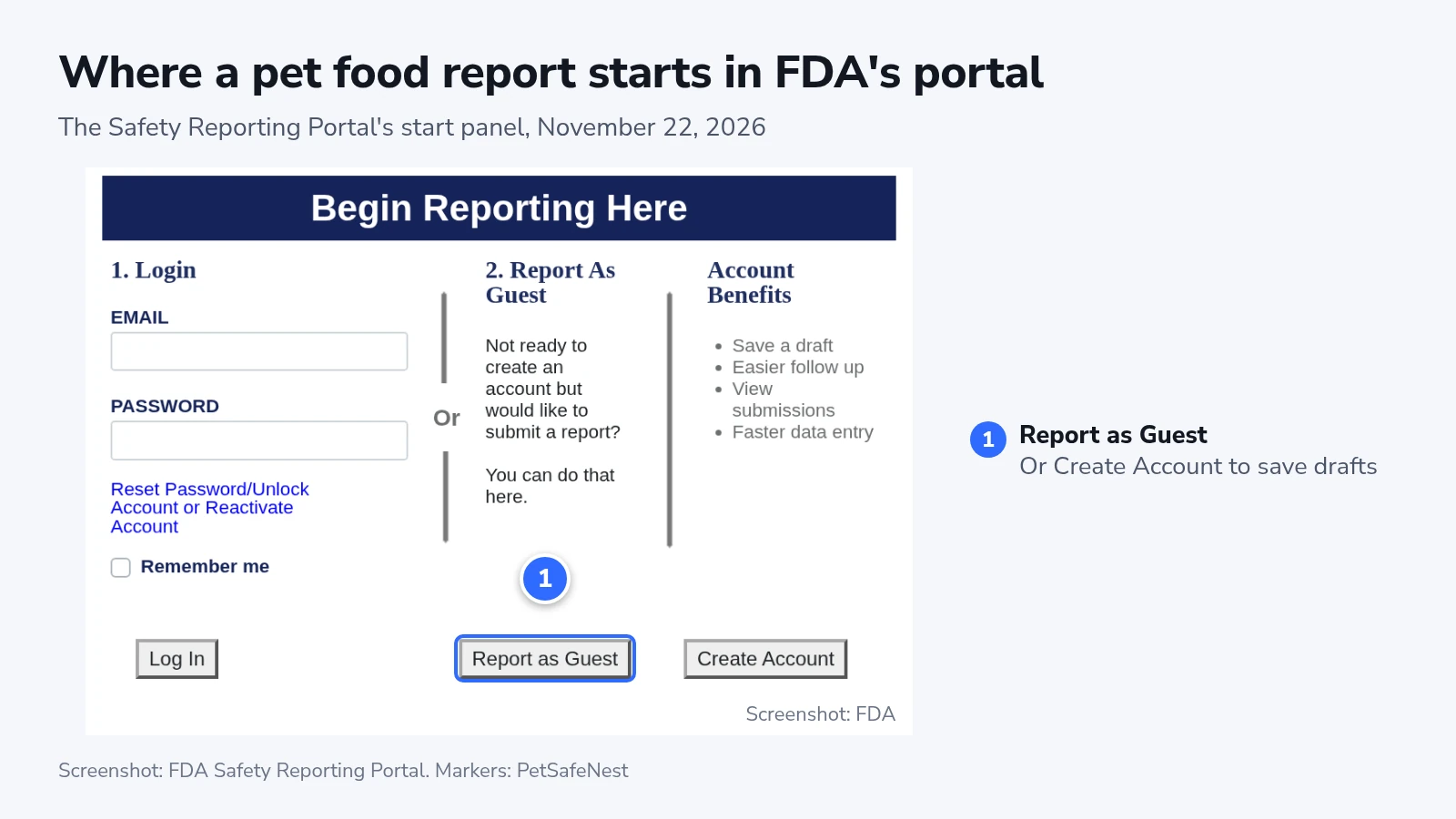
- Open the Safety Reporting Portal from the FDA pet food complaint page in Sources.
- Choose “Report as Guest” to complete a report in one sitting, or “Create Account” if you need to save a draft.
- Start a new report and select the pet food option. Enter the product and lot details, the dates and the signs you observed. Add the vet’s findings and any photos you have.
- Submit the report and keep the confirmation number and a copy. A guest should also save the “Report Key” for a follow-up.
Report an animal drug or device problem
For an approved animal drug, the FDA recommends calling the maker using the number on the package. Ask for its adverse-event reporting team and keep the case number. You can report to the FDA directly through its animal drug and device reporting instructions, which are linked from the pet food complaint page. Use the form linked there if you’re reporting a compounded drug, other unapproved drug or device.
Report a pesticide exposure to the EPA
Follow the label’s first-aid instructions and call your veterinarian about symptoms. When you report, give the product name, EPA registration number, when and how it was used and the signs you observed. The EPA says to notify the manufacturer. You can also send the details to report.pesticide.incident@epa.gov. Contact your state pesticide agency if you suspect the product was used against its label.
Report a vaccine reaction to the manufacturer or USDA
Ask your clinic which vaccine it administered and contact the manufacturer first. If you can’t report to the manufacturer, use USDA’s public adverse-event reporting route or call its Center for Veterinary Biologics at 800-752-6255. Your veterinarian handles the immediate care.
If you need to add new information
Use the “Report Key” to reopen a guest submission when test results arrive. The FDA portal offers a follow-up option for previously submitted guest reports. Read the updated report through before submitting it. If you have no lot code, include the details you can verify instead of delaying the report.
What happens after you report
The FDA reviews reports and may ask for records, a sample or other details. A report also contributes to safety monitoring when the agency has no sample to test. Keep the package with the report number so you can match them. An FDA investigation of Darwin’s raw cat food shows why the lot numbers matter when a warning applies to specific batches.