When Northwest Naturals recalled two raw chicken products on August 28, 2026, it listed one lot of a 6 lb dog food bag and one lot of a 2 lb cat food bag, and bags from other lots were not part of it. To check if pet food is recalled, you match the codes printed on your own package to the ones in the notice. It takes about ten minutes per product and works the same for dry, canned, frozen and freeze-dried food and treats sold in the US. The usual problem comes before the search: the code panel went out with the empty bag when the kibble moved into a bin.
Before you start
- The bag, can, pouch or case, or a photo of its code panel
- The receipt or order email, for the store and the purchase date
- A phone camera to zoom in on small print
- About ten minutes per product
Copy three codes from the package
FDA’s “Save Your Pet Food Lot Number” page sorts out which printed code is which. The lot number matters most, because it records when and in which plant the food was made. Companies are not required to print one, though most do.
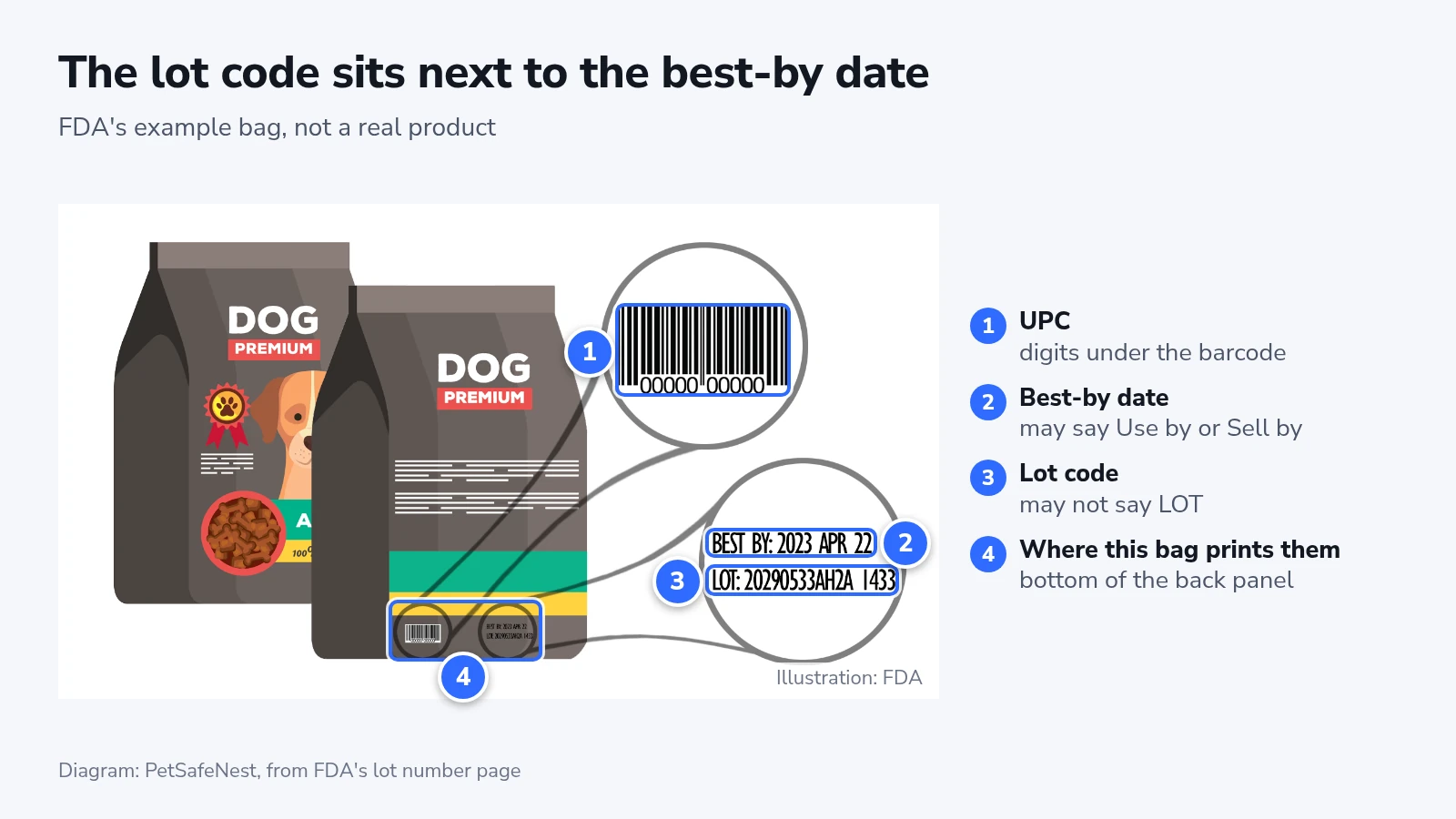
- Find the UPC, the row of digits under the barcode. It identifies the company and the product (recipe and size) but says nothing about the batch.
- Find the best-by date. It may be labeled “Best by”, “Use by”, “Use before” or “Sell by”.
- Find the lot code, usually printed near the best-by date. Bags and pouches carry it on the bottom, on a side or a few inches from the top, and cans usually on the bottom. Some brands print it on the tear strip or the can lid, leave out the word “LOT”, or use the best-by date as all or part of the lot code.
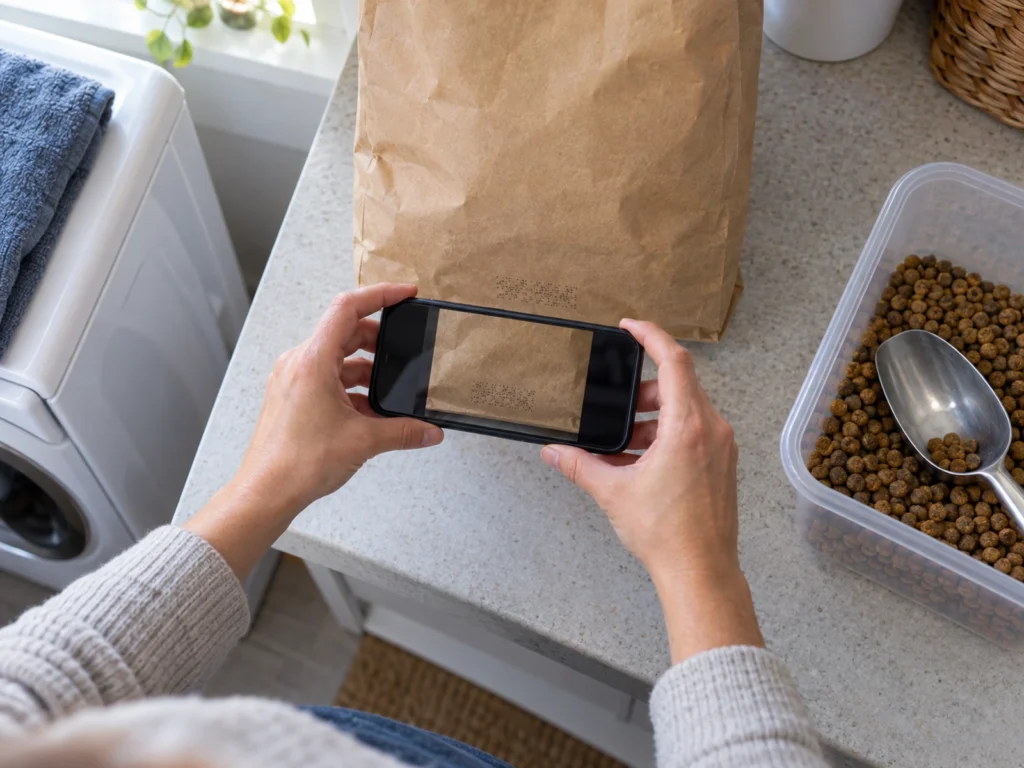
- Photograph the panel and zoom in on the photo. FDA warns that a B can look like an 8 and a V like a U.
Where pet food recalls are posted
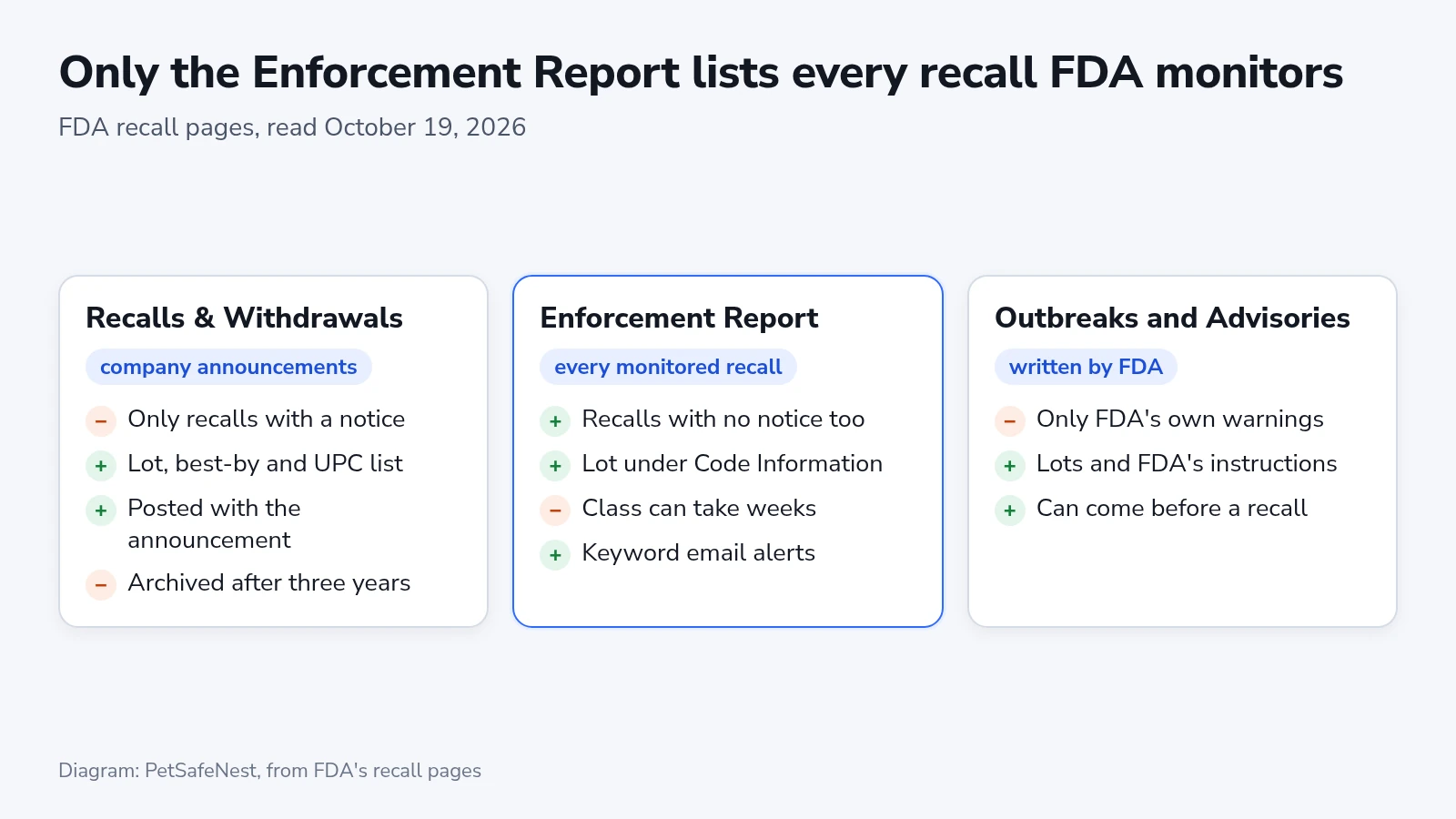
FDA posts pet food recalls in three places, and the same problem can show up on them months apart. “Recalls & Withdrawals” in FDA’s Animal & Veterinary section carries announcements that companies write and FDA posts “as a public service”. FDA’s main recall page says that not all recalls have press releases or appear there. The Enforcement Report “includes all recalls monitored by FDA”, with or without a press release, once FDA has classified them and sometimes earlier. “Outbreaks and Advisories” holds warnings that FDA writes itself, separate from any company announcement.
Search the company notices first
Each notice carries the company’s full list of affected products, so this is the quickest match.
- On FDA’s website, open “Animal & Veterinary” > “Safety & Health” > “Recalls & Withdrawals”.
- Type the brand into the “Search” box above the table.
- Read the matching rows: “Date”, “Brand Name(s)”, “Product Description” and “Recall Reason Description”.
- Click the brand name to open the company announcement.
- Compare its product list with your package, size by size.
The Northwest Naturals announcement lists the 6 lb dog food as Lot B-19, Best By 01/25/2028, UPC 087316380392. It tells owners to stop feeding it and return the unused portion to the store for a full refund. Announcements stay on FDA’s recall pages for three years before they move to the FDA Archive.
Then search the Enforcement Report
Of FDA’s three lists, this is the only one that carries a recall the company never announced.
- On FDA’s “Enforcement Reports” page, click “Search Enforcement Reports” and choose the “Quick Search” tab.
- Type the brand into the box and click “Search”.
- Under “FILTER SEARCH RESULTS”, open “PRODUCT TYPE” and tick “Veterinary”. Quick Search matches each word on its own, so on October 19, 2026 a search for Northwest Naturals also returned 14 human food entries, from frozen vegetables to ice cream, until that box was ticked.
- Click “view details” on each row that names your product.
- Compare “Code Information” with your lot code and best-by date.
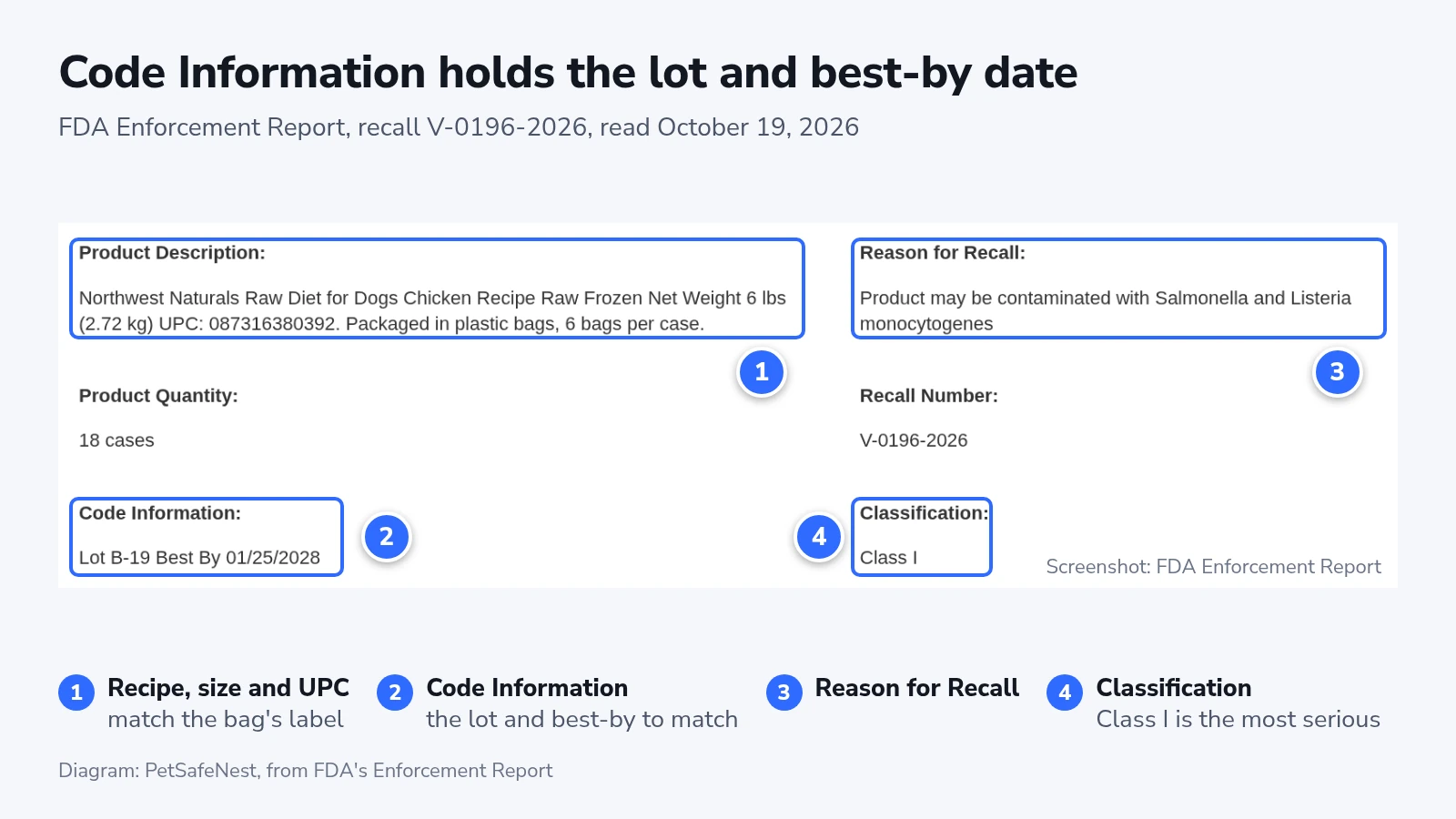
Under “Classification”, Class I means a reasonable probability of serious health consequences or death, Class II means temporary or medically reversible effects, and Class III means harm is not likely. A new entry can read “Not Yet Classified”. The Northwest Naturals recall started on August 28, 2026 and was classified Class I on September 22, 25 days later, so act on a matching lot without waiting for the class.
Read FDA’s own advisories
“Outbreaks and Advisories” gets only a few entries a year, and it can warn before a company acts. On January 23, 2026, FDA told owners not to feed eight lots of Raaw Energy dog food after samples tested by Connecticut and New Jersey agriculture officials carried Listeria, Salmonella or Campylobacter. FDA added that the company had not started an adequate recall. Raaw Energy’s recall announcement came on May 22, covering the dog food it made from July 17 to December 23, 2025 plus one lot from March 2026, more than 180 lots in all. FDA’s list of company announcements carried nothing from Raaw Energy in those four months. Raaw Energy’s tubes carried no lot code at all, only a date sticker, so the manufacturing date was the code to match.
Decide whether your bag matches
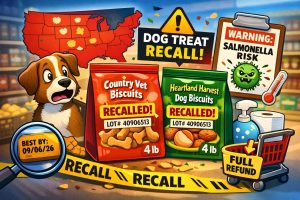
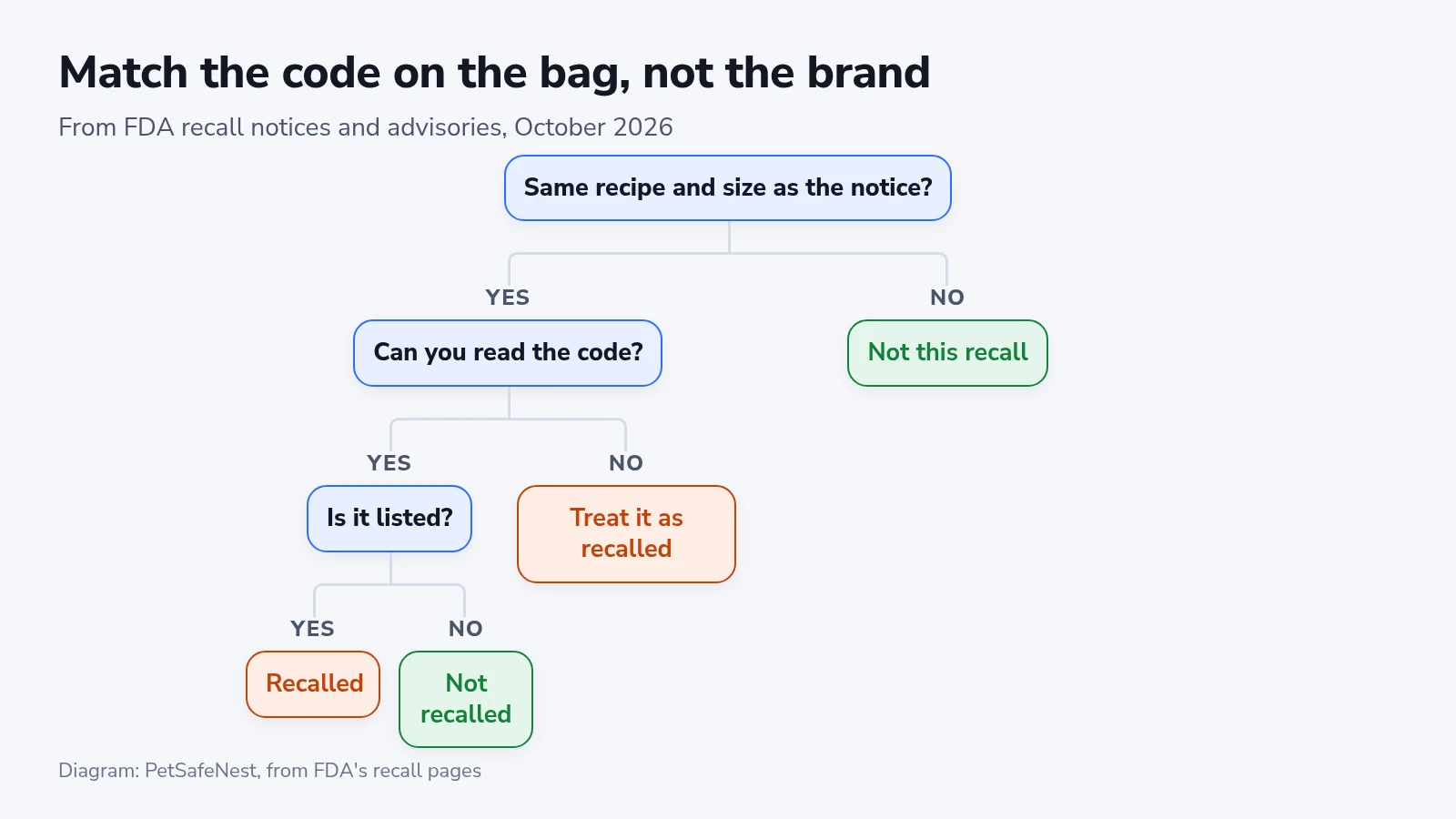
A brand on the list proves nothing by itself. Your package is part of the recall when the recipe and size match a listed product and its lot code or best-by date matches one in the notice. Some recalls cover a span of production dates instead of single lots, as Raaw Energy’s did, so check whether your date falls inside it. A December 2025 dog biscuit recall named one lot code and one best-by date for two brands of 4 lb bags, so a bag of those biscuits with any other code was not included.
When the code is unreadable, FDA’s Raaw Energy advisory gives the rule: “If you no longer have the package or cannot read the date code, throw the food away.”
If your bag matches
- Stop feeding it, and move it where pets and children cannot reach it.
- Photograph the code panel and keep the receipt. FDA’s complaint form asks for the lot code, best-by date, UPC, purchase date and store.
- Do what the notice says with the food. Northwest Naturals asked for returns to the store, and FDA’s Raaw Energy advisory said to throw the food away in a secure container that other animals, wildlife included, cannot get into. Do not donate it.
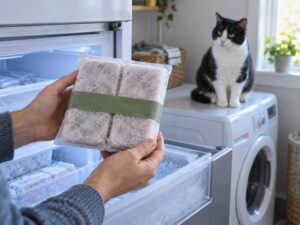
- Clean and disinfect bowls, scoops, the storage bin, feeding mats and anything else the food touched, including the fridge or freezer shelf for frozen food. Pick up your pet’s feces promptly, then wash your hands with soap and water.
- Watch your pet. FDA lists vomiting, diarrhea that may be bloody, fever, loss of appetite and lower activity as signs of Salmonella in pets, and a pet can carry the bacteria and spread it with no signs at all. Call your veterinarian if signs appear.
- Report an ill pet to FDA through the Safety Reporting Portal and attach the photo of the code panel.
Germs in pet food can make people sick too. The Northwest Naturals announcement names pregnant women, newborns, adults 65 and older and people with weakened immune systems as the people most at risk from Listeria. CDC asks adults to make sure children wash their hands after handling pet food, and anyone who falls ill after handling a recalled product should call a healthcare provider. If the recall is for a toxin, such as the aflatoxin and vitamin D recalls on FDA’s advisory list, treat it as a possible poisoning and tell your veterinarian how long your pet ate the food and how much.
When the check stalls
If the code went out with the bag, find the store, the date, the recipe and the size on your receipt or order email, and call the company number printed in the notice. If nobody can tell whether your food came from a recalled lot, follow FDA’s advisory and throw it away.
A code that is almost the same needs a second read from a zoomed photo, because B and 8 or V and U are easy to swap. When the notice prints a shorter code than the one on your package, send the company a photo of the panel and ask.
Human food in the Enforcement Report results means the “Veterinary” box under “PRODUCT TYPE” is still unticked. “Recalls & Withdrawals” lists only animal products.
For a recall more than three years old, search the FDA Archive with the product or company name and the year, as FDA’s recall page suggests. The Enforcement Report’s year menu goes back to 2012.
When nothing matches but your pet got sick on the food, report it anyway. FDA says fewer than half of the reports it receives include a lot number, so attach the photo of the code panel.
Keep the codes for the next bag
FDA suggests putting the whole original bag inside the bin, or cutting out the code panel and taping it to the bin or the inside of a cabinet door. It calls a dated phone photo of the panel the least messy way to keep the code.
In the Enforcement Report, “Subscribe to Recalls/Manage Preferences” sends email about new recalls that match keywords you choose, such as your pet’s food brand or “dog food”. FDA’s main recall page has a separate sign-up for its recall announcements. With a photo of each new bag on your phone, the next check is two searches and one look at “Code Information”.