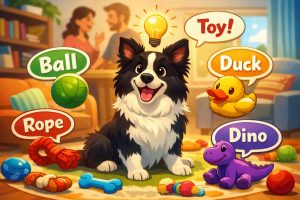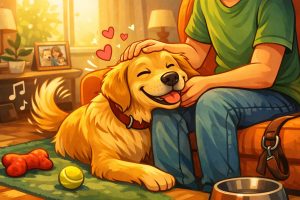
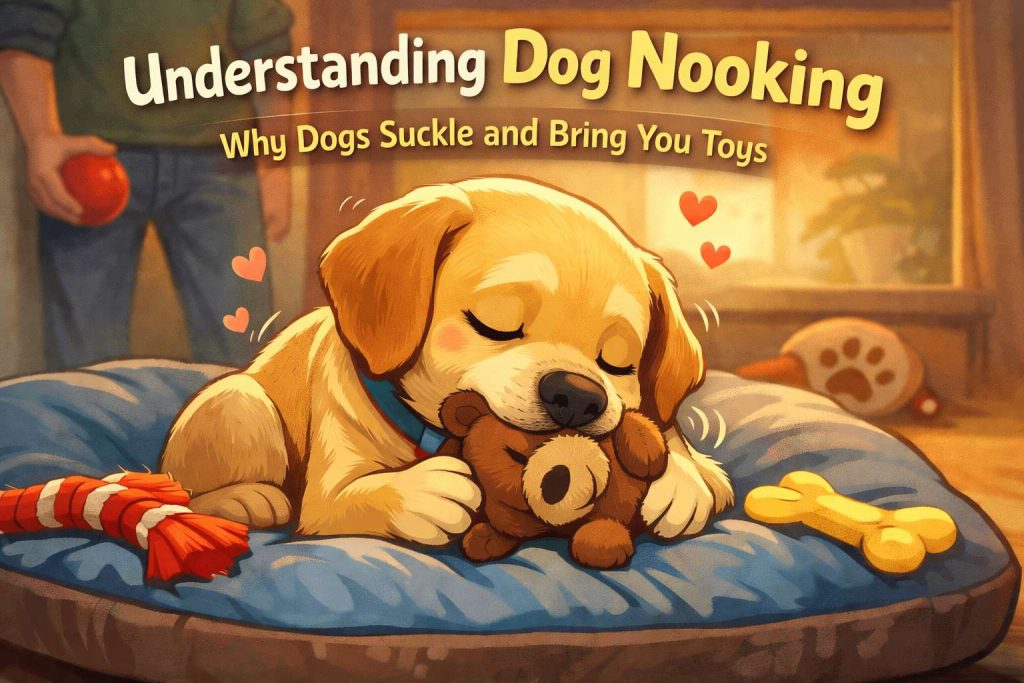
Dog owners keep noticing two habits that look cute at first, then start to feel like they mean something more. One is the front door greeting where a dog grabs a toy and trots over like they brought you a gift. The other is “dog nooking,” where a dog presses a soft toy, bed edge, or pillow against their mouth and does a steady suckling motion. A lot of dogs knead with their paws at the same time.
People use “nooking” online, but it is not a veterinary diagnosis. It is a casual label for comfort-style mouthing or suckling. You will also hear it called blanket sucking, toy suckling, or just a soothing habit.
What dog nooking looks like at home
Dog nooking tends to follow a pattern:
- The dog picks a soft item, often a plush toy, blanket, or a corner of the dog bed.
- The mouthing looks gentle and rhythmic, not like hard chewing.
- The paws may knead, push, or “make biscuits.”
- The dog looks calm and focused, almost like they are self-soothing.
Some dogs stick to one item. Others switch targets. You might notice your dog nooking on a toy at night, or nooking the bed after a busy day. Some dogs even try it on a sleeve or an arm during cuddles, which can feel odd the first time you see it.
Why dogs do it
In many cases, dog nooking is a comfort behavior. It can resemble the soothing suckling puppies do early in life, and some dogs keep a version of that routine as adults. It does not always mean something is wrong. Sometimes it is just their way of winding down.
Owners often call it “heartbreaking” once they hear one possible explanation. The American Kennel Club links some adult object-suckling to puppies that did not get enough comfort suckling, for example when the mother stopped nursing early or the pup was separated and bottle-fed. That can be true for some dogs. Still, it is not the only reason, and you usually cannot know the full story without the dog’s early history.
Stress can also play a role. Dogs repeat comfort routines during change. A move, a new schedule, noisy holidays, more time alone, or even a new pet in the home can push some dogs toward soothing behaviors that look repetitive.
There is also a simple learning piece. If a dog feels calm when they do it, they do it again. It becomes a routine.
If you like dog behavior and learning, you might also enjoy this piece on language and cognition in dogs, which shows how surprisingly much they can pick up just by listening: some dogs can learn new words just by listening.
Is nooking bad for dogs?
The AKC does not count occasional blanket sucking as compulsive, because it can be interrupted. Its veterinarian Dr. Jerry Klein says dogs that suck on blankets to relax “can be perfectly healthy dogs.”
A 2007 study is more cautious. Moon-Fanelli, Dodman and Cottam studied blanket and flank sucking in Doberman Pinschers for the Journal of the American Veterinary Medical Association. They concluded that “veterinarians should advise owners that flank and blanket sucking are abnormal, potentially harmful behaviors in dogs.” The study covered one breed, so it does not mean every dog that suckles a toy has a problem.
It becomes an issue when safety or intensity changes. Watch for these red flags:
- The dog starts ripping the toy and swallowing pieces.
- The dog seems “stuck” doing it and struggles to stop.
- The dog shifts from toys to licking or sucking their own skin, paws, or flank and causes irritation.
- The behavior ramps up fast, and you also notice other changes like appetite issues, stomach upset, restlessness, or pain signals.
If any of those show up, it is worth treating it like a real signal, not just a quirky habit.
Why is my dog nooking all of a sudden?
When it starts suddenly, a few things often show up in the background:
- A new stressor, like travel, visitors, fireworks, or a schedule change.
- Less exercise or less mental stimulation than usual.
- Teething in younger dogs.
- Discomfort, itch, or pain that makes the dog search for a calming routine.
A simple tip is to track it for a week. Note when it happens, how long it lasts, what object they pick, and how easily they stop when you redirect them. If the change feels sharp, or you see any health symptoms, bring that log to your vet. It helps a lot.
Is it a breed thing?
People talk about “nooking dog breeds,” but this behavior can show up in many breeds and mixes. What matters is not the breed label. It is the pattern.
In the 2007 Doberman study, blanket and flank sucking could get intense enough to cause medical problems. The AKC adds that researchers have found a genetic marker behind flank sucking in some Doberman Pinschers. In any breed, pay attention when the behavior looks compulsive or escalates over time.
Why dogs greet you with a toy
A toy greeting is usually a good sign. It often means excitement and a desire to engage. Many dogs have learned that carrying a toy during greetings gets them attention and praise.
There is another angle too. Holding a toy can help some dogs regulate big emotions. A reunion can be a high-energy moment, and the toy gives the mouth something to do. It can help the dog stay a bit more organized and less jumpy. So yes, it is sweet, but it can also be their way of managing excitement.
What to do if your dog nooks, or greets you with toys
Pick a safer “nooking toy”
Choose a durable plush made for dogs, and keep an eye on wear and tear. If your dog eats fuzz or stuffing, skip plush and talk with your vet about safer options.
Set a gentle boundary if your arm becomes the target
If your dog tries nooking on your arm, redirect without making it a big deal. Offer the toy right away. If they keep going for skin, pause the cuddle for a moment, then restart with the toy in place.
Avoid grabbing the greeting toy
If you snatch it, some dogs turn it into keep-away, and a few can start guarding it. Trade instead. Toss a treat a few feet away, then pick up the toy once the dog moves.
Calm the front door routine
Keep greetings low-key. Give the dog a predictable job, like going to a mat with their toy. Reward the calm behavior.
Get help when the pattern changes
If the habit becomes intense, destructive, hard to interrupt, or paired with health changes, a vet check is the right next step. It is always better to rule out pain or medical causes early.