Check your dog for cuts and sores every evening if it lives, hunts or travels in West Texas or southern New Mexico. On October 21, USDA confirmed New World screwworm in an elk on a game ranch in Pecos County, Texas, after a hunter shot it. It is the first case found in US wildlife.
Screwworm flies lay their eggs in open wounds and body openings. According to the FDA, the maggots that hatch burrow in and eat living tissue, and the damage is often deadly to the animal. Most dogs and cats in the US are still at low risk, because confirmed cases are limited to one area.
Near the border, though, dogs are among the animals the fly finds most often.
What the elk case changes
Before October 21, the US cases were in livestock and pets. USDA now asks hunters and landowners to report wild animals with maggots in a wound or a foul-smelling injury. They are often the first people to see one.
The Texas Animal Health Commission (TAHC) will modify an existing infested zone after the find. USDA and Texas Parks and Wildlife are also adding wildlife surveillance in the area.
USDA’s dashboard of US cases listed its newest one on October 22, in cattle in Hidalgo County, New Mexico. Recent cases on it come from Pecos, Brewster, Presidio, Val Verde and Crockett counties in Texas, and from Otero and Grant counties in New Mexico. The first dog case was reported on June 8, in a dog from Lea County, New Mexico.
Dogs in the cases near the border
USDA also lists every case Mexico confirms within 100 miles of the US, and updates the list each business day. Dogs come second on it, after cattle.
From September 22 to October 21, the list counts 77 cases. Of those, 22 were dogs, close to three in ten. Since January, dogs account for 127 of 502 cases, about one in four.
Most of the recent dog cases are in Nuevo León, around 90 miles south of the border. One was much closer. On October 20, Mexico confirmed screwworm in a six-year-old dog in Chihuahua, about a mile from the US.
Only five cat cases appear on the list this year, all confirmed in May and June.
Flea and tick products that treat it
Several flea and tick products your vet may already use are authorized by the FDA to treat a screwworm infestation in dogs or cats:
- NexGard and NexGard COMBO, authorized in February 2026
- Credelio CAT, authorized for cats in November 2025
- Credelio Quattro, conditionally approved for dogs in December 2025
- Simparica TRIO, authorized for dogs and puppies in August 2026
These products kill the maggots already in a wound, and none of them is authorized to prevent screwworm. On September 3, the FDA added prevention to two other products. The director of its veterinary center said then that no earlier dog or cat product had been for prevention.
The daily tablet authorized to prevent it
Capstar and its generic, Nitenpyram Tablets, are over-the-counter flea tablets. Those are the two the FDA authorized on September 3 to prevent and treat screwworm in dogs and cats. The pet has to weigh at least 2 pounds and be at least 4 weeks old.
To prevent screwworm, your dog takes one tablet every day. The tablet doesn’t repel flies or stop them from laying eggs. It kills newly hatched maggots within 24 hours of each dose, so an infestation can’t take hold.
Daily use hasn’t been evaluated for longer than nine months in dogs and cats, or six months in puppies and kittens. Ask your vet whether your dog’s risk calls for a daily tablet, and for how long.
What to check after a hunt
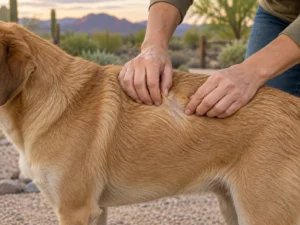
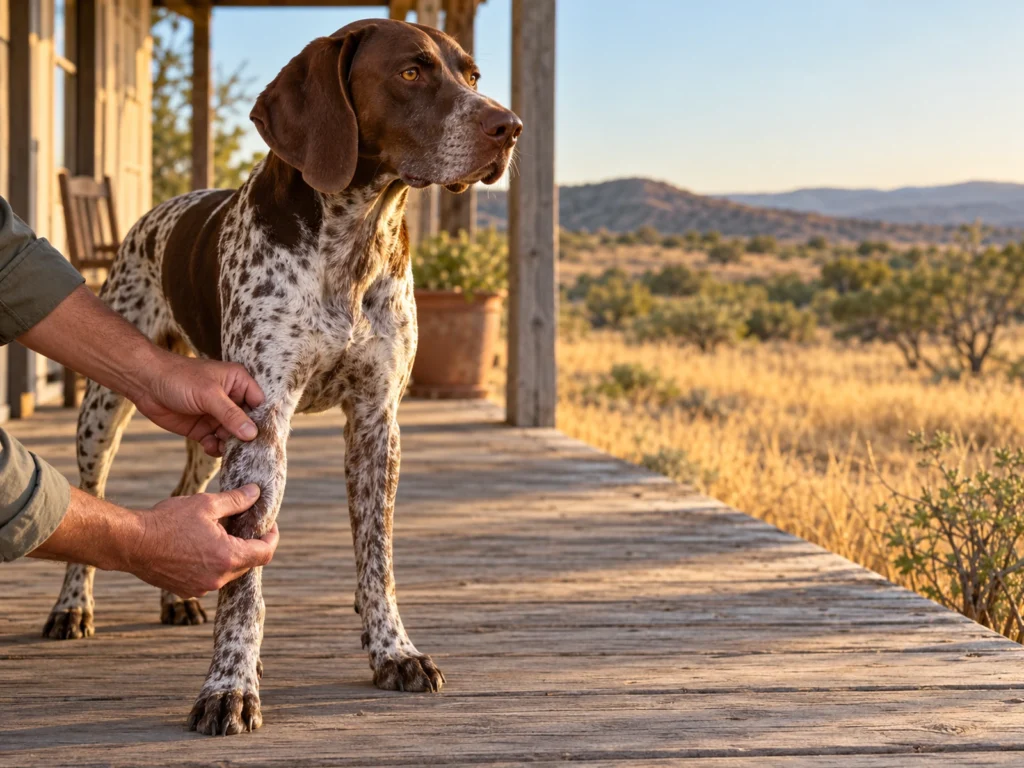
Screwworm eggs hatch in 12 to 24 hours, so a cut picked up on a morning hunt can hold maggots by the next day. Look over the legs, chest, belly and ears after every outing, and part the fur over any scrape.
Watch for wounds that drain or keep growing, and for maggots or egg masses. Sores around the ears, nose, genitals or navel count too, and so does a dog that seems uncomfortable or irritable. A wound that smells bad needs a vet the same day.
If you find maggots
Call your vet right away. With Capstar, a second tablet follows six hours after the first, and the vet removes the maggots left in the wound and cleans it.
Wear gloves if you touch the wound, the bedding or the maggots. Put any maggots that fall off into a sealed container with rubbing alcohol. Keep the dog away from flies until the wound has healed, because a treated pet can be infested again.
You can also report a suspected case to your state animal health official or to USDA. In Texas, livestock cases go to TAHC or to the state veterinarian on call at 1-800-550-8242. Cases in wild animals go to Texas Parks and Wildlife.
Moving a dog out of an infested zone
Texas infested zones carry movement requirements for pets as well as livestock, according to APHIS, the USDA agency leading the response. Before you travel with a dog from the area, search your address on TAHC’s online zone map.
When TAHC releases a zone, those requirements end inside it. It released two zones on October 13 and modified a third. The elk case means another change to an existing zone, and that change will appear on the same map.