An ASPCA study published on October 2, 2026, in the Journal of the American Veterinary Medical Association links the hydrogel in hot-and-cold migraine caps, eye masks and wraps to poisoning in 45 dogs. Of the 21 dogs whose outcome is known, 14 died or were euthanized. The poison is acrylamide, a nerve toxin left over from making the gel. ASPCA Poison Control says it now hears about severe cases every week, including from dog beds filled with the same kind of gel. If your dog has chewed into one of these products, call your veterinarian or ASPCA Poison Control at (888) 426-4435 even if the dog seems fine.
Acrylamide levels in the tested gels
Polyacrylamide, the polymer that turns these packs into a soft gel, has a wide safety margin. Rats in older tests tolerated a single dose of 4 grams per kilogram of body weight. The trouble is acrylamide monomer, the raw material the polymer is built from. Some of it can stay behind in the finished gel, and the body absorbs it through the mouth, the skin and the lungs. It damages nerves.
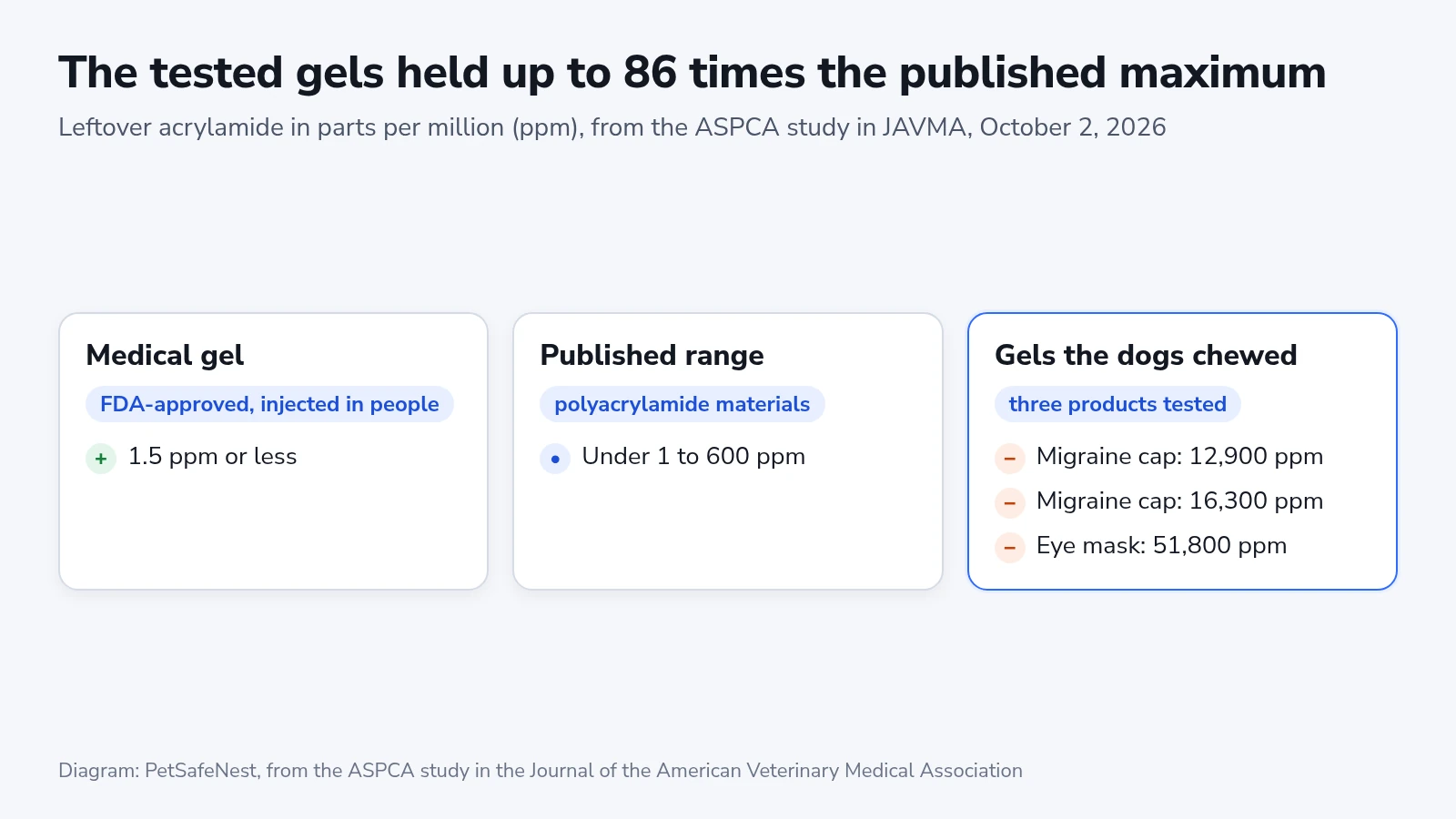
Published levels of leftover acrylamide in polyacrylamide materials run from under 1 to 600 parts per million. An injectable polyacrylamide gel approved by the FDA for use in people is held to 1.5 ppm or less. Polymer scientists at Cambridge Polymer Group in Woburn, Massachusetts, tested gel from three products tied to the cases. A migraine cap of unknown brand held 12,900 ppm, a cap bought online from a brand involved in seven of the cases held 16,300 ppm, and an eye mask from a brand involved in four cases held 51,800 ppm. The highest figure is 86 times the top of the published range. The paper doesn’t name the brands.
“Nontoxic” on the package
Packages for these products often say “nontoxic” or “medical grade,” and dogs died despite labels that used those words. The authors point out that “nontoxic” is an unregulated term. The caps, masks and wraps are made in China, sold online and in local stores, and marketed for pain and inflammation.
Those therapeutic claims may put them outside the jurisdiction of the Consumer Product Safety Commission, the authors write, while the FDA may not regulate them as medical devices. Injuries to people and pets may then go untracked by either agency. The box can’t tell you how much acrylamide is in the gel, and the ASPCA says the problem shows up across a wide number of brands.
How little gel it takes
Nobody has established the smallest dose of acrylamide that poisons a dog. In older experiments, dogs given 100 milligrams per kilogram of body weight had convulsions and lost coordination, and cats showed toxicosis at 40 mg/kg.
The eye mask’s maker lists it at about 6 ounces, roughly 170 grams, and its gel held 51.8 milligrams of acrylamide in every gram. For the 9.5-kilogram spaniel mix described below, which swallowed the gel from one of these masks, the authors work out a dose of as much as 927 mg/kg. Less than 20 grams of that gel would have been enough to reach 100 mg/kg.
For a 20-pound dog, the same arithmetic gives about 18 grams of the strongest gel tested, a little more than half an ounce. The weakest gel takes about 70 grams. Both amounts are well under the weight of one mask. A 10-pound cat would reach the 40 mg/kg level with about 3.5 grams of the strongest gel. Six of the calls to ASPCA Poison Control involved cats, which the authors left out of the analysis.
Signs in the 45 dogs
The 45 dogs came from calls to ASPCA Poison Control between January 2024 and June 2026. Signs generally began within 12 hours, and vomiting came first. About half the dogs had seizures, and about half had tremors or wobbled on their feet. A third changed their behavior, turning anxious, frantic or aggressive, and one dog appeared to hallucinate. A racing heart and low blood pressure were far more common in the dogs that died. Where the time was recorded, death came within 24 hours.
The spaniel mix, 2.5 years old, was found with an eye mask in its mouth and all of the gel gone. It started vomiting 90 minutes later. About five hours after swallowing the gel, it reached an emergency clinic with severe tremors. Over the next 11 hours its seizures came every hour and then more often, and its potassium kept falling. About 18 hours after it ate the gel, its blood pressure dropped, it stopped breathing and it died.
There is no antidote. Treatment means controlling seizures and tremors and correcting the dog’s potassium and fluids. Dogs that recovered took anywhere from a day to several weeks, and in one husky the tremors lasted about three weeks.
If your dog chews one
Treat it like any other poisoning at home: get the product away from the dog and call your veterinarian or ASPCA Poison Control right away, after any amount. Shaking, wobbling or a seizure means going straight to the nearest veterinarian. Making a dog vomit soon after may reduce how much it absorbs, and that is a decision for the veterinarian on the phone.
The ASPCA’s guidance for veterinary staff asks for the product and its packaging to be kept for toxicology testing. It also calls for nitrile gloves when anyone handles the gel or bathes a pet that has it on its fur, because acrylamide passes through skin. The same guidance asks for the product to be reported to the Consumer Product Safety Commission or the FDA.
Cooling beds and the gel packs already in your home
No pet bed was among the three products tested. ASPCA Poison Control says the weekly reports also involve dog beds with similar gel, and the paper cites an earlier report of poisoning from a gel cooling pad for dogs. The ASPCA’s advice is to watch a dog while it uses a cooling pad, especially a dog that chews.
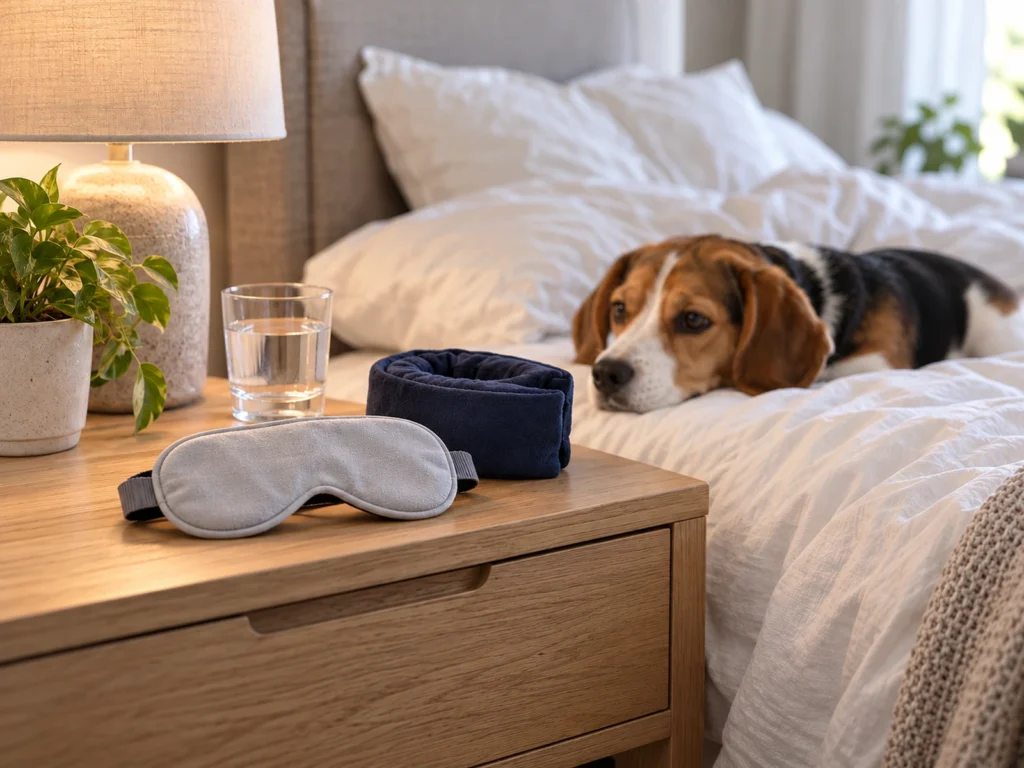
Migraine caps, eye masks and wraps aren’t made for pets. Keep them in a closed drawer or in the freezer between uses, off the nightstand and the couch, where a dog can reach them.