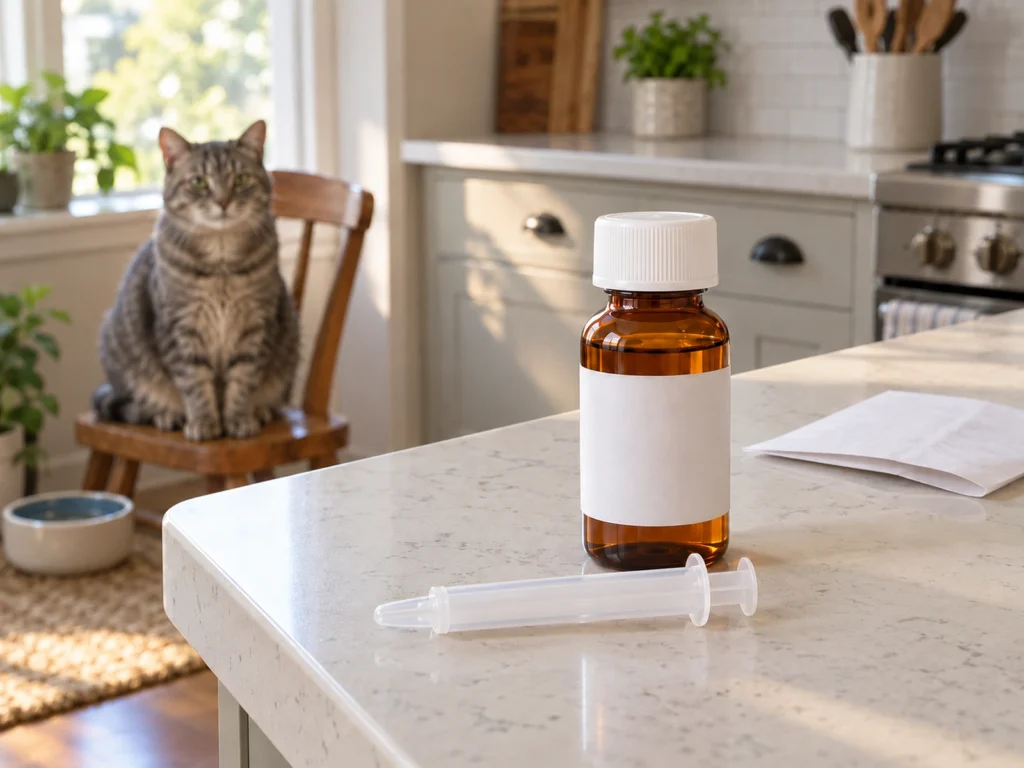
If your dog or cat takes a medicine made to order by Wedgewood Pharmacy, check the label before the next dose. Wedgewood is recalling thousands of compounded veterinary medicines it shipped from February 18 to October 6, 2026, because it no longer trusts some of its own lab results. A recalled bottle may hold less of the drug than the label says, or more. If yours is listed, call your vet the same day.
Wedgewood announced the recall on October 21, and the FDA posted the notice the same day. The pharmacy, based in Swedesboro, New Jersey, ships to veterinary practices, pharmacies and pet owners across the US.
What went wrong in Wedgewood’s lab
A compounded medicine is mixed by a pharmacy to a vet’s prescription, for example as a flavored liquid for a pet that won’t swallow a pill. Wedgewood checks the strength of its medicines in its own laboratory. Its quality reviews found inconsistencies in some of that testing data, so some medicines it released may be weaker or stronger than labeled.
In the notice, Wedgewood says a weak dose can mean the treatment doesn’t work, and a strong one can mean toxicity or an overdose.
Wedgewood had received 98 complaints by the time it announced the recall, and 7 of them were serious. Its own recall page adds that it has not identified an increase in complaints or adverse events linked to the affected products. Read together, the two pages say complaints came in but did not climb above the usual level. Neither page describes the seven serious cases.
The medicines on the list
Wedgewood’s SKU and lot lookup, with data dated October 21, lists 3,927 products. It covers powders, pastes, oral suspensions, injectables, eye and ear medicines, sprays and gels. They were made for pets, horses, exotic and zoo animals, wildlife and aquarium animals, and none were meant for animals raised for food.
Counted by lot, about 19 in every 20 are liquids given by mouth. Eight medicines make up about six in ten lots, and most of them treat long-term conditions:
- fluoxetine, a behavior medicine
- pimobendan, for congestive heart failure in dogs
- trilostane, for Cushing’s disease
- ursodiol, for chronic liver disease
- methimazole, for cats with an overactive thyroid
- budesonide, for inflammatory bowel disease
- gabapentin, for seizures and nerve pain
- telmisartan, for high blood pressure
A pet on one of these may have gone through several bottles since February. A refill can come from a different lot, so check every bottle you still have, not only the open one.
Checking your pet’s bottle
- Look for Wedgewood’s name on the label. A medicine your vet’s clinic handed over may carry the clinic’s own label, so ask the clinic where it came from. The recall tells clinics and pharmacies that passed recalled medicine on to tell their clients.
- Check when it arrived. Only medicine Wedgewood shipped from February 18 to October 6 is included, and every listed lot expires between October 22, 2026, and May 3, 2027.
- Open the SKU and lot lookup on Wedgewood’s website and type the medicine’s name, its strength or the lot number. Partial matches work.
- Compare the lot number on your label with the lots listed under that product.
The medicine’s name alone doesn’t put your bottle in the recall. The lot does, the same way it does when you check a bag of pet food against a recall.
If you can’t find a lot number, call the recall line at 866-562-5931 with the bottle in hand. Sedgwick, the company Wedgewood hired to run the recall, answers Monday to Friday from 8 a.m. to 9 p.m. Eastern and on Saturday from 9 a.m. to 5 p.m.
When the lot is on the list
The notice tells owners to stop using an affected medicine and to keep it, not throw it out. Sedgwick is contacting affected customers by email and by mail, and it is arranging a refund or, where possible, a replacement.
Stopping a daily medicine leaves a gap, so call the vet who prescribed it before the next dose is due. Wedgewood says treatment decisions for each animal belong with that vet, and it is helping vets find suitable alternatives where they exist. Sedgwick passes owners’ clinical questions to Wedgewood’s care team.
Tell the vet if your pet’s condition changed after a new bottle started, and when. A weak bottle can look like a treatment that stopped working. A strong one can bring the signs of an overdose.
You can report a reaction or a quality problem to the FDA at 1-888-FDA-VETS or through its online form for animal drug problems. Keep the bottle, its box and the packing slip together until Sedgwick tells you what to do with them.