
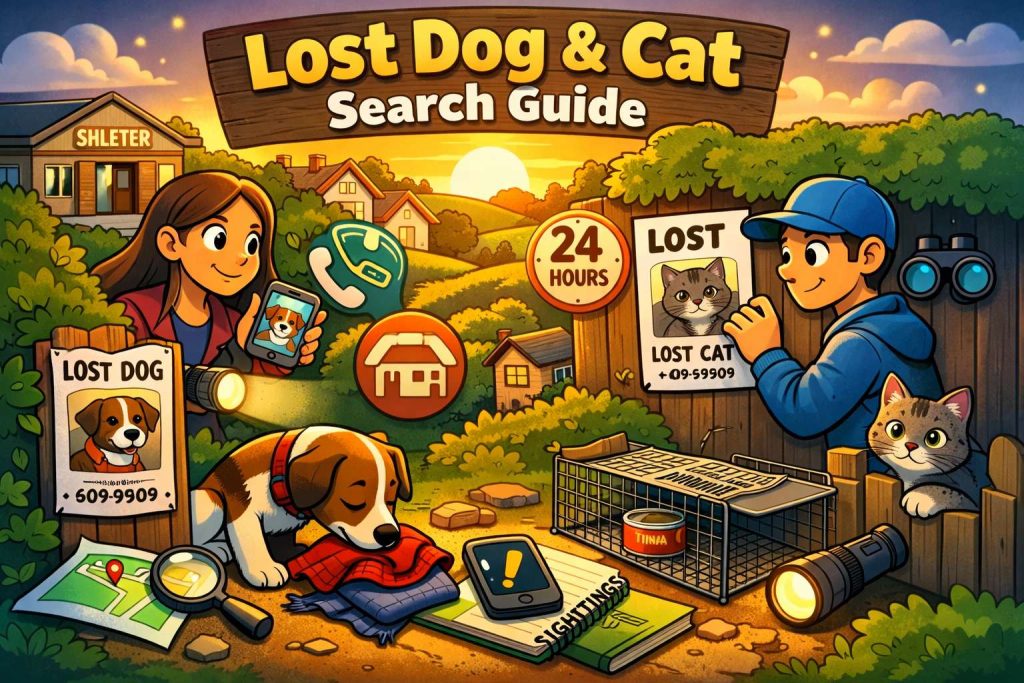
A lost pet moment feels scary, so a simple plan helps. Start close to the last seen point, then widen the search in a steady way. Write down every call, every sighting, and every place you checked. That log keeps you focused, and it stops repeat work.
Quick start. What to do in the first 10 minutes
Do these steps right away, then move outside.
- Close gates, doors, and garage access, so your pet does not drift farther.
- Pick one clear photo that shows the face and body markings.
- Grab high value treats, a leash or carrier, and a flashlight.
- Find your pet’s microchip number and registry name in vet records or chip paperwork.
- Open a notes log with four fields: time, location, source, and result.
Now take a breath. Then start the first 2 hours plan.
First 2 hours checklist. Fast actions that bring pets home
Start with a tight home and yard sweep
Pets hide fast, so check the places that trap or muffle sound.
- Closets, basements, attics, crawl spaces
- Under beds, behind appliances, inside cabinets
- Sheds, garages, parked cars, wheel wells
- Under decks, bushes, thick hedges, stacked items
Indoor cats can wedge into silent spots. Dogs can get stuck behind fences, in tight alleys, or near drainage areas. So move slowly, and use your flashlight even indoors.
Call your pet, then pause and listen
Use your normal call voice. Then stop for 15 to 30 seconds. Repeat. Listen for tags, paws, a meow, or movement.
A scared pet often stays quiet at first. Still, your calm voice can pull them closer. So keep your tone steady, and do not rush.
Search close first, then loop outward
Start with a close-radius search. Then widen in circles, block by block.
For dogs, walk the streets near home and scan yards in a loop pattern. Then check quiet corners, open lots, and spots with cover.
For cats, stay even closer at first. Check low cover in your block, then the next block. Look under porches, behind bins, and along fence lines.
Next, repeat the loop once more. Many pets move after a few minutes of quiet.
Knock on doors, and ask for quick checks
This step feels awkward, yet it works.
Ask neighbors for a 60 second check in these spots:
- Sheds and garages
- Basements and stairwells
- Under decks and porches
- Inside fenced yards
Focus on closed spaces. A cat can get stuck in a garage. A dog can slip into a yard and then freeze.
Set up a safe “home base” scent cue
Place a familiar item near your entry point, then leave it there.
- Unwashed bedding
- A worn shirt
- A favorite blanket or toy
Keep it simple. Do not scatter items all over town. Instead, keep the scent cue at home, since that is where you want your pet to return.
Post one clean missing pet alert
Post in local community groups and missing pet groups.
Include:
- One clear photo
- Last seen location with cross streets
- Time last seen
- A short description
- One phone number
Keep one proof detail private, like a small scar or a unique paw mark. Then use that detail to screen false claims.
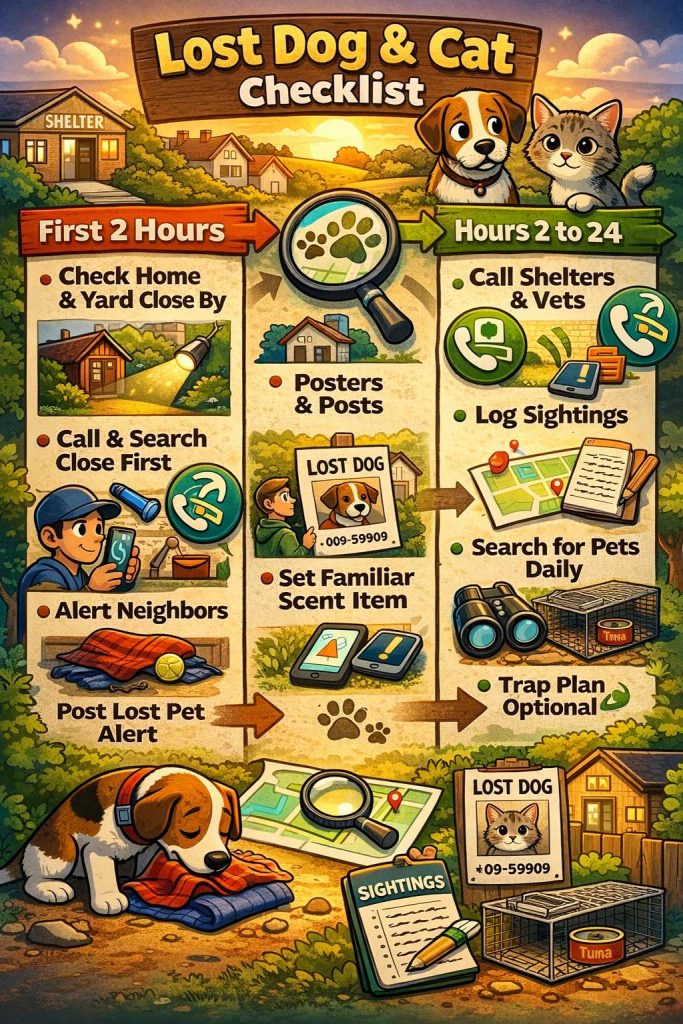
First 24 hours checklist. Turn panic into a system
Call the right places, and log every contact
Now move into outreach mode, step by step.
Call and record:
- Local shelters and municipal animal services
- Nearby rescue groups that handle strays
- Vet clinics in your area
- Your microchip registry, so they can mark the pet as lost and confirm your contact details
A microchip only helps when someone scans your pet, and your registry details match your current phone number and address. So check those details today, not next week.
Build a sightings log that stays consistent
Treat sightings like data. That sounds cold, yet it keeps you calm.
Use one log for all sightings and actions:
- Date and time
- Exact location
- Direction of travel
- Pet behavior, calm or fearful
- Witness name and phone
- Your follow-up result
Then share the log with anyone helping you search, so you all work from the same info.
Put up posters that drivers can read fast
Your poster needs to work in three seconds.
Use:
- A big photo
- “LOST DOG” or “LOST CAT” in large text
- Cross streets, not a long address
- One phone number
- One short description, color and size
Place posters at:
- Busy intersections near the last seen point
- Parks, trails, and dog walking routes
- Pet stores and vet clinics
- Shelter bulletin boards
Next, take a photo of each poster location. Then log it, so you can refresh them later.
Adjust your search style for dogs vs cats
Dogs. Common patterns and what to do
A scared dog can run far, then settle into a routine. So search in a way that matches that pattern.
- Search at dawn and dusk, since streets are quieter.
- Drive slow, stop often, and scan yards and open lots.
- Ask delivery drivers, joggers, and park staff. They notice patterns over days.
Look for places that catch a roaming dog:
- Fenced yards with gaps
- Construction sites
- Drainage channels
- Areas near dumpsters or outdoor food smells
At the same time, think about your dog’s personality. A friendly dog may approach people. A fearful dog may avoid them. So aim your effort where that dog would go.
If you want a quick read on how young dogs learn and react early, this guide can help you think about behavior and cues during searches: what puppy research shows about early learning before 4 months.
Cats. Common patterns and what to do
Most missing cats hide first. Then they move in short bursts, often at quiet times.
- Search with a flashlight at night. Sweep low, then pause.
- Check under decks, bushes, porch stairs, and crawl spaces.
- Ask neighbors to check garages and sheds each time they open them.
Do not rely on calling alone. A hiding cat often stays silent, even when you stand nearby.
If you struggle to get a cat to approach once you spot them, this method can help you call more effectively: a hands-first way to call your cat that works in real life.
Avoid the mistakes that waste the most time
These errors show up again and again, so keep them out of your plan.
- Posting five different versions of the story. Use one message, then update it.
- Expanding too far too fast for a cat. Many cats stay close early on.
- Searching only at the loudest time of day. Quiet hours work better.
- Waiting two days to check shelters. Intake can happen fast.
- Paying anyone who claims they “found” your pet. Ask for a photo, and use your private proof detail.
After 24 hours. What changes, and what stays the same
After the first day, you need persistence plus structure. So build a daily routine and stick to it.
- Check shelters every day. Ask about new intakes and hold policies.
- Refresh your posts daily with the same photo and contact line.
- Search the same blocks at the same times each day.
- Follow credible sightings within hours, not days.
If sightings cluster in one zone, focus there. Then search that zone again the next quiet window. If sightings stop, tighten your search and ask neighbors for second checks of closed spaces.
Where are dogs usually after 24 hours of going missing?
There is no single rule that fits every dog. Distance depends on fear level, traffic, weather, and how social the dog is. Still, many recovered dogs turn up close to the last seen area. So your best starting move is a strong first-mile search.
Use this practical plan after 24 hours:
- Put most of your effort in the first mile around the last seen point.
- Then expand to two to five miles in focused corridors like parks, trails, and feeder roads.
- Recheck the same streets more than once. Dogs move, then circle back.
- Ask people who work outside, since they see the area daily.
Next, match your approach to your dog’s profile:
- Friendly dog: check homes, yards, and people-heavy spaces. A friendly dog may follow someone.
- Fearful dog: check quiet cover, brush lines, industrial edges, and drainage paths.
Then keep your pace steady. A calm, repeatable search beats a frantic sprint that burns you out.
What are the chances of a cat coming back after 24 hours?
There is no single percentage that fits all cats. Return timing varies a lot. Indoor-only cats often hide close. Outdoor-access cats may roam farther. Weather, noise, and predators shift behavior too.
Still, a cat missing for 24 hours can come back. So do not treat the first day as a cutoff. Instead, run a close, careful plan for several days.
What to do after 24 hours:
- Keep your strongest effort near the escape point, street by street.
- Search during quiet hours, then pause and listen.
- Keep a safe entry point available at home, and keep the home base calm.
If you get repeated sightings in one area, switch to a focused plan.
- Go back at the same time each evening.
- Bring strong-smell food, then wait quietly.
- Use a humane trap only after you confirm the cat is visiting the spot.
Will my cat be okay if I’m gone for 2 days?
A healthy adult cat can sometimes handle a short absence, yet risk rises fast without a daily check. Water can spill. Bowls can get dirty. Food can run out. A cat can also get stuck in a room.
Use this safety rule:
- Do not leave a cat fully alone for two days without a human visit.
- Arrange at least one daily check-in by a trusted person.
- Use two visits per day for kittens, seniors, or cats with medical needs.
If an emergency forces you close to 48 hours, reduce risk:
- Set multiple water stations in different rooms.
- Use a large, stable water bowl plus a backup source.
- Leave extra dry food, or use a timed feeder.
- Add a second litter box.
- Remove hazards like strings, toxic plants, and loose cords.
- Set a stable indoor temperature.
- Ask the visitor to confirm water, food, litter, and the cat’s location.
Common search phrases people use, and the actions that match them
People search in stress, so they use direct phrases. You can mirror that clarity in posters and posts.
- “Lost dog what to do first”
- “Lost dog checklist first 24 hours”
- “My dog ran away how to find him”
- “Lost cat checklist first 24 hours”
- “Indoor cat escaped how to find”
- “How to find a cat at night”
- “Microchip lookup lost pet”
- “Missing pet poster template”
Now tie each phrase to one clear step.
- “Checklist first 24 hours” maps to shelter calls, microchip registry updates, posters, and daily searching.
- “Find a cat at night” maps to flashlight searching, quiet calling, and neighbor checks.
- “Microchip lookup” maps to registry contact checks and vet clinic calls.
Copy-ready action plan for your notes app
First 2 hours
- Home and yard sweep, inside and out
- Close-radius street search
- Neighbor door knocks and closed-space checks
- Home base scent cue near the entry point
- One clean missing pet post
Hours 2 to 24
- Shelter and animal control calls
- Vet clinic calls
- Microchip registry update and “lost” flag
- Posters at intersections and pet businesses
- Dawn and dusk searches for dogs
- Night flashlight searches for cats
- Sighting log updates every time
Day 2 and onward
- Daily shelter checks
- Daily post refresh
- Repeat searches in the same blocks
- Focused plan after credible sightings, and trap only when sightings support it